FSSAI Scrutiny Limited To One Goa Batch, Now Out Of Circulation: Bisleri
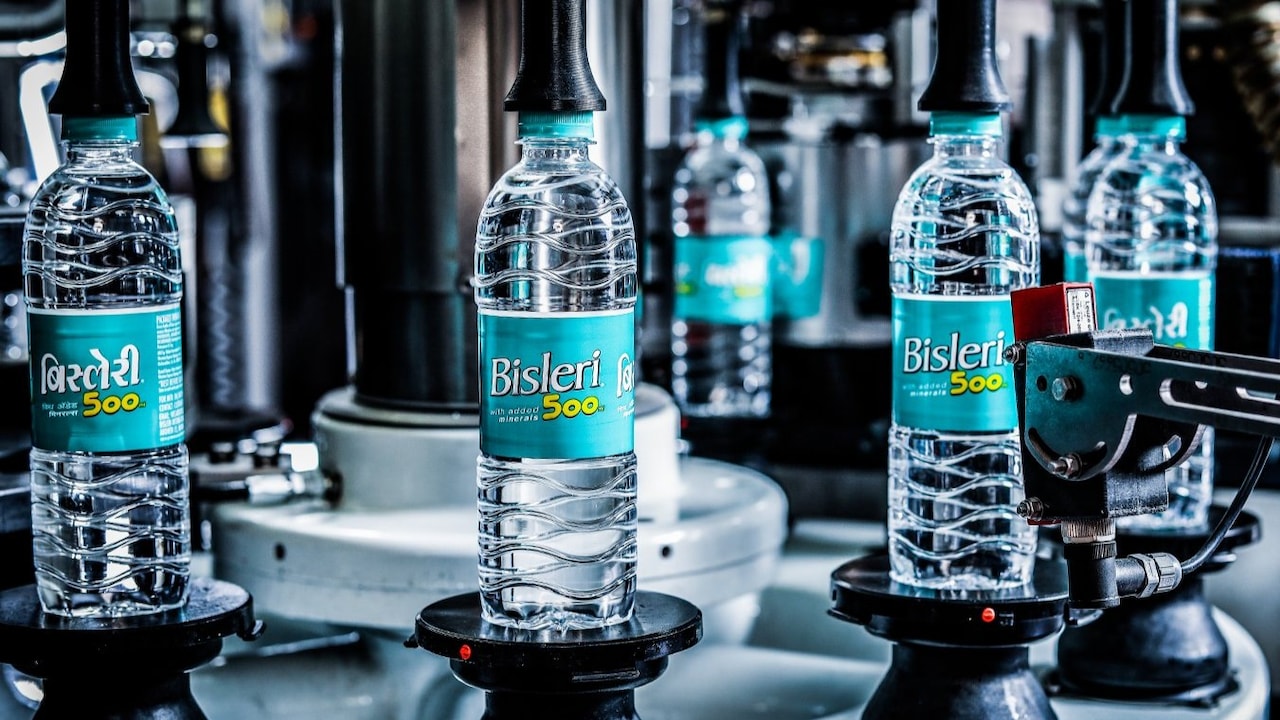
Packaged drinking water maker Bisleri International on Tuesday said the FSSAI scrutiny related to just one batch manufactured at its Goa plant in September 2025, which is no longer in circulation, adding that subsequent testing found bromate levels in the sample within permissible limits.
The company said all its 143 manufacturing plants remain operational and compliant with FSSAI regulations, with the Goa facility also continuing operations without any suspension order from the regulator.
"Bisleri produces more than 50,000 batches annually. FSSAI's sale prohibition applies only to one Batch GO 270, manufactured in Goa on 27 September 2025. There are no stocks of this batch in the market currently," it said. "The FSSAI has categorically and conclusively clarified on 23rd November 2026 that bromates were found below the permissible limit on re-testing of the above batch sample."
Responding to an FSSAI clarification issued on November 23, Bisleri said the regulatory action related exclusively to batch GO 270, manufactured on September 27, 2025, and that no stocks from the batch were currently available in the market.
The company said FSSAI had clarified that bromate levels detected on retesting the batch sample were below the permissible limit. Separately, it acknowledged that one of six samples tested in a subsequent round had reported polycyclic aromatic hydrocarbons (PAHs) at 0.144 micrograms per litre. Another sample from the same batch had cleared all parameters.
On Sunday, the Food Safety and Standards Authority of India (FSSAI) had said it had sanctioned prosecution against Bisleri International, whose one sample of packaged drinking water failed in lab tests following the detection of bromate beyond permissible limits and, on subsequent testing, polynuclear aromatic hydrocarbons (PAHs).
Bisleri had questioned the laboratory findings, citing discrepancies between test results, and said it has not received any formal notice of the reported regulatory action.
On Monday, FSSAI clarified that, as per the law, the report of the referral lab should be final in case of appeal by food business operators (FBOs). "The order for prohibition of sale was issued to Bisleri International for the Batch No. Go 270. Only one batch was found to be non-compliant. FBO (Bisleri) has been conveyed to conduct root cause analysis."
Bisleri on Tuesday said it had flagged discrepancies in the PAH findings and sought a retest in February 2026. It added that no subsequent samples tested by FSSAI across its plants had reported adverse PAH findings.
The company said samples from subsequent production at the Goa facility had met applicable FSSAI standards and that it would continue to cooperate with the regulator in the matter.
In a statement responding to an FSSAI clarification issued on November 23, the company said the regulatory action related to a single batch, identified as GO 270 and manufactured on September 27, 2025. It said no stock from the batch was currently available in the market.
Bisleri said FSSAI's retesting had established that bromate levels in the sample were below the permissible limit. However, the company acknowledged that one of six samples tested had reported the presence of polycyclic aromatic hydrocarbons (PAHs) at 0.144 micrograms per litre.
According to Bisleri, all six samples initially cleared testing, while a subsequent round of testing found PAHs in one sample from batch GO 270. Another sample from the same batch cleared all parameters.
The company said it had highlighted discrepancies in the findings and requested a retest of the PAH results in February 2026. It added that it would continue to cooperate with the food safety regulator and defend its position in any proceedings.
Bisleri also said no subsequent samples tested by FSSAI across its manufacturing facilities had reported adverse PAH findings.
Seeking to distinguish the regulatory scrutiny of the specific batch from its wider operations, Bisleri said all its 143 manufacturing plants remained operational and compliant with FSSAI regulations.
The company said its Goa facility had not received any direction to suspend operations and that samples from subsequent production had met applicable food safety standards.
Bisleri said it produces more than 50,000 batches annually, arguing that the regulatory action was confined to one batch manufactured more than a year ago.
The development comes amid heightened consumer sensitivity to packaged drinking water quality and regulatory oversight of food and beverage products. The distinction between findings in individual samples and compliance across subsequent production batches is likely to be important for consumer confidence and the company's brand reputation.
Bisleri said it welcomed the regulator's clarification and urged consumers to rely on verified information, adding that it would consider legal action against what it described as false and misleading claims.
Founded more than five decades ago, Bisleri International operates 143 plants and has a distribution network of more than 6,000 distributors and 7,500 distribution trucks across India and the UAE, according to the company.
(Except for the headline, this story has not been edited by NDTV staff and is published from a syndicated feed.)
KioskNews shows a cleaned-up reading view extracted from the publisher’s page — the original always lives on their site, not ours.