The Best Starter Pokémon for Every Generation

Born with Autism (formerly classified as Asperger syndrome), Tyler B. Searle has been obsessed with storytelling since he was old enough to speak. He gravitated towards fairy tales, mythology, the fantasy genre, and animated movies and shows aimed at family audiences. When not writing, Tyler enjoys watching more cartoons and reading fantasy books in his home in Ontario, Canada.
Sign in to your Collider account
The Pokémon franchise has come a long way since the release of Generation I in 1996. Beginning as handheld games for the Nintendo Game Boy, it quickly expanded into a trading card game, manga, and long-running anime, before hitting global markets. Now it is the highest-grossing media franchise in the world, and the original 151 Pokémon have blossomed into over 1000.
One thing that has remained consistent is that, when you start a new game, your first Pokémon is chosen from a trio of Fire, Water, and Grass-types, known by fans as Starter Pokémon. Though you are not required to keep them for the entirety of your journey, each is designed to be well-rounded and dependable, so it's never a bad idea to hang onto them. However, one Starter tends to stand above the other three in its respective home region, be it because of its match-ups against gyms, new types and attacks upon evolution, or how its stats are distributed.
Gen I: Venusaur — Pokédex Number 0003, "The Seed Pokémon"

No Starter trio is more iconic than the originals from Kanto, thanks to their simple yet ingenious designs that combined fantastical elements with real-life animals, and the fact that Ash Ketchum, the protagonist of the anime, acquired all three on his journey. It's a tough call to pick one over the others, but in the end, it's the Poison and Grass-type Bulbasaur, and its final evolution Venusar, that wins out.
Venusaur is an all-around solid pick for a Kanto run, breezing through the first two gyms, holding its own against Giovanni's Ground-types, and offering good defensive matchups against the Electric and Grass-type gyms, and Bruno's Fighting-types in the Elite Four. The best thing about it, however, is that it very early learns the move Sleep Powder in the remakes, Pokémon FireRed and LeafGreen, a near-guaranteed move that puts the opponent to sleep and allows Venusaur to set up all sorts of combos for the rest of the team. Even if you're playing the original Pokémon Red and Green/Blue, it still gets Leech Seed and Poison Powder for whittling down enemy health, and a good mix of defense and offensive capabilities.
Gen II: Typhlosion — Pokédex Number 0157, "The Volcano Pokémon"

Pokémon Gold and Silver added a lot to the franchise, including a day/night cycle, breeding, friendship evolutions, the Steel and Dark types, and an expansive post-game that involved going back to Kanto. As for the Starters, they presented the first trio to be monotypes even in their final forms, and though still not as popular as other starter trios, they have their fans. As for who is the best, there's no contest: Typhlosion, the final form of Cyndaquil.
Typhlosion's stats are identical to Charizard's, meaning it's a fast, hard-hitting Special attacker. It can make short work of the Bug and Steel-type gyms, handle the Bug-types on Koga's Poison team, and blast through most Team Rocket fights with brute force alone, especially if given Sunny Day to boost its Fire-type attacks. Its coverage isn't the best, so it is a bit of a one-trick pony, but it does that trick really well, especially since Fire-types are comparatively rare in Johto, whereas there are lots of Water and Grass-types to pick up.
Gen III: Swampert — Pokédex Number 0260, "The Mud Fish Pokémon"

Gen III was a big leap forward for the franchise, making use of the Game Boy Advance's better graphics to bring to life the tropical Hoenn region. It introduced mechanics like natures and abilities, which, for the Starters, meant abilities that boost their primary attacks when reduced to 30% health. All three Hoenn starters are fantastic choices, but it's hard to debate that Mudkip's final form, Swampert, doesn't rise above the others.
Swampert is a Water and Ground-type, a fantastic combination that means it is only weak to Grass. This typing makes the Rock, Electric, and Fire-type gyms trivial matters, while also weathering battles against Team Aqua and Team Magma. Thanks to good bulk and a wide array of TMs, Swampert can hold its own against the other gym leaders and Elite Four members. In Pokémon Omega Ruby and Alpha Sapphire, Swampert gets a Mega Evolution that boosts its Attack even higher and gives it Swift Swim, turning into a speedy sweeper when in the rain.
Gen IV: Infernape — Pokédex Number 0392, "The Flame Pokémon"

Generation IV is arguably the most important generation outside the first thanks to the physical/special split. This shift added a whole new level of strategy to the game and allowed some Pokémon, like Gyarados, to make use of their best stats when their types previously hindered them. Thus, Sinnoh designed its trio to have stats and moves that make use of this split, and it is best realized in Infernape, the final form of Chimchar.
Infernape's stats are distributed to make it a fast mixed attacker, capable of using special and physical moves in equal measure. Its Fighting-type comes with its second form, Monferno, making it the perfect choice for the Rock, Grass, Steel, and Ice gyms, Aaron's Bug-types in the Elite Four, and a good choice in most Team Galactic fights thanks to their love of Glameow and Bronzor. Finally, Sinnoh has very few Fire-types, even if you play Pokémon Platinum, so having one as versatile as Infernape is a major boon.
Gen V: Emboar — Pokédex Number 0500, "The Mega Fire Pig Pokémon"

Gen V made the bold choice to give the franchise a soft reboot, forcing players to use over 150 new Pokémon for a main playthrough before they could have access to the old ones. Thus, a lot of pressure was put on its Starter trio of Snivy, Tepig, and Oshawott. While fans were not happy that Tepig's final form, Emboar, was the third Fire and Fighting-type combo in three generations, there's no denying how useful it is when traveling through the Unova Region.
Emboar's typing might have been overdone, but it is also the only Unovan Starter to get a second type, granting it far more versatility in battle. It makes short work of the early game Normal and Bug-type gyms, as well as Team Plasma battles, since they use a lot of Normal and Dark-types. The late game sees it defeat the Ice gym and the Dark-type Elite Four League member, and, stat-wise, Emboar's high HP makes up for its comparatively low defenses, making it surprisingly durable.
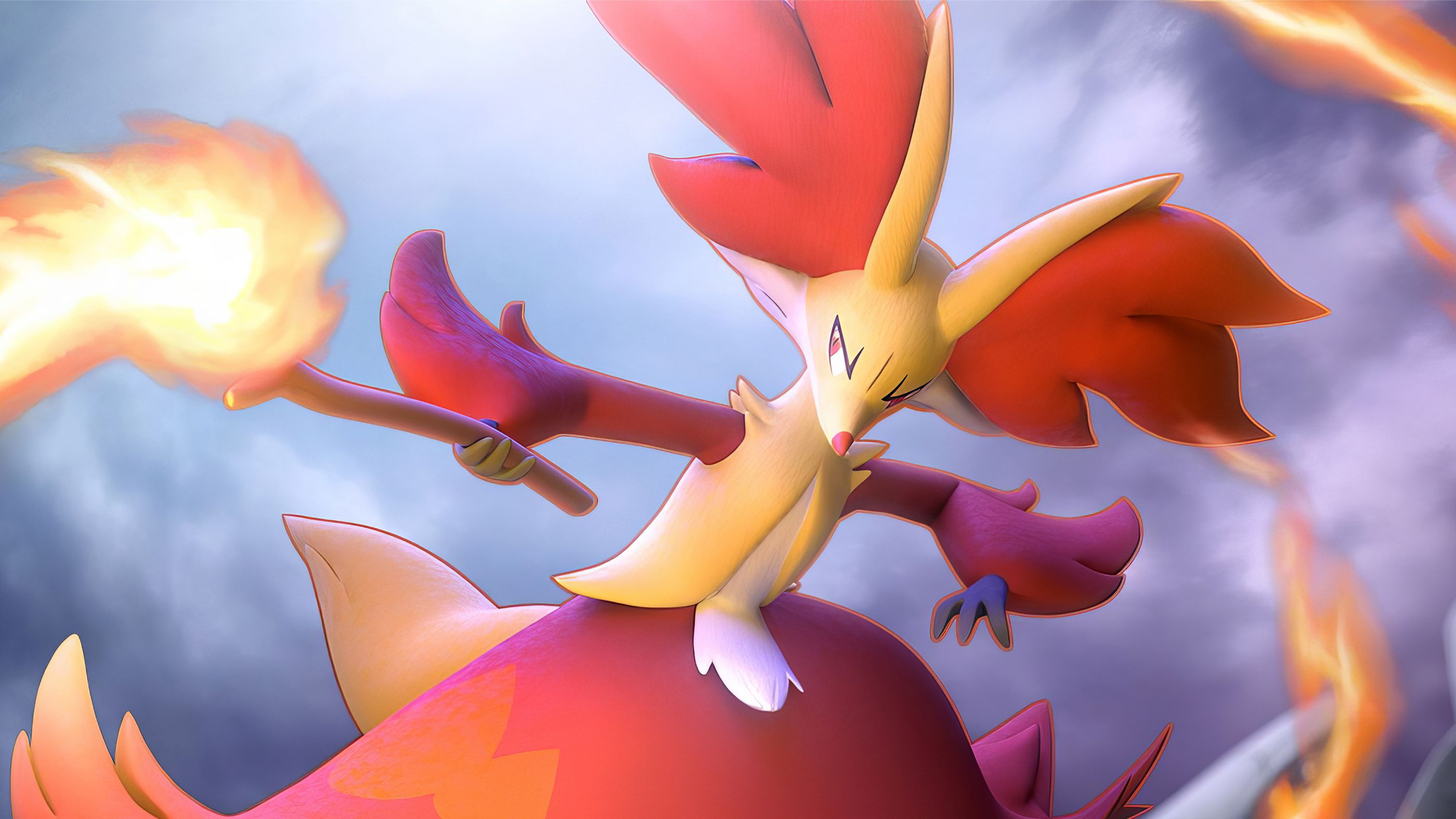
Gen VI: Delphox — Pokédex Number 0655, "The Fox Pokémon"

Gen VI's Kalos region was the first handheld game brought to life in 3D graphics, introducing both Mega Evolution and the new Fairy-type. Though the game's quality is debated to this day, it had a good lineup of new Pokémon, thanks in part to introducing the fewest in any generation, at 72. The starters had an interesting RPG gimmick to them, and while the ninja-like Greninja became one of the most popular Pokémon in the franchise, the best one for exploring Kalos is actually Fennekin's mage-like final form, Delphox.
Fennekin's Fire-type allows it to clear the Bug-type gym, and thanks to getting Psybeam as a Braixen, it can do a bit of work against the Fighting-type one not soon after. Once evolved into Delphox, it gains the Psychic-type, allowing it to clear out Team Flare's numerous Poison-types while burning the Grass and Ice gyms, and the Steel-type member of the league. You also get a free Kanto starter who can eventually Mega Evolve, and Delphox pairs perfectly with a Mega Venusaur, who can take on the Water, Ground, and Rock-types that threaten Delphox.
Gen VII: Primarina — Pokédex Number 0730, "The Soloist Pokémon"

Gen VII really mixed up the franchise by doing away with the traditional gym challenge for Island Challenges that pit trainers against powerful Totem Pokémon who can call for help and transform the match into a 2 v 1. After defeating the Totems, there are the four Island Kahunas, powerful trainers who use Z-crystals to unleash devastating attacks. One might be tempted to take the Fire-type Litten due to its final evolution, Incineroar, but while it does pretty well against the Totem Pokémon, the Water-type Popplio edges it out thanks to its final form, Primarina.
Primarina gains the Fairy-type, and even in its middle form, Brionne, it gains access to the Fairy-type attack Disarming Voice. Not only does this give it an attack that can hit multiple enemies, but it makes Primarina particularly effective against the Totem Raticate in Pokémon Moon, Totem Salazzle or Marowak in Pokémon Ultra Sun and Ultra Moon, and Totem Kommo-o in every game. Moreover, since the Kahunas are Fighting, Rock, Dark, and Ground-type, Primarina is the only starter that has an edge over all of them. It's also just a reliable Pokémon in battle, with enough HP and Special Defense to weather several hits; its signature Sparkling Auria attack is a strong Water move that hits multiple opponents, and in the Ultra games, it gets access to a unique and hard-hitting Z-Move called Oceanic Opera.
Gen VIII: Cinderace — Pokédex Number 0815, "The Striker Pokémon"

It's hard to think of a more contentious generation and region than Gen VIII's Galar. Through a combination of lazy graphics, the removal of half of the Pokédex, and a boring region that plays out pretty much in a straight line, it made for an underwhelming and boring experience, though the new Pokémon and Dynamax mechanic did get some love. The Starters ended up as the first monotype trio since Gen II, and the most popular, Scorbunny, also turned out to be the best, especially when it evolves into Cinderace.
As a Scorbunny, it breezes through the Grass-type gym—the first one you face—and later can resist attacks from the Fairy-type gym and melt the Ice-type one if you're playing Pokémon Shield. Fire is also the perfect type to use against the main antagonist, Steel-type specialist Chairman Rose, as well as Champion Leon's Aegislash and Mr. Rhyme. When compared to the other starters, Cinderace also edges out thanks to its high Speed and Attack, its signature Pyro Ball move being a great physical Fire-type attack, and access to a wide array of TMs for coverage, including U-Turn, Acrobatics, Zen Headbutt, and Gunk Shot.
Gen IX: Skeledirge — Pokédex Number 0911, "The Singer Pokémon"

Gen 9 was the first generation to try its hand at an open world and a non-linear story progression, to mixed results. One place where it succeeded, however, was the Starters, with each one acquiring fans thanks to their charming personalities, dual-type final stages, and gimmicks based around performances. It's a close call between them, but the Fire-type Fuecoco ends up winning thanks to its musically talented final form, Skeledirge.
Fire and Ghost is a very strong combination, giving Skeledirge an edge in many story battles. It can defeat or hold its own against almost every Gym Leader except for the Water specialist Kofu, melts the Steel-type Elite Four member and the Titan Orthworm, resists the Fire, Fairy, and Fighting-type Team Star bases, and is useful against half of Clavell's team. Finally, there is its signature Torch Song attack, a hard-hitting Fire-type move that also increases its Special Attack by one stage, which quickly turns Skeledirge into a steamroller.

Pokémon Horizons
- Release Date
- April 14, 2023
- Network
- TV Tokyo, TV Osaka, TV Aichi, TVh, TVQ, GBS, TSC, Nara Television
- Directors
- Fumihiro Ueno, Hiromichi Matano, Ayumi Moriyama, Yūichi Abe, Junya Koshiba, Hiroyuki Okuno, Masashi Tsukino, Makoto Ooga, Satoshi Saga
- Cast
- Daisuke Namikawa, Mitsuki Saiga, Eiji Wentz, Kenta Miyake, Yuka Terasaki, Kei Shindo, Yu Shimamura, Ayane Sakura, Taku Yashiro, Daiki Yamashita, Eriko Matsui, Ikkyu Juku, Minori Suzuki, Hironori Kondo, Chiaki Kobayashi, Kanade Ueda, Asei Miki, Miki Kousei, Yuki Onodera, yama, Yoshino Aoyama, Kotaro Koizumi, Megumi Okada, Tatsuki Kobe, Ai Satou
- Seasons
- 1
KioskNews shows a cleaned-up reading view extracted from the publisher’s page — the original always lives on their site, not ours.