Red Sea Ships Now Seek Houthis' Clearance By Email Before Sailing: Report
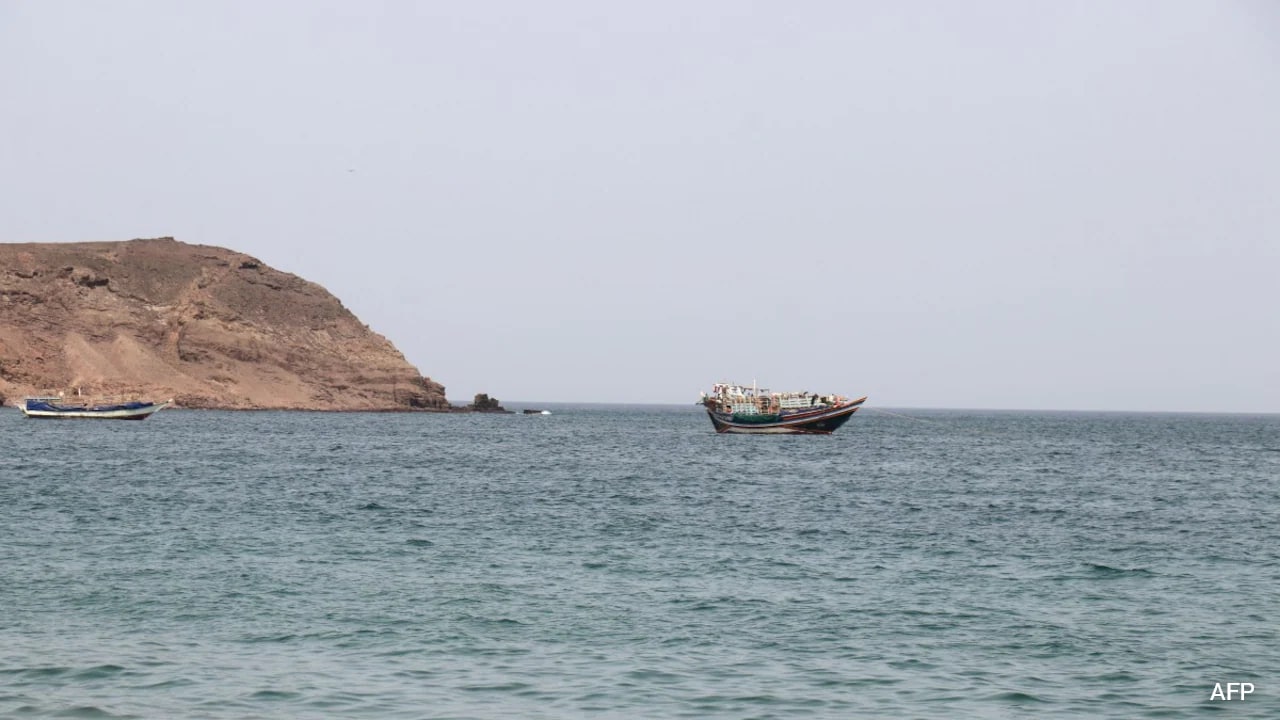
Crossing the Red Sea now comes with an unusual step for some commercial vessels. The vessel operators need to get in touch with the Houthis, an Iran-backed Yemeni group, before setting sail.
Shipping companies are using an informal communication channel to share ship details and seek assurances they will not be targeted, The Wall Street Journal reported.
The development underlines just how much the security situation in the vital waterway has changed, the report added.
How Does The Houthi Email System Work?
Shipping operators can contact the HOCC (Humanitarian Operations Coordination Centre), an organisation the Houthis established in early 2024, with information about the vessel and its planned journey, the report said.
In some cases, ships state that they have no connections to Israel, the US or the UK and ask the Houthis to confirm that they can pass safely. According to the report, responses arrive within about 24 hours.
The Houthis have also issued specific instructions to some vessels after reviewing their requests.
The unusual arrangement is not just being discussed in theory. One such email application, sent on August 16, included details about the vessel and its planned voyage, the report added.
It involved the Chinese container ship Zhong Cheng Chang Ling. The group granted a seven-day transit permit and instructed the vessel to keep its Automatic Identification System (AIS) switched on during the journey, the report said. For those who don't know, AIS broadcasts information such as a ship's identity, location, speed, and course, allowing vessels to be tracked.
Why Are Ships Contacting The Houthis?
The unusual communication channel has emerged because shipping companies are weighing two risks: taking the shorter route through the Red Sea or avoiding the region altogether.
The Red Sea and the Bab el-Mandeb Strait are key links between the Indian Ocean and the Suez Canal. The Houthi attacks on commercial shipping have made the route significantly more dangerous.
Some operators have been forced to consider longer alternatives, including sailing around the Cape of Good Hope.
Not Every Ship Is Using The System
The email channel does not mean shipping companies are required to obtain Houthi approval before entering the Red Sea.
The Houthis have said that vessels without links to the US, UK or Israel are permitted to pass. Some operators have contacted the HOCC as an added precaution, particularly after the escalation involving Saudi Arabia, the report added.
The Houthis rule over most of northwest Yemen and have disrupted global trade and energy markets with attacks on cargo ships and tankers in the Red Sea.
The UN brokered a truce between the warring sides in 2022, but that collapsed in July this year. This has triggered a major resurgence of hostilities between the Iran-backed Houthis and Saudi-led coalition forces.
KioskNews shows a cleaned-up reading view extracted from the publisher’s page — the original always lives on their site, not ours.