Australia confirms H5N1 bird flu case in fur seal
Australia yesterday confirmed its first case of H5N1 bird flu in a mammal, with the deadly virus found in a long-nosed fur seal in South Australia.
Australia has been grappling with rising cases of the highly pathogenic avian influenza after it landed in the country in June. The country’s first mass seabird deaths from the virus occurred this month, marking an escalation of the outbreak that began after the virus was first detected in migratory seabirds before spreading to native species.
South Australian authorities confirmed the nation’s first mammalian detection in the seal, found at the coastal town of Beachport, about 310 km south of Adelaide, the state capital.
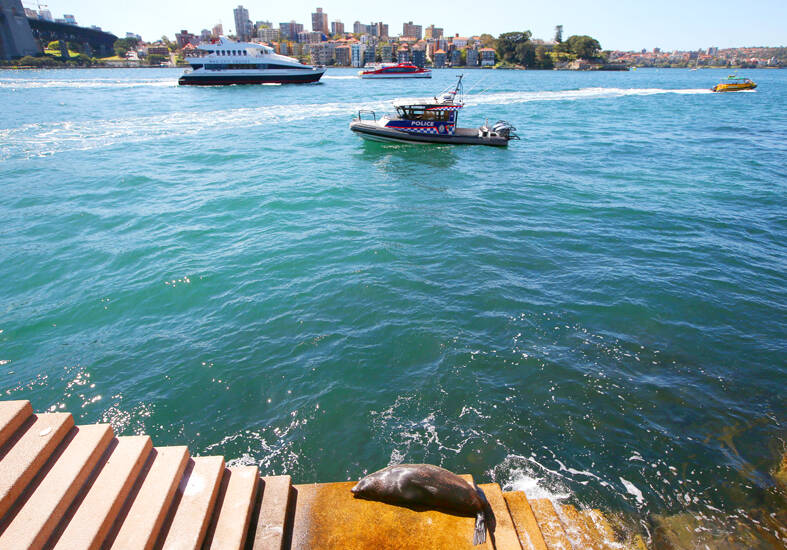
A fur seal suns itself on harbor steps in front of the Sydney Opera House in Australia on Oct. 2, 2014.
Photo: AP
The seal, one of an estimated population of 100,000 in the state’s waters, was found dead with no signs of injury, the authorities said.
Its death “does not appear to be associated with other sick or dead marine mammals,” Australian Minister for Agriculture, Fisheries and Forestry Julie Collins said in televised remarks.
“Once the H5 bird flu is spreading in the natural environment it is not possible to avoid significant losses,” she said.
Australia was the last continent to report bird flu, although the virus was detected late last year on the subantarctic territory of Heard Island. More than 13,000 baby seals were killed by the virus on the island, local media reported.
Seals are at high risk of contracting the virus because they live near wild birds on rocky outcrops on the coast, South Australia Department of Primary Industries and Regions Chief Veterinary Officer Skye Fruean said.
“They would be coming across, no doubt, really high levels of the virus in their environment,” Fruean said in televised remarks.
H5N1 has not shown up in Australia’s poultry or agriculture, according to the federal government, which on Friday said that 297 cases had been confirmed nationwide.
KioskNews shows a cleaned-up reading view extracted from the publisher’s page — the original always lives on their site, not ours.