Hong Kong’s 5-year plan balances markets, planning amid global shifts: minister
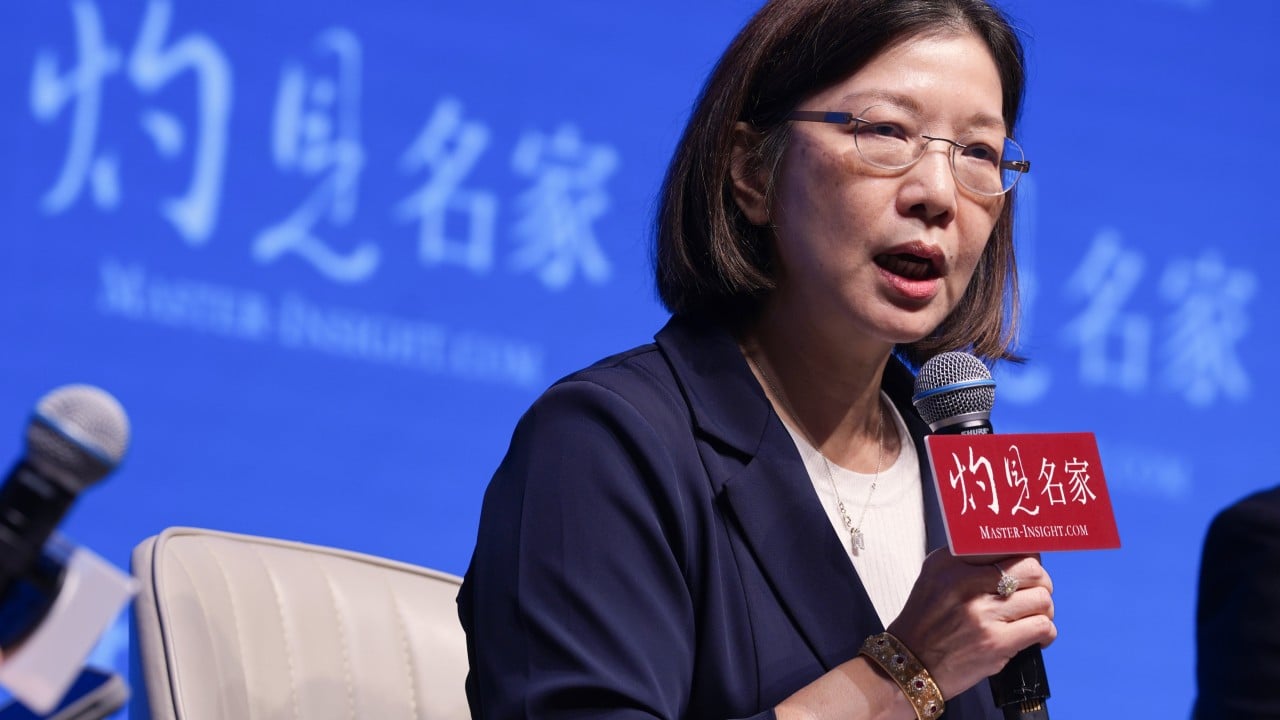
Hong Kong’s first five-year plan aims to steer the city through an “ever polarising” global landscape by balancing free-market principles with government planning, the minister responsible for its drafting has said, while a political veteran has warned of further disruption from Sino-US rivalry.
Speaking during a panel discussion on the plan at a forum on Tuesday, Secretary for Constitutional and Mainland Affairs Janice Tse Siu-wa said Hong Kong, as a small economy facing rapid technological change, could not “fight alone” and should strengthen its connections with mainland China.
“I think Hong Kong had developed well in the past with a free-market model where the government adopts a positive, non-interventionist attitude,” said Tse, who was tasked by Chief Executive John Lee Ka-chiu with mapping out the blueprint.
“But nowadays, when the competition is ever polarising and the winner takes all, could start-ups grow big easily? In such a red ocean market, can we really succeed by going it alone?
“Therefore, without planning, we cannot achieve long-term goals. We can no longer afford to focus solely on short-term gains at the expense of the long term.”
Hong Kong unveiled its first five-year plan in September. The blueprint aims to align the city’s development with China’s 15th five-year plan, with priorities including finance, innovation and technology, accelerating the Northern Metropolis megaproject and improving livelihoods.
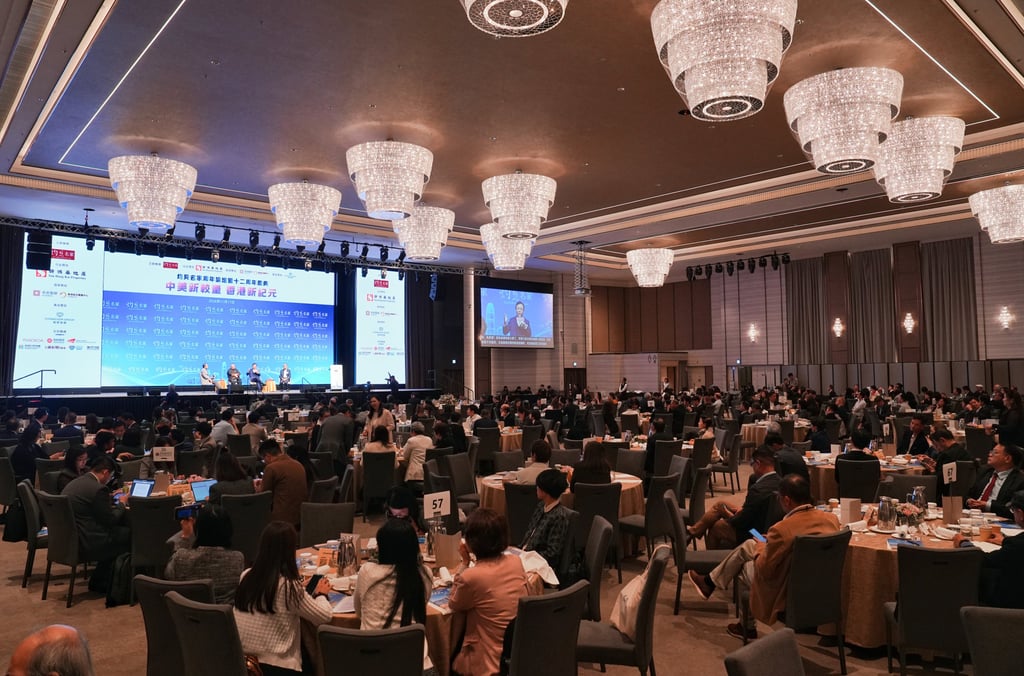
Tuesday’s forum, organised by an online media outlet, focused on China-US rivalry and Hong Kong’s changing development landscape. It also featured Tam Yiu-chung, a former Hong Kong member of the National People’s Congress Standing Committee, the country’s top legislative body.
Tam said relations between China and the US remained turbulent despite frequent meetings between their leaders this year.
He warned that President Donald Trump’s pragmatic approach to China could be constrained by Congress after the Democrats won control of both the House of Representatives and the Senate in the recent midterm elections.
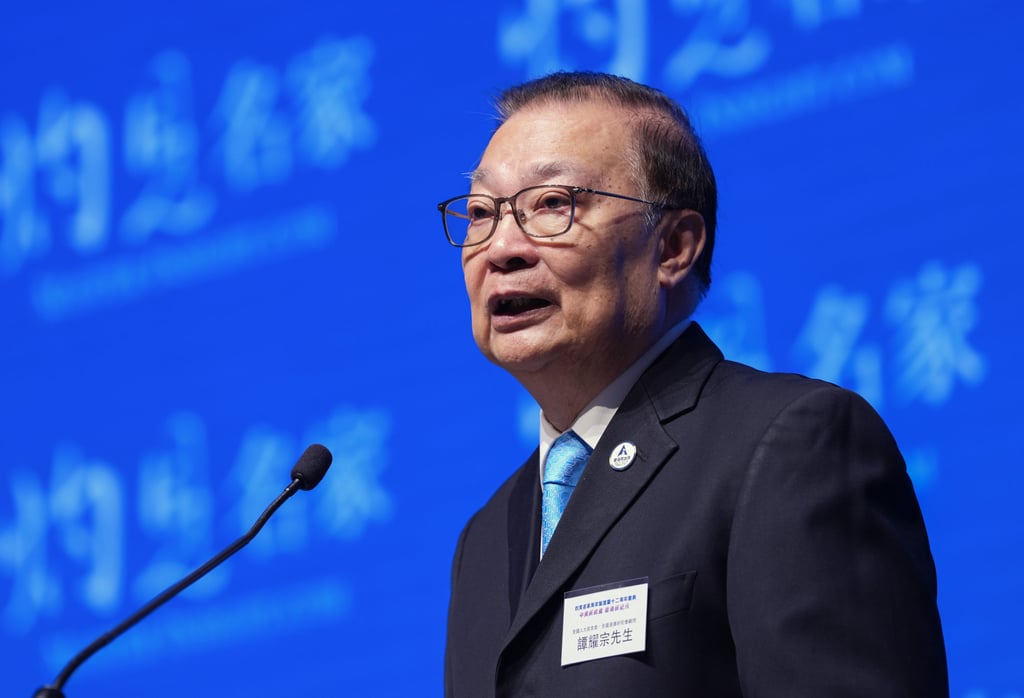
“Since the inherent structural contradictions between China and the US have not fundamentally changed, the complex economic and trade competition, as well as the strategic rivalry, between the two countries continues to manifest across all levels,” said Tam, now a consultant to the Chinese Association of Hong Kong and Macau Studies, a semi-official think tank.
Amid the disruption caused by Sino-US competition, he said Hong Kong should safeguard national security while using its unique position as a “superconnector” between China and the rest of the world.
In a video address to the forum, Lee said Hong Kong should not merely react to geopolitical developments but carve out a distinct role amid the turbulence.
“Hong Kong has succeeded in transforming itself multiple times, and the key lies in adapting to the times and proactively seeking change,” he said.
“I believe that as long as we steadfastly leverage the advantages of ‘One Country, Two Systems,’ seize the opportunities arising from national development, and uphold fundamental principles while breaking new ground, Hong Kong will certainly scale new heights under the new circumstances.”
During the panel discussion with Tse, Professor Liu Ningrong, a deputy vice-president at City University of Hong Kong who oversees international strategy, said mainland state-owned enterprises invited to participate in the Northern Metropolis commonly complained that the government was “too calculating” in the terms it offered.
Liu added that state-owned enterprises also needed to generate returns and urged officials to abandon their traditional focus on revenue from land sales to attract investors.
The Northern Metropolis is a government megaproject to transform 300,000 hectares of land near the mainland border into a technology and housing hub.
Technology and innovation sector lawmaker Duncan Chiu echoed Liu’s views, calling on the government to foster new pillar industries in the Northern Metropolis by abandoning its traditional “property mindset”.
In response, Tse rejected suggestions that the government was seeking to profit from land sales in the area. But she said the development should still follow a market-orientated approach, in keeping with Hong Kong’s respect for market mechanisms.
“Although the Hong Kong government is guiding the development, we are not setting the details for this development ourselves,” she said.
“Out of the five binding targets [in the first five-year plan], four are related to environmental protection, and the remaining one is simply about how much land the government will prepare in the Northern Metropolis – rather than stipulating how much land we will allocate to whom. That is where the balance lies.”
KioskNews shows a cleaned-up reading view extracted from the publisher’s page — the original always lives on their site, not ours.