Central Report Exposes Health Gaps In Madhya Pradesh's Balaghat Child Deaths
When Rahul Gandhi questioned the deaths of children in Madhya Pradesh's Balaghat, the state government dismissed his visit as "political tourism". The Chief Minister spoke of leaders "hungry for votes". The Deputy Chief Minister and Health Minister pointed to a once "Bimaru", or ailing, state now ranking first in the country in several areas.
But the central government's own investigation records a troubling reality, critical disease-surveillance posts were vacant, children's nutrition records did not consistently match conditions found in their homes, and the worst-affected village had been without an ASHA community health worker for more than a year.
NDTV is in possession of the National Joint Outbreak Response Team's final report. It documents serious weaknesses in the health system responsible for identifying danger early, tracking illness and ensuring timely care.
"Thus, overall Disease surveillance system is much weakened," the central team concluded.
For families who lost children, that assessment carries a human cost.
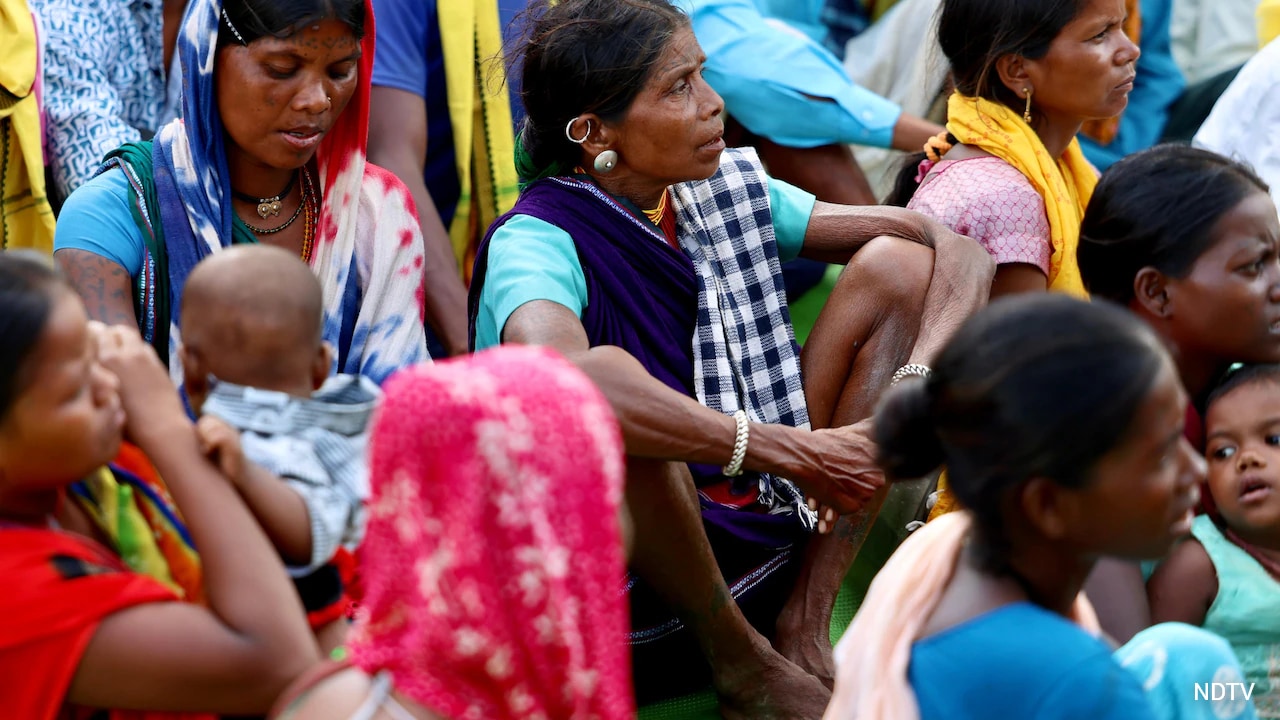
Bamin Baiga had six children. One daughter died. Bamin told NDTV that the child developed a rash, a condition locally described as "Mata Aana". The family first took her to a hospital in Baihar, then to Balaghat, where she was treated for seven days. They subsequently brought her home. She died there.
Bamin wants a hospital in Jangla village.
Hirondi told NDTV that their child suffered from jaundice, fever and a rash. The family alleged that no government doctor visited their home during the illness, forcing them to obtain medicines and syrups from a private doctor.
Other affected relatives told NDTV on camera that they had received no compensation and that no official had visited their homes.
The central report identifies serious gaps in the machinery meant to support such families. The District Epidemiologist's post was vacant. There was no District Public Health Laboratory. The Microbiologist's post was also vacant.
The district unit responsible for determining where disease was spreading, how quickly it was moving and who faced the greatest risk was itself severely understaffed.
Operating under the Integrated Disease Surveillance Programme, or IDSP, the District Surveillance Unit was functioning with limited personnel and was "largely dependent on Data Manager", the report states.
The team also questioned the arrangement for the District Surveillance Officer's charge, saying it "was not well addressed".
At village level, the gaps were equally serious. "The most affected village has been without an ASHA for more than one year," the report says, describing this as a major obstacle to active case detection, community mobilisation and follow-up.
Birsa block also faced significant staff shortages. Several sanctioned positions were being managed through additional-charge arrangements involving multipurpose health workers and supervisors.
"These human resource constraints are affecting routine surveillance as well as the ability to mount a timely response during outbreaks," the team concluded.
Even obtaining a timely, reconciled patient list proved challenging.
Investigators found major gaps in collecting, reporting and sharing information between surveillance, laboratory, immunisation and nutrition programmes. Different teams had visited the affected areas, but the district had no readily available common repository of their findings and recommendations.
That weakened the administration's ability to track what had been recommended, what had been implemented and what remained pending.
An outbreak record generated on August 18 documented 65 cases. The broader field list contained 196 reported patients. Of the 196 reported patients, 156 nearly 80 per cent were aged 10 or younger. Of these, 108 were aged five or younger. The laboratory table recorded 25 measles-positive results from 64 samples. Separately, 27 of 32 malaria blood slides examined were positive.
Twelve patients were also reported to have both measles and malaria. Dengue, chikungunya and enterovirus were detected in other samples, pointing to the need for a response covering multiple infections.
The report does not identify a single infection as the cause of every illness or death. But one of its detailed death reviews records a particularly distressing case.
A girl from Bondari, whose age was recorded as three, weighed just 4.9 kg when admitted to Balaghat District Hospital on August 9. Her oxygen saturation was 88 per cent. She had severe breathing difficulties, and her measurements indicated severe acute malnutrition.
She died on August 11.
Two other children whose deaths were investigated died before accessing hospital care. Their case histories recorded delays in seeking formal treatment, reliance on traditional healers and incomplete follow-through after advice from community health workers.
The team recommended a referral system that goes beyond advising a family to visit a hospital. It should verify whether the child reaches the facility, receives treatment and is subsequently followed up.
The systems meant to identify malnutrition early were also falling short.
Findings from earlier teams, reproduced in the report, recorded visible wasting or severe wasting among children in approximately 20-25 per cent of households visited. Only approximately 30-35 per cent of children assessed were found enrolled in the Poshan Tracker. Physical measurements entered in the system did not consistently match measurements taken during household verification. Weekly weighing was not being conducted regularly either. The records and monitoring intended to flag a child's deteriorating nutritional condition were themselves unreliable.
Vaccination protection was incomplete.
For April 2025-March 2026, the recorded coverage of the first measles-rubella vaccine dose in Baihar was 51 per cent, while second-dose coverage was 49 per cent. In Birsa, the corresponding figures were 64.8 per cent and 65 per cent.
Figures for April-July 2026 showed improvement, but Birsa's first-dose coverage remained at 70.4 per cent against the reported target, with full immunisation coverage at 70.2 per cent.
The central team identified vaccination gaps and malnutrition as important vulnerabilities during the outbreak.
The timing of the report is significant. Field investigations were conducted between August 13 and 18. On September 16, Madhya Pradesh's National Health Mission forwarded the final report to the Balaghat Collector, seeking necessary action and a point-wise action-taken report.
The findings were therefore formally before the administration more than two weeks before Rahul Gandhi's October 1 visit.
At Jagla village in the Baihar assembly constituency, Rahul Gandhi sat on the ground with Baiga families and spent approximately half an hour hearing their accounts. "There is a massive governance failure in Madhya Pradesh; the government has failed," he said.
He accused both the Centre and the state government of abandoning tribal communities in the heart of India. He linked the deaths to disease and malnutrition and alleged that all the children had died because of malnutrition.
Though the NJORT report does not establish that blanket attribution. It documents different infections, nutritional vulnerability and delays in accessing care, while calling for further verification of mortality records.
Chief Minister Mohan Yadav later took an indirect swipe at the visit, saying that with Naxalites eliminated from the state, leaders "hungry for votes" were arriving in Balaghat.
"Why didn't you come to Balaghat and show us what you could do when your government was in power?" he said.
The government has argued that it inherited longstanding problems. Deputy Chief Minister and Health Minister Rajendra Shukla defended its response while describing Gandhi's visit as "political tourism".
He cited visits by the Chief Minister and other ministers, the posting of four Block Women Development Officers and work to establish 14 sub-health centres and community health centres in the region.
The central team, too, acknowledged that Balaghat was declared Naxal-free in December 2025. Its investigation nevertheless found serious deficiencies in health services months later.
Its urgent recommendations included reconciling reported deaths within 48-72 hours, creating a single district patient database, actively searching for cases, closing vaccination gaps, strengthening nutrition services and ensuring adequate staff, medicines, diagnostics, oxygen and referral transport.
The questions for the government remain specific. Why were the epidemiologist's and microbiologist's posts vacant? Why had the worst-affected village gone without an ASHA for more than a year? Why did children's nutrition records not consistently match their actual condition? And what changed after the report was forwarded on September 16?
In Balaghat, there are the government's claims of achievement and the findings of the Centre's own investigation. Between them are families whose children will not return.
KioskNews shows a cleaned-up reading view extracted from the publisher’s page — the original always lives on their site, not ours.