‘Flimsy excuses’: Opposition hits out at Election Commission over refusal to share details on SIR software
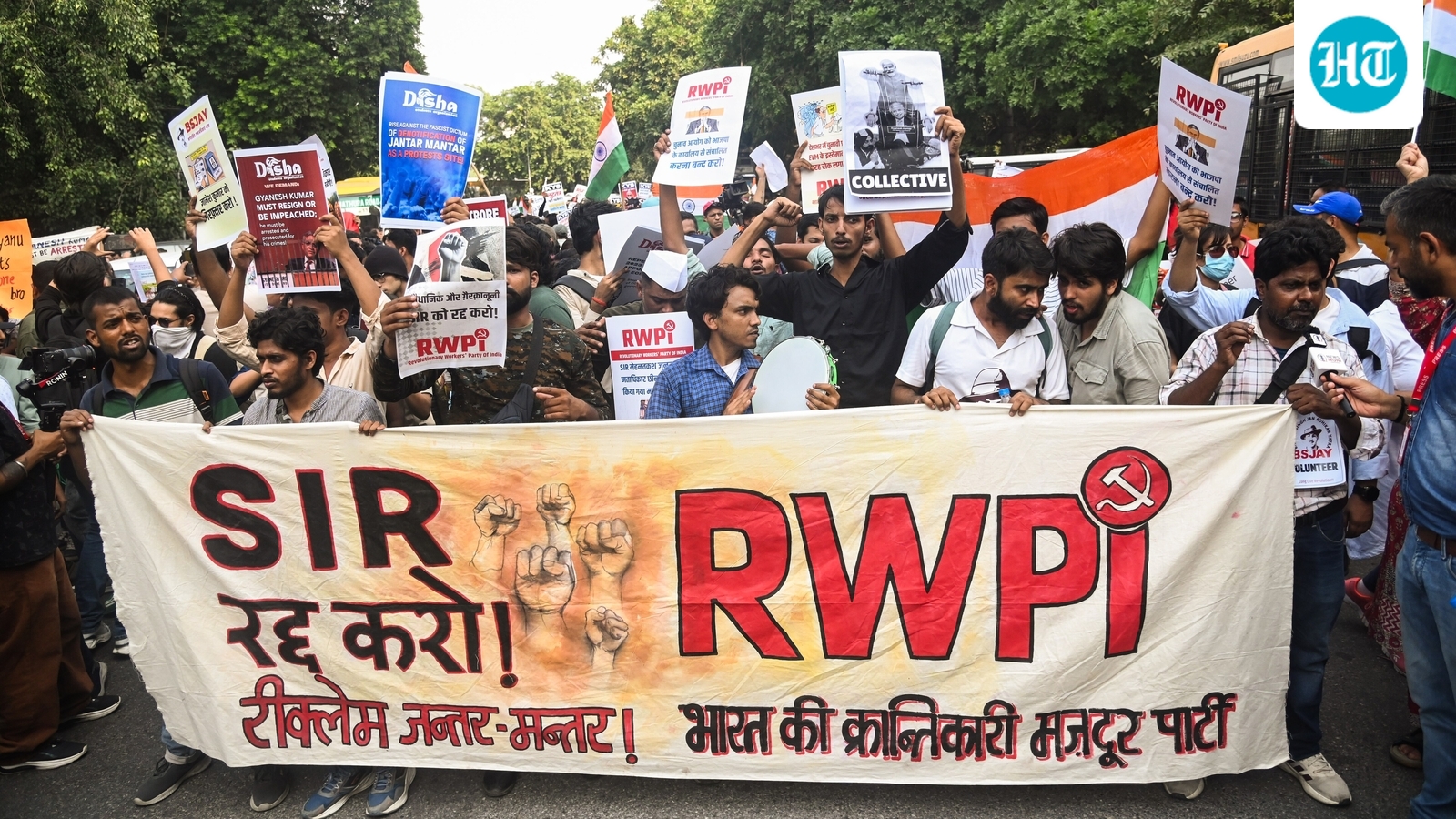
The Opposition has alleged that the lack of transparency around the software used to flag errors and anomalies in voter rolls during the Special Intensive Revision (SIR) has raised several questions for the Election Commission (EC) and dented public trust in the entire process.
Congress general secretary Jairam Ramesh on Sunday alleged that the poll body’s refusal to share details on the ECINET software “reveals the reality of the massive, centralised manipulation that has taken place”. Party leader Pawan Khera hit out at Chief Election Commissioner (CEC) Gyanesh Kumar for “blocking transparency” in the electoral process.
Trinamool Congress (TMC) leader and Rajya Sabha MP Menaka Guruswamy sought to know what the poll body was “hiding”.
Also read | Details of software used in SIR exempt from RTI, Election Commission cites 'trade secrets'
The three opposition leaders made the remarks while referring to an HT report that the EC has declined to disclose the name and version of the software it used to identify errors and anomalies in voter rolls during the SIR exercise. The poll body has claimed the information relates to “commercial confidence, trade secrets and intellectual property” and is exempt under the Right to Information (RTI) Act.
There was no immediate reaction from the EC and the BJP at the time of filing this report but both have earlier denied any wrongdoing in the revision of the electoral rolls.
“The Election Commission of India continues to hide information about the controversial ECINET software at the heart of the disastrous SIR, that has been used to centralise manipulation of the electoral rolls. Today, a leading national daily revealed that the ECI has refused to provide information on the software being used in the SIR in its response to a Right to Information (RTI) application. Using flimsy excuses, the ECI has refused to name the software being used in the SIR, or confirm whether AI is being used and what safeguards are in place,” Ramesh said on X as he shared the HT report.
The Congress leader said “the lack of transparency around the ECINET software and the use of AI has damaged the credibility of the entire process among citizens”. “The ECI is repeatedly refusing to provide this information because it will reveal the reality of the massive, centralised manipulation that has taken place,” he added.
He also questioned why the poll body had not publicly disclosed that the software was developed by Tata Consultancy Services (TCS), which, he claimed, emerged through the company’s disclosures. “Why has the ECI repeatedly denied the use of AI in the SIR and electoral roll revision, when it is clearly being used?”
Also read | RTI reveals Cabinet Secretariat sent election commissioners’ letters to CEC Gyanesh Kumar
“The ECINET software and the IT Division of the ECI were the focus of several objections raised by Election Commissioners Sukhbir Singh Sandhu and Vivek Joshi. The complaints even reached the Department of Personnel and Training (DoPT), which comes under the Prime Minister himself. The public knows that massive manipulation has taken place. Gyanesh Kumar must go. The SIR must be suspended forthwith,” he said.
Khera also targeted CEC Kumar over the issue. “Why is Gyanesh Kumar Gupta blocking transparency in the electoral process as though it were evidence from a crime scene and he were the criminal?” he said on social media.
He alleged the CEC had subverted democracy and said the truth could no longer be concealed.
Guruswamy also slammed the poll body over the report. “Utterly ridiculous! What is the ECI hiding???” she wrote on X.
On Sunday, HT reported that the EC also said “no new software has been developed or procured for the SIR exercise”, and that electoral registration officers (EROs) decide on the inclusion or exclusion of an elector “on the basis of facts and records”.
Explained | How ECI identifies, removes duplicate electoral roll entries
The reply, dated October 16, came in response to an RTI application filed by MA Mujeeb Ayyub, a social activist based in Karimnagar, Telangana.
Ayyub sought the name and version of software, application or AI platform used to detect errors or inconsistencies in voter data; whether such a system automatically flags records for verification, correction or deletion, and the workflow that follows; whether AI, machine learning, predictive analytics or automated decision support tools were used at any stage; the safeguards against false positives and wrongful flagging of genuine electors; and the authority that reviews or approves flagged anomalies before action is taken on a voter’s record.
In response to Ayyub’s first question, the ECI invoked Section 8(1)(d) of the RTI Act, which exempts information involving commercial confidence, trade secrets or intellectual property, the disclosure of which would harm a third party’s competitive position.
Regarding the queries covering automatic flagging, the use of AI or ML, and safeguards against wrongful flagging, the commission said the information sought was a “clarification” that does not fall within the definition of “information” under Section 2(f) of the Act.
KioskNews shows a cleaned-up reading view extracted from the publisher’s page — the original always lives on their site, not ours.