Rupee much more flexible now, FX rate should be first line of defence: IMF’s Srinivasan
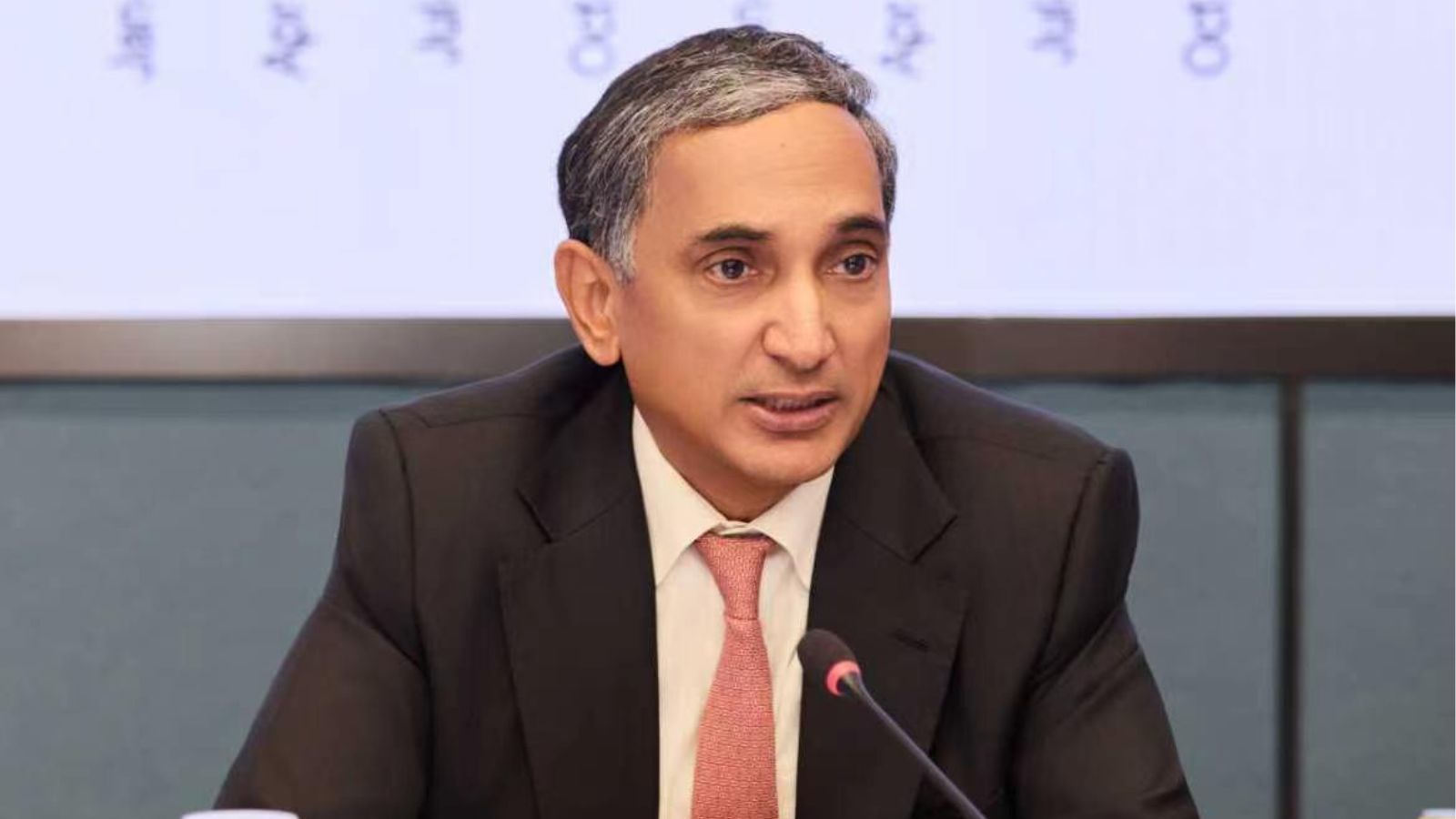
There has been “much more flexibility” in the rupee’s exchange rate after its ‘de facto’ arrangement was reclassified last year as ‘crawl-like’ from ‘stabilised’, Krishna Srinivasan, Director of the International Monetary Fund’s (IMF) Asia and Pacific Department, said.
While deferring to the Fund’s Article IV consultation team and its ‘mechanical’ exercise on the exchange rate, Srinivasan told The Indian Express in an interview that allowing the exchange rate to move is “better”, with interventions by many Asian countries not providing “much by way of relief”. He also discussed the importance of labour reskilling and Asia’s demographics. Edited excerpts:
The APAC regional economic outlook warns that creating jobs through the export-led, manufacturing model is becoming harder. With youth unemployment in the region rather high, what should authorities do amid AI advancements?
Some of the work we have done says countries in Asia trade a lot with each other when it comes to intermediate goods, because they’re part of global and regional supply chains. But when it comes to final goods, there’s very little intra-regional trade – it’s only 30% compared to 60% in the EU and North America. So, there’s potential there to have greater integration, which provides support for manufacturing-led exports and manufacturing activity, which will create jobs.
Our work on AI shows that since ChatGPT was launched, in sectors that are relatively more exposed to AI, labour demand has come down by 10% and stabilised – so it’s a reshaping of jobs rather than disappearance.
A lot of manufacturing now also involves services. And whether you focus on manufacturing or services, what’s important is bridging the skills gap. So, a lot of emphasis needs to be placed on what is required for the jobs of tomorrow and what is being produced in terms of people coming out of college. The skills mismatch needs to be addressed to make sure that the people joining the labour force get jobs. And for India, that number could be 150 million to 300 million between now and 2050.
So, it can’t be just about creating a lot of jobs right now but also making them AI proof.
Story continues below this ad
I don’t know what you mean by AI proof because our study shows that if employees embrace AI, then there are employers willing to employ you. That’s what I mean by saying you have to reskill.
By AI proof I mean jobs that are not at risk. For instance, the Chief Economic Adviser mentioned recently that youngsters should be willing to pursue trade skills.
I think I agree with him. As per another study of ours, those skilled and benefitting from AI will get an income and generate demand for services, be it carpenters or drivers. So, that will be an important source of demand for these skills which Anantha (CEA V Anantha Nageswaran) talked about. But even those jobs, at some point, will be affected by AI.
It’s important that we emphasise reskilling and retooling. I often tell people about Singapore, which has a model whereby the government asks employers what kind of skills they want and provides an incentive to hire employees who are retooling themselves for the skills that are wanted. Sure, Singapore has the fiscal space to do it, not everybody does. But sometimes it happens organically: in the dot-com boom, India produced so many people who could code as ITIs (information technology institutes) mushroomed everywhere.
Story continues below this ad
The world has gone from benefiting from China’s low prices to feeling threatened by its overcapacity. With exports driving its growth, what risk could a weaker China pose?
China has relied on investment and export-led growth for a long period of time and it needs to rebalance towards greater consumption demand. Our estimate for long-term growth in China is 3.5%. If China rebalances towards greater consumption, growth could be stronger and more durable.
For every 1 percentage point change in China’s growth, the impact on the rest of the emerging market is about 0.3 percentage points over the medium-term. We have documented the fact that a lot of the overcapacity also reflects some resource misallocation.
Is Asia’s demographic dividend window closing faster than perhaps median ages would suggest?
Story continues below this ad
When it comes to demographics, there’s not one Asia, but three. The first is the early dividend countries, like Nepal and Philippines, where the labour force is young and growing. Then you have the late dividend countries, like India and Indonesia, and then the post-dividend countries like China and Japan. In an ideal world, labour could go from surplus to deficit countries. That’s not happening.
But it’s not just about how many people are there in the workforce; it’s more about are they skilled enough for the new world. What we find is that for the young and educated population, unemployment is even higher. That tells you there is a skill mismatch.
The point which we would like to underscore is that we have to think more holistically about what we are producing in our universities. If you address that well, then you can have the dividends. If you don’t, it could be a drag.
Even if the government and universities proactively approach reskilling, wouldn’t it take anywhere between 5-10 years?
Story continues below this ad
I won’t put a number on it. People can be quite adaptive; if they know what kind of skills are needed, they will adapt. We saw this during the dot-com boom – there were institutes which came up to cater to what IT companies were looking for. Similarly, if there’s a good understanding of what is needed, then you can do it quite quickly. I would not focus on whether the college curriculums should change. There could be other substitutes, such as vocational training.
The IMF and India haven’t always seen eye to eye on the exchange rate policy. Last year, it was changed to crawl-like. What do you make of the RBI’s recent regulatory measures to make hedging more expensive?
One has to study some of these measures deeper and see whether they’re having the right impact or not. Generally speaking, given the shock and the fact that India is an energy importer, we would like to see the exchange rate be the first line of defence. Our general advice is to not protect prices because they are the signalling mechanism. You can also think of how to liberalise tariffs and non-tariff barriers so that there’s an offsetting force.
Of course, there are conditions where if the movement is very disorderly, then you can think of some kind of an intervention. But the way we see it as right now, the currency mismatches are not large, the market is reasonably deep. Many countries in Asia have intervened and it has not provided much by way of relief. So, allowing it to move is better and to keep your reserves as a buffer against future shocks.
Story continues below this ad
So, the exchange rate does not fit the crawl-like arrangement definition.
They have allowed the exchange rate to move… There is definitely much more flexibility in the exchange rate, no question about that.
The IMF’s Article IV team will look at that (exchange rate classification). It’s a very mechanical exercise. But the point I want to make is that the exchange rate has been a lot flexible since the time when that assessment was made.
You have called India’s GDP revisions as being consistent with the IMF’s advice and good practices. Can the national accounts data expect a better grade than C?
Story continues below this ad
My sense is the revisions broadly reflect the recommendations we’ve been making. In terms of the grade, that is a question for the Article IV team. They’ll do a holistic assessment of the whole framework.
KioskNews shows a cleaned-up reading view extracted from the publisher’s page — the original always lives on their site, not ours.