Okowa wins re-election to ICJ after third-round vote
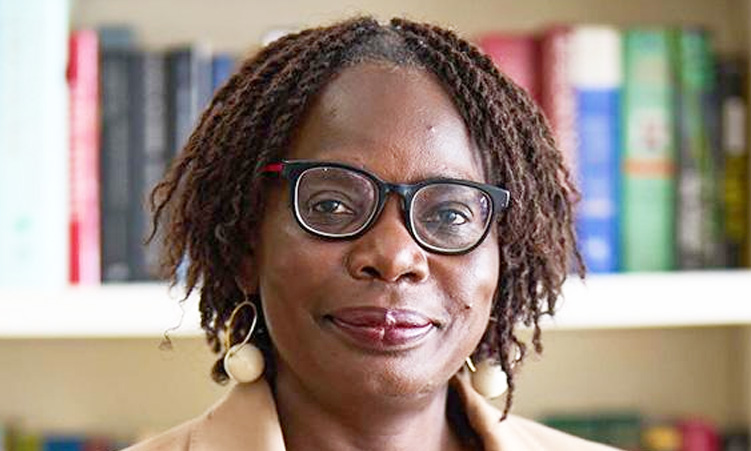
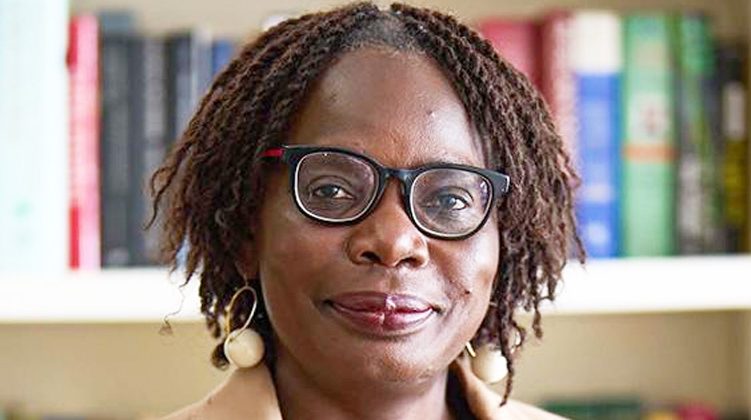
NAIROBI, Kenya, Nov 3 — Kenya’s Prof. Phoebe Okowa has secured re-election to the International Court of Justice (ICJ) for a full nine-year term running from 2027 to 2036, bringing an end to a prolonged contest that went through multiple rounds of voting at the United Nations.
Okowa prevailed over Peru’s Luz del Carmen Ibáñez Carranza in the third round, securing 13 votes in the 15-member United Nations Security Council against none for her Peruvian rival.
Her victory followed the withdrawal of three other candidates — Sierra Leone’s Prof Charles Chernor Jalloh, Ecuador’s Marcelo Vázquez-Bermúdez and South Korea’s Jin-Hyun Paik — ahead of the final ballot, narrowing the contest to a decisive face-off between Kenya and Peru.
The withdrawals came after successive rounds failed to resolve the contest for the remaining seat, with Okowa initially struggling to translate her support in the General Assembly into the required majority in the Security Council.
Sierra Leone’s withdrawal was particularly significant after its envoy to the UN announced that the country would throw its support behind Okowa, arguing that Africa risked losing representation on the court if its vote remained divided.
“If Africa’s vote stays divided, the continent risks losing even the one seat now open to it and falling further below its already inadequate share. Sierra Leone will not let that happen,” the envoy told the General Assembly.
The representative said the decision placed Africa’s representation above individual national interests, adding that Okowa had demonstrated her credentials through her service on the court and international legal work.
“Saving Africa’s seat matters more than any one national candidate. Our decision puts the continent first,” the envoy said.
He also highlighted Okowa’s distinction as the first African woman elected to the United Nations International Law Commission, describing her as a jurist with deep scholarship, practical experience before the court and commitment to international law.
Okowa had secured 87 votes in the General Assembly during the second round but received only four in the Security Council, leaving her short of the required majority in the latter.
Under the ICJ Statute, candidates must obtain an absolute majority in both the 193-member General Assembly and the 15-member Security Council to be elected. The threshold is at least 97 votes in the General Assembly and eight in the Security Council.
The election process had earlier seen four candidates — Dapo Akande of the United Kingdom, François Alabrune of France, Mahmoud Daifallah Hmoud of Jordan and Rena Lee of Singapore — secure the required majorities in both organs.
Okowa was elected to the ICJ in November 2025 to fill the vacancy left by Judge Abdulqawi Ahmed Yusuf of Somalia, who resigned. Her current mandate was due to expire on February 5, 2027.
Her re-election secures Kenya a place on the 15-member court for another nine years, with her new term beginning on February 6, 2027.
The ICJ, based in The Hague, Netherlands, is the principal judicial organ of the United Nations. It adjudicates legal disputes between states and issues advisory opinions on questions of international law referred to it by authorised UN bodies and agencies.
Judges serve independently and do not represent their countries, with the court expected to reflect the world’s principal legal systems and forms of civilisation.
- Sierra Leone withdraws ICJ candidate, backs Kenya’s Phoebe Okowa
- Okowa heads into second ballot after falling short in UN Security Council vote
- Ahmednassir warns Kenya’s dual ICC, ICJ bids ‘strategic misstep’
- Kenyan Phoebe Okowa elected ICJ Judge in UN Security Council vote

Bruhan Makong is a Senior News Reporter for Capital FM in Nairobi, covering diplomacy, foreign policy, national security, climate, and human rights across East Africa and the wider region.
KioskNews shows a cleaned-up reading view extracted from the publisher’s page — the original always lives on their site, not ours.