Europe urgently needs solidarity on China
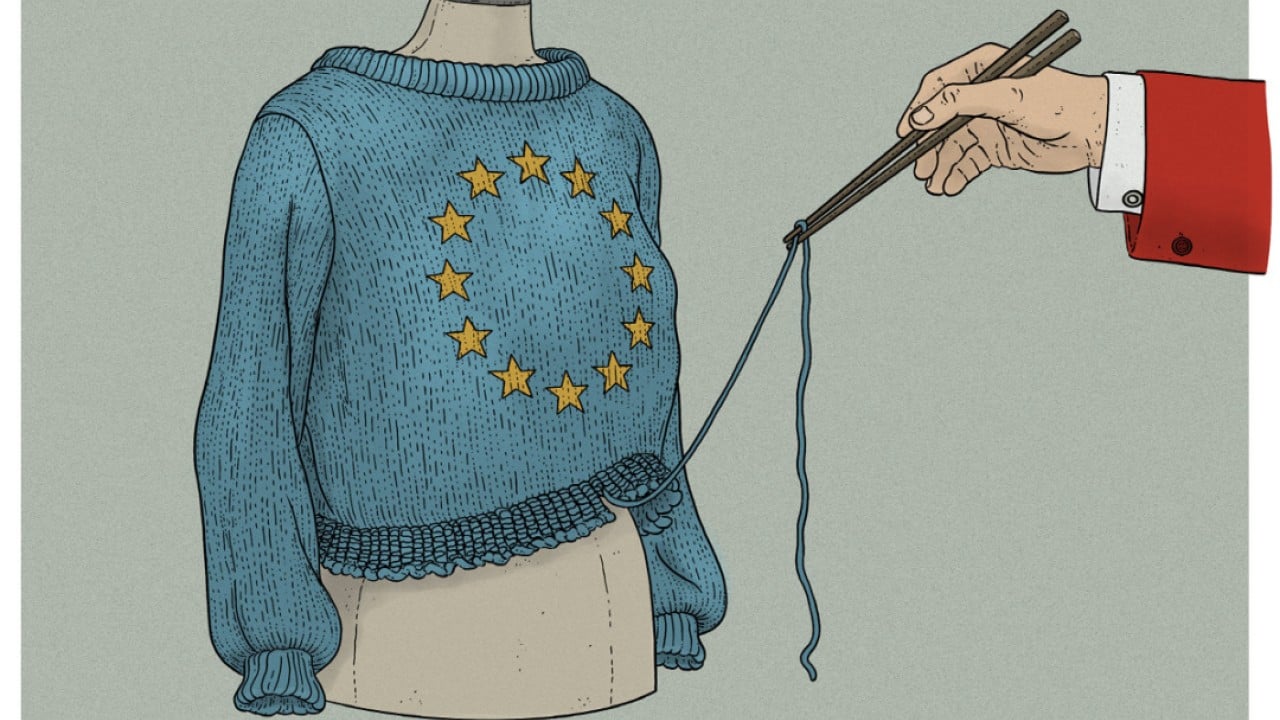
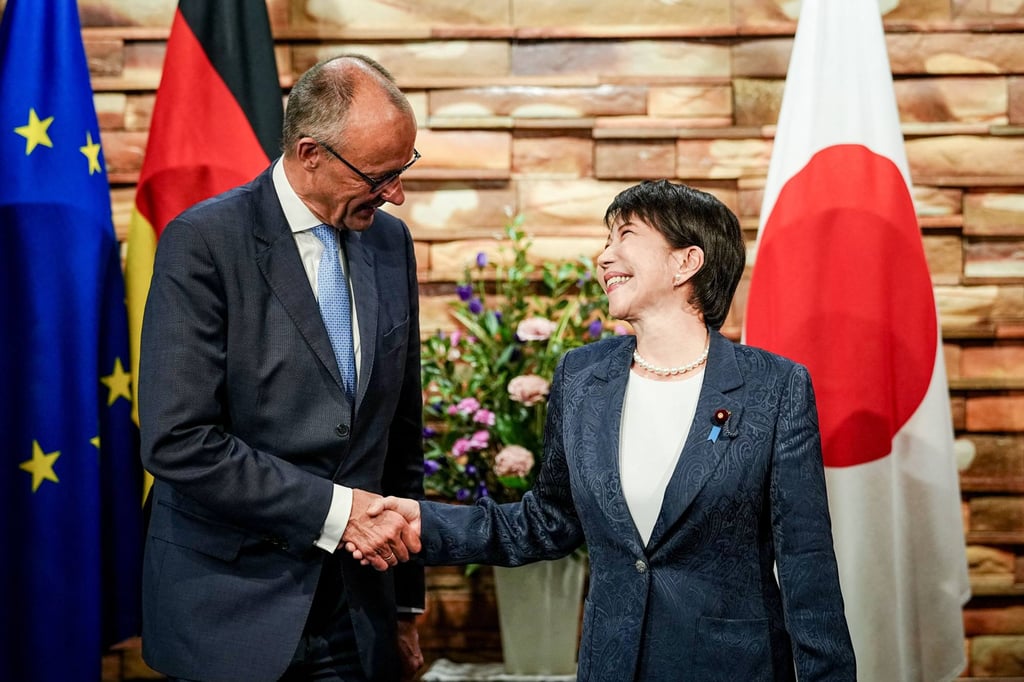
Last month, Germany’s President Frank-Walter Steinmeier left for his first state visit to China since 2018, while Chancellor Friedrich Merz took off for Singapore, Tokyo and Seoul on a tour meant to reduce German dependence on China. Steinmeier’s office let it be known he was travelling “as a European”.
Earlier in October, Merz and France’s President Emmanuel Macron won the backing of fellow EU leaders for new trade weapons, including one that could, in extreme cases, shut a country out of Europe’s single market. Within a month, Germany was effectively asking Brussels for a sharper sword, courting alternatives to China and sending its head of state to shake hands with President Xi Jinping. Eva Seiwert of the Mercator Institute for China Studies, a Berlin think tank, describes a China policy resting on “two pillars”.
Beijing sees something else. Ding Chun, head of the Centre for European Studies at Shanghai’s Fudan University, has warned that the European Union’s China policy could prove “strong at the top but weak at the bottom”. Chinese analysts sort the bloc into protectionists, nervous exporters and governments hunting for Chinese factories. On that reading, Steinmeier’s visit confirmed that German de-risking is a bilateral position, open to renegotiation in the Great Hall of the People.
For years, the convenient culprit for Europe’s discord over China was Viktor Orban, whose Hungary vetoed EU criticism of Beijing. Orban was voted out in April, yet at their June summit EU leaders still avoided naming China, preferring to reference “global macroeconomic imbalances”, even though the EU’s trade deficit with China reached €360 billion (US$401.5 billion) in 2025 and, for the first time, every member state ran one.
Spain’s Prime Minister Pedro Sanchez has visited Beijing four times in four years. After one trip in 2024, Madrid switched to abstaining on EU tariffs against Chinese electric vehicles.
Disunity is a rational response to coercion that singles out individual members while spreading costs unevenly. After Lithuania let Taiwan open an office under its own name in 2021, Beijing wiped the country from its customs system and Lithuanian shipments to mainland China fell by more than 90 per cent the following month; the EU’s complaint at the World Trade Organization was withdrawn late last year.
When the Netherlands seized control of the Chinese-owned chipmaker Nexperia in 2025, Beijing blocked exports from the company’s Chinese plants. Within weeks Germany’s Bosch, a leading car parts manufacturer, was preparing to send workers home. The Hague suspended its order seven weeks later.
The lesson for other capitals was plain: whoever stands up to Beijing stands alone. As a result, each keeps a private line open. Steinmeier’s tour was Germany paying its premium, a habit that lets Beijing bargain Europe’s position down one capital at a time.
The pattern is half a century old. While Arab oil producers embargoed the Netherlands in 1973 for supporting Israel in the Yom Kippur war, Britain and France were classed as “favoured” countries and spared the deepest cuts, and both refused Dutch requests to share oil. Oil-importing nations responded a year later with the International Energy Agency, whose members committed in advance to holding emergency stocks and sharing supplies under near-automatic rules with no national veto. France stayed out until 1992.
The 1973 oil crisis showed how solidarity cannot be improvised while every government is calculating its own exposure. It has to be built and paid for beforehand. In December, the European Commission will propose a solidarity mechanism for member states facing coercion or retaliation, alongside DiversifyEU, a plan to end reliance on single suppliers. Leaders will be tempted to treat the solidarity mechanism as a footnote to the Franco-German “kill switch”. It should be the centrepiece.
The money should come from the new EU-wide revenues the commission has proposed, though Germany is among the governments resisting them. Payouts must follow automatically once coercion is established under the Anti-Coercion Instrument, a 2023 law Brussels has never used. That test would also stop any government picking a fight with Beijing and sending Brussels the bill.
11:33
Balancing trade and economic rivalry: the future of Sino-German relations
The other half of the bargain is a common price for Chinese investment. The Industrial Accelerator Act, proposed in March, would oblige investors from countries with more than 40 per cent of a global market to meet conditions such as joint ventures with European partners and creating jobs for EU workers.
SCMP Plus is a new premium news platform that gives you an
all-inclusive edge to stay ahead on China news.
To access our exclusive content you’ll need to subscribe.
Already a subscriber?
LOG IN
Beijing has demanded that EU governments scrap it and threatened countermeasures, which suggests the proposal has teeth. Merz told business leaders in China in February, “We want Chinese investment in Germany.” A single European price would end an auction in which capitals bid against one another and Beijing rewards the most pliant bidder.
An obvious objection is that Germany’s exposure is too large to insure. It is, if insurance means compensating Volkswagen for every car it no longer sells in China. However, the mechanism seeks only to remove the targeted pressure that makes governments flinch. Once squeezing Vilnius or The Hague means confronting all 27 EU members, a China increasingly reliant on European buyers loses the incentive to try while Berlin loses its best excuse for sending presidents bearing reassurance.
The price of delay is on display this month. China’s year-long suspension of sweeping rare earth controls is set to end on November 10, and the matter is being settled in Beijing’s talks with the United States. Europe, which buys 98 per cent of its rare earth magnets from China, is a bystander to that negotiation. We are told Steinmeier went to Beijing as a European; in December, EU leaders can make that a reality.
KioskNews shows a cleaned-up reading view extracted from the publisher’s page — the original always lives on their site, not ours.