The 6 Best Romance Books Released Since 1990, Ranked


Sign in to your Collider account
A lot of people write off romance as the genre where nothing bad can really happen, just a teeny tiny misunderstanding before everything gets resolved in an instant. All this since you already know the couple ends up together. These six prove that's not really true, a happy ending doesn't mean getting there is easy, painless, or even guaranteed to feel the way you'd expect going in. Some of these authors put their leads through real loss, distance, actual years apart, before ever letting them land somewhere good.
A couple of these will wreck you and that’s a disclaimer. That's kind of the whole trick with a great romance, it has to make you scared it won't work out, even when some small part of you already knows it will. The best ones build that fear honestly instead of faking tension with a misunderstanding that gets solved in one conversation. So, get your tissue boxes and have a read.
6 'The Hating Game'

Two executive assistants who can't stand each other end up sitting at desks all day, every day, after their two companies merge into one. Most of their actual job involves inventing new ways to annoy each other on purpose, petty office games, competitive lunch orders, staring contests, anything to avoid admitting there's something underneath it all. Lucy and Josh both want the exact same promotion too, which gives Sally Thorne a built-in excuse to keep them competing and clearly attracted to each other.
The Hating Game doesn't reinvent the enemies-to-lovers formula, it just executes it about as well as it can possibly be done. The dialogue is sharp, the tension actually builds instead of getting resolved too early, and the slow burn deserves the payoff it eventually gets instead of rushing toward it. It became a massive BookTok favorite years after it originally came out, long after most books from that particular wave of romance had already been forgotten.
5 'The Seven Husbands of Evelyn Hugo'

An aging Hollywood legend agrees to finally tell her real life story, but only to one specific journalist, and nobody understands why she picked someone so unknown until the very end of the book. Evelyn Hugo walks Monique through seven marriages across her whole career, one husband at a time, and each one gets its own chapter almost like its own short story. It becomes clear pretty fast that most of those marriages were about image and survival in an industry that would've destroyed her otherwise.
The real love story gets saved for last, Evelyn's actual great love was a woman, actress Celia St. James, kept hidden for decades because of when and where they lived. Their relationship survives affairs, fake marriages, and public scandal, mostly by staying invisible to everyone except the two of them. The final connection between Evelyn and Monique recontextualizes the entire book once it's revealed, tying the whole narrative back to something much more personal than a simple interview.
4 'The Time Traveler's Wife'
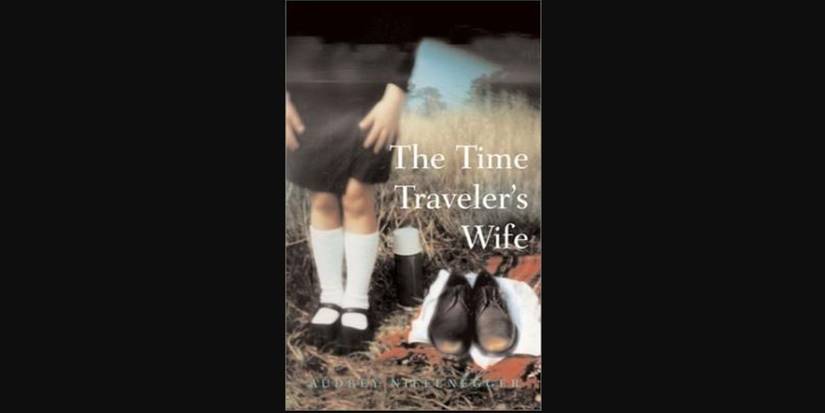
Time travel isn't something Henry can control, it just happens to him against his will, pulling him out of his own life without warning and dropping him somewhere else in time completely naked and disoriented. Clare meets him for the first time as a child, decades before he's actually born, while he's an adult jumping backward into her childhood from his own future. Audrey Niffenegger tells the story completely out of order, which means you're piecing together their whole relationship the same confusing way Clare has to live through it.
Their timelines only really line up properly once they're both adults, and even then, Henry keeps disappearing without any warning at all. Clare has to build an entire adult life around someone who might vanish mid-conversation and not come back for hours, or days, or longer. It's one of the few time-travel romances that treats the mechanics of the premise as something properly tragic not just a cute gimmick.
3 'Call Me by Your Name'
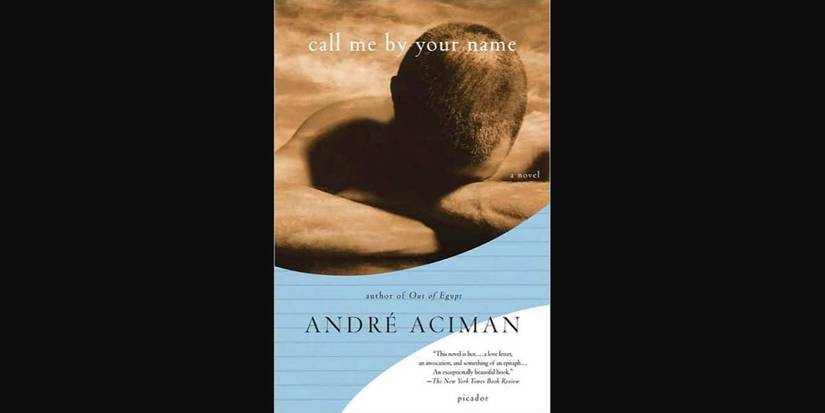
A summer in 1980s Italy, a seventeen-year-old named Elio, and a graduate student named Oliver stayed with his family for a few months, and that's basically the entire setup. André Aciman writes almost the whole book from deep inside Elio's head as he tries to figure out what he's actually feeling, circling around it for weeks before he can even say it to himself.
The prose is so specific and sensory, fruit, heat, sunlight on stone, that the whole book feels like remembering a summer that actually happened to you personally. Elio's father gives a monologue near the end about not numbing yourself to pain that comes from real love, and it lands as one of the most quietly devastating scenes in the whole book. It's become one of the most quoted passages in modern romance writing, popping up in graduation speeches and think pieces years after the book came out.
2 'Outlander'
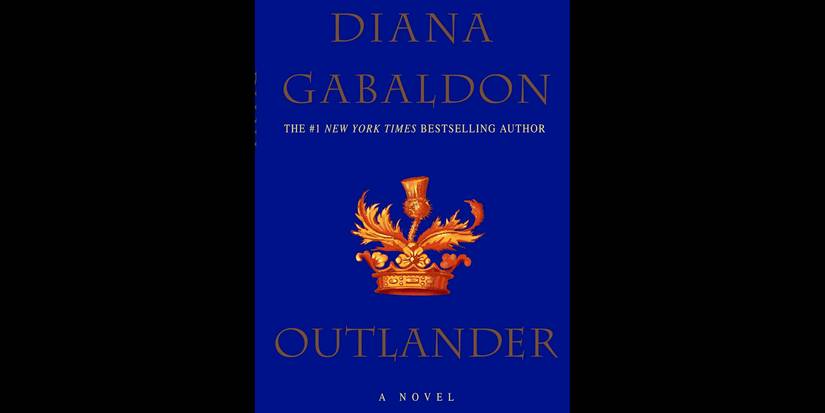
A circle of standing stones in Scotland sends Claire, a nurse from the 1940s, backward in time to 1743, dropping her into the middle of clan politics and a brewing rebellion she knows nothing about. Within the first hundred pages she's already married to a Highland warrior named Jamie Fraser, mostly just to keep herself safe from the English soldiers hunting her as a suspected spy.
This book blends so many genres into one, war history, time travel, adventure, romance, that it shouldn't hold together as well as it actually does. The relationship between Claire and Jamie stays the real center of it no matter how big the historical backdrop gets. The series is still going decades later, with new installments still being written, which says something about how much readers still want to stay in this world. This first book alone has enough plot for what most authors would stretch across an entire trilogy.
1 'The Song of Achilles'

This is the Iliad retold from Patroclus's side of the story, an exiled prince who grows up alongside Achilles and becomes his closest companion long before anyone starts talking about prophecies or a war in Troy. Their bond forms slowly, through training, exile, and years of just being kids together before either of them understands what they actually mean to each other.
The ending is still one of the most devastating in modern fiction, their names carved together at the very end after everything they've survived and lost along the way. Miller builds toward that final image patiently, never rushing the grief or skipping past what it actually costs both of them to get there. It's exactly as brutal the second time you read it as it was the first, maybe even more so once you already know what's coming. Few retellings manage to make a three-thousand-year-old story feel this personal, and this one deserves every bit of that reputation.
Collider Exclusive · 8 Questions · 2 Minutes Which Iconic Romance Is Your Favorite? Harry & Sally · Love & Basketball · Heated Rivalry · Titanic
Four great love stories, and four completely different ideas of what love actually is. One is a friendship that took twelve years to admit itself. One is two people who refuse to stop competing. One happens entirely behind closed doors. And one lasts five days and never stops mattering. Eight questions decide which one is really yours.
🍂Harry & Sally(1989)
🏀Love & Basketball(2000)
🏒Heated Rivalry(HBO Max)
🚢Titanic(1997)
01
How does your love story start? The first scene tells you what kind of story this is going to be.
02
What do the two of you keep arguing about? Every great romance has one fight it has over and over.
03
How do you show somebody that you love them? Grand gestures are easy to write. This is the harder question.
04
What is actually standing in the way? There is always something. Which something tells you the genre.
05
Which romantic moment gets you every single time? Be honest. There is one that works on you and you know which.
06
What would you actually risk for the right person? Every romance asks this. Most people find out far too late.
07
Where are the two of you in ten years? Some love stories are about the meeting. Some are about the staying.
08
Which of these sounds most like something you would say? Eight questions in, this is the one that decides your romance.
Roll The Credits Your Romance Is…
Four love stories, four completely different ideas of what it means to be somebody's person. This is the one that matches how you actually fall, and what it would ask of you.
Harry & Sally
You do not fall for strangers. You fall for the person you have already been talking to for years, which is the slowest and by some distance the most durable way anybody has found to do this.
- When Harry Met Sally made the case that the best romance is an argument you enjoy, conducted over a decade, by two people refusing to admit what is happening.
- You want to be known rather than swept away. Somebody who remembers your worst story is doing better work than anybody arriving with flowers.
- The film is unusually honest about timing. These two are wrong for each other repeatedly until suddenly they are not, and neither of them engineered it.
- You would still be talking about everything at eighty. That is the entire promise.
Love & Basketball
You want a partner, not an audience. Somebody who wants their own life as badly as you want yours, and who would never ask you to be smaller to make the relationship easier.
- This is the rare romance where both people have a real career and the film takes both of them equally seriously.
- You would rather be pushed than protected. The right person for you is also a bit of a rival, and that never entirely goes away.
- It understands the actual problem in ambitious relationships. Not whether you love each other, but whose turn it is this year.
- You would still be competing at forty. That is how you would know it was working.
Heated Rivalry
The intensity was never the problem. The secrecy is. You are drawn to a love that lives entirely in private, and to the particular ache of wanting somebody you are not supposed to want.
- Heated Rivalry runs on the oldest engine in romance: two people on opposite sides, meeting in secret, getting far more attached than either of them planned.
- You keep your private life genuinely private, and something in you finds hidden things more real than public ones.
- The tension is not only between the two of them. It is between what they have and what it would cost either one to say it out loud.
- Years of this, and the whole story is really about whether either of them will finally stop hiding.
Titanic
You do not do this cautiously. When it happens for you it is immediate and total and it rearranges everything, and you would not accept a smaller version of it.
- Titanic gave us the biggest romance in film history and then made it last about five days, which is precisely the point of it.
- You measure love by intensity rather than duration. A few days of the real thing beats decades of something merely comfortable.
- The film is not only about the romance. It is about a woman who went on to live an enormous life afterwards because of it.
- You would still be telling this story at a hundred years old, and telling it exactly the same way.
KioskNews shows a cleaned-up reading view extracted from the publisher’s page — the original always lives on their site, not ours.