Can Connie Chan become San Francisco’s first Asian-American in Congress?
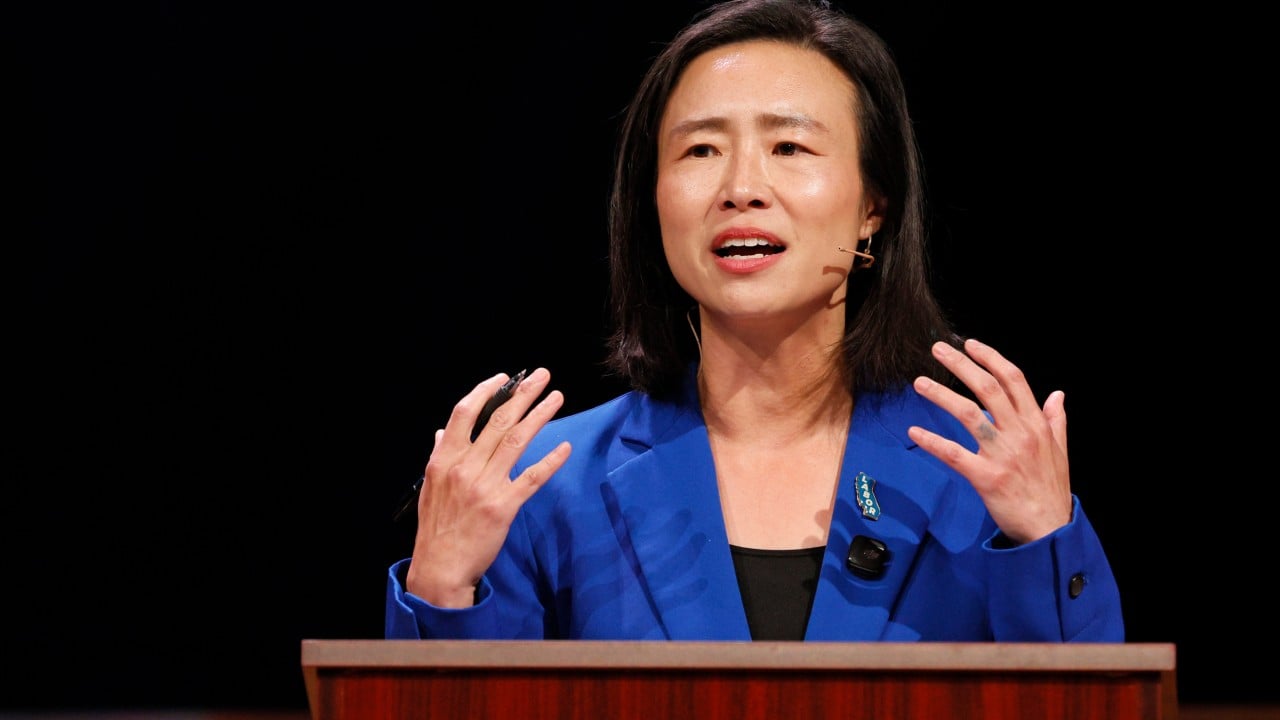
On a recent warm Thursday evening, supporters drift into San Francisco’s United Irish Cultural Centre to hear Connie Chan, who is running for California’s 11th congressional district.
Born in Hong Kong, Chan attended elementary school in Taiwan before immigrating to the United States at 13. Now a San Francisco supervisor, she hopes to succeed long-time Democratic powerhouse Nancy Pelosi, who announced her retirement and endorsed her.
The 48-year-old politician would be the first Asian-American to represent the city in Congress.
But Chan faces a strong adversary in Scott Wiener.
While she entered local politics in 2020, Wiener has been a fixture in San Francisco Democratic circles since 2004, building strong ties with Asian-Americans, championing “yes in my backyard” (Yimby) housing policies and establishing himself as a formidable fundraiser.
As Chan takes the stage, she recounts her life story, her hands moving in a slightly practised fashion for emphasis. She speaks of the hard work, love of freedom and her family’s arrival with almost nothing before finding her way as a volunteer interpreter and social activist.
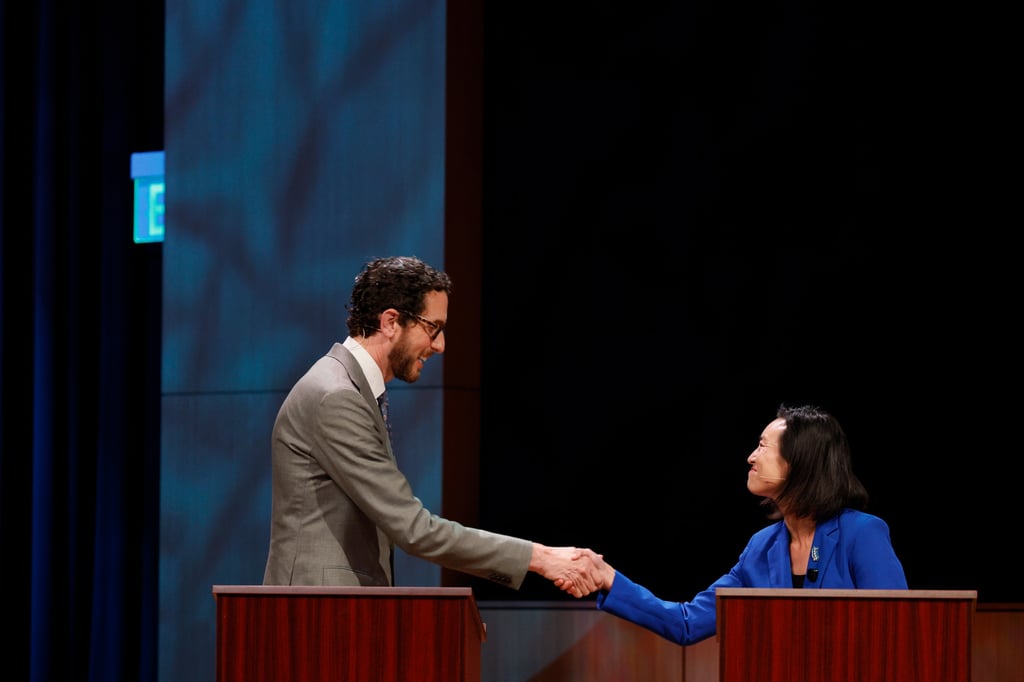
“That is our job, our job for San Francisco, for the United States, to be the conscience not only for the nation but the conscience for this world,” she says to enthusiastic applause in the large, half-full hall with ageing chandeliers, parquet flooring and large Palestinian, Irish and American flags.
“We must stand in solidarity and make sure that we send, all of us in Congress, that we’re ready to pass that vote with conscience to say no more wars and no more genocide,” she adds, addressing a crowd heavily weighted towards union labour, Arab-Americans and older whites. “We are ready to vote for peace around the world.”
Will Nancy Pelosi’s successor take a different approach to China?
San Francisco has long been a hub of liberalism and multiculturalism, and it remains to be seen whether Pelosi's successor adopts her views on China honed during her 38 historic years in Congress as the nation’s first female speaker and an outspoken critic of Beijing’s human rights record.
Some say San Francisco politics have moved on from the stance Pelosi embraced in the 1990s, with neither candidate likely to make geopolitics as central as she did.
But Chan devoted nearly a third of her speech to Gaza, Ireland and oppression. Others argue that even if US-China tensions intensify, Chan would have deeper cross-cultural roots in finessing any trans-Pacific tensions.
Pelosi was not one to hide her views. She was a long-standing critic of Beijing’s human rights record, opposing preferential trade treatment for China and speaking out against its treatment of Tibetans, Uygurs and Hong Kong activists. In 2022, she became the first sitting US House speaker to visit Taiwan in a quarter century.
04:57
US House Speaker Nancy Pelosi arrives in Taiwan as Beijing announces live-fire military drills
Beijing was quick to react. During and after her visit, China suspended military talks; conducted unprecedented live-fire military drills, including missiles launched over the island; sent warplanes and ships across the Strait’s median line; and imposed an import ban on hundreds of Taiwanese products.
Beijing sees Taiwan as part of China to be reunited by force if necessary. Most countries, including the US, do not recognise Taiwan as an independent state, but Washington is opposed to any attempt to take the self-governed island by force and is committed to supplying it with weapons.
“Connie would be able to advocate those dynamics with a level of care and competency that other candidates would not be able to and, to be quite honest, that Pelosi wouldn’t have been able to or wasn’t able to do,” said Vincent Pan, co-executive director of the activist group Chinese for Affirmative Action.
“ I just don’t think that, on this issue, Scott would be able to do so. Again, it’s not a direct criticism. It’s just stating a fact.”
Asian-American voters could prove decisive in San Francisco race
The contest is significant for several reasons, Chinese-American community members say. As enthusiastically supported as Pelosi was in winning 20 elections, San Francisco has never had an Asian-American representative in Congress, despite Asians making up a third of the city’s population.
“Our communities are super threatened by the Trump administration, so that necessitates new leadership that can address what we’re facing,” said Russell Jeung, Asian-American studies professor at San Francisco State University and co-founder of activist group Stop AAPI Hate.
“Connie Chan’s advocacy, her use of language, makes a strong statement that Asian-Americans are part of the system, have a stake in the community. And what people are realising is that Asians are not just a swing vote but actually a dominant voting bloc.”
One concern is that recent Chinese immigrants vote at lower rates than other groups, especially if they do not speak English and have little experience with democracy.
“Having an Asian-American candidate sort of draws their attention and then educates them,” Jeung added. “We don’t have the socialisation into the American system.”
In June’s primary, dominated by three Democratic candidates, Wiener garnered 41 per cent of the vote against Chan’s 30 per cent.
But after tech entrepreneur Saikat Chakrabarti dropped out, lending his support to Chan, the race has tightened. Ultimately, a lot of the outcome will depend on Asian-American turnout, say local operatives.
An October 16-19 University of Southern California poll has Wiener leading by 6 percentage points, within the margin of error. Betting site Kalshi shows a wider margin, giving Wiener 79 per cent odds against Chan’s 22.
“It is and was quite a hill to climb for Connie,” said Malcolm Yeung, chief executive of San Francisco’s Chinatown Community Development Centre.
“Scott’s reputation, which is incredibly well deserved, is that he’s a monster campaigner,” Yeung added. “He works harder than virtually any other politician. He shows up at every event, talks to every constituent.”
Key issues in this heart of the Silicon Valley race include development and artificial intelligence.
Wiener is seen as more pro-growth, more aligned with property and tech firms and a long-time advocate of the “yes in my backyard” housing stance.
Chan’s base includes public sector and construction unions and opponents of data centres and gentrification.
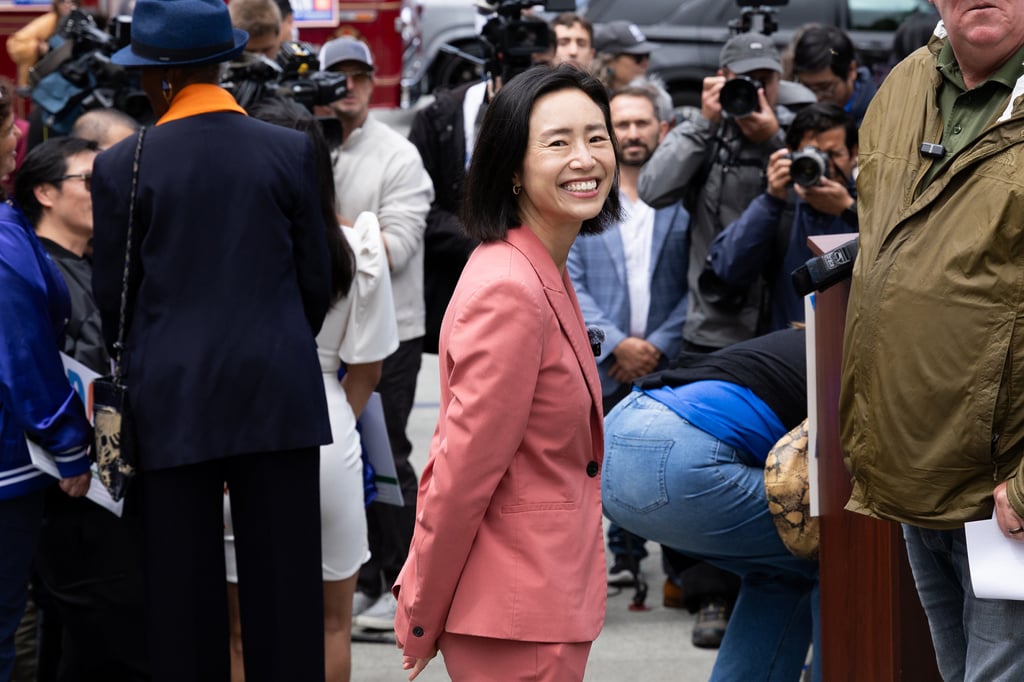
Chan supporter Jordan Mar, a political organiser, said a Chinese-American representative in Congress is long overdue given the city’s long history of migrant workers singled out for exclusion.
He voted for Wiener in past state races, Mar said, but Chan’s concerns over artificial intelligence (AI), data centres and lost opportunities swayed him.
“I think he takes too much Anthropic money,” he said, referring to the San Francisco-based AI model developer. “It’s not necessarily about strong ethnic identity, but I think we need strong regulations to support housing.”
Given that both candidates are progressive Democrats, the advertising has been civil without the rancour seen in Texas, Ohio and other scorched-earth races.
As a long-time Yimby, Wiener has sought to paint Chan as something of a regressive Nimby – short for “not in my backyard” – while she has hit him on his ties to corporate interests.
Political insiders say Pelosi, who has ties to both candidates, endorsed Chan for several reasons, including her own long-standing support in Chinatown, her advocacy for female candidates and Chan’s backing from construction unions.
Wiener also “got ahead of the game a little bit” by announcing his candidacy and appealing to her backers before Pelosi formally bowed out, said one source.
“That’s a no-no, especially with Nancy,” he added.
Chan and Wiener divide San Francisco’s Chinese community
As always, however, Chinese communities are complex, encompassing people from mainland China, Taiwan and Hong Kong, recent immigrants and multigenerational families, and residents across the economic spectrum.
Even as Asian-Americans feel obliged to support one of their own, many prefer Wiener’s policies and more pro-business stance.
“In the Chinese community, a lot of people don’t want to speak up because Chinese are supposed to support Chinese,” said Nancy Yu Law, owner of a tea shop and active in the Chinatown History and Culture Association that has several hundred Chinese shop owners. “A lot of people don’t necessarily agree with what she has done, but we don’t want to say we don’t support her. It’s tricky.”
Yu Law recounts a recent fundraising event attended by several of her Chinese business friends.
“Somehow Pelosi shows up. Oh, wow – and they were stunned. And when they asked for a group photo, all my friends left. But they did sponsor her US$1,500,” Yu Law said. “And they say ‘no way, I have lots of business in China’.”
The shopkeeper added that if Chan is elected as Pelosi’s successor, business owners are concerned she could mirror her mentor’s Taiwan visits and human rights campaigns. “My friends do not want to take a picture with Nancy Pelosi.”
Back at the Irish cultural hall, as she mingles in the crowd dressed in a tweed jacket and a thick black belt, Chan counters that her lived experience makes her an ideal trans-Pacific bridge.
“Chinatown is a gateway between Asia and the diverse Asian-American population, which gives me deep understanding,” she said. “It’s not a monolithic community. I understand our different Asian heritage, how complex we are as Asian-Americans.”
KioskNews shows a cleaned-up reading view extracted from the publisher’s page — the original always lives on their site, not ours.