COP31: Why climate summits still matter, even as the world misses its targets
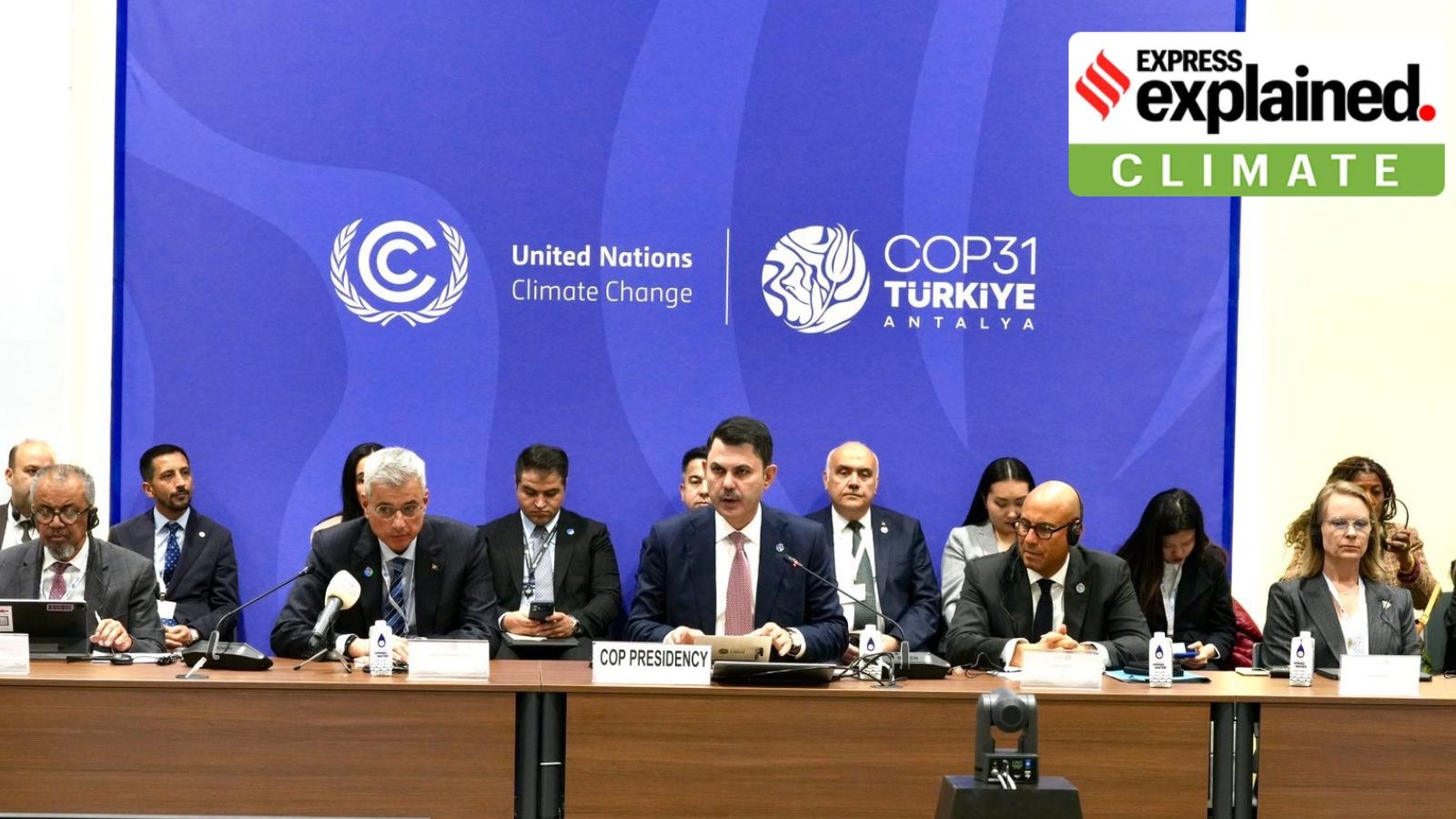
The annual United Nations Climate Change Conference, or COP31, comes amidst a troubling reality check.
According to two reports released by the United Nations Environment Programme (UNEP) this year, the window of opportunity to limit global warming to 1.5°C above pre-industrial levels has now closed. The best the world can hope for, the reports suggest, is to restrict the rise to 1.7-1.8°C. This is the first time UNEP has made such an assessment.
One might therefore expect COP31, which began in the Turkish city of Antalya on Monday (November 9) and is expected to run till November 20, to focus on finding ways to put the world back on track. However, the conference is unlikely to produce any breakthrough on this front.
The 1.5°C target did not suddenly become unattainable this year. It was always a difficult target, and years of inadequate climate action have finally led scientists to conclude that it can no longer be achieved. No outcome from COP31, however ambitious, can reopen that window of opportunity.
Delinked from reality
In terms of expected outcome and impact, COP31 could prove to be one of the most inconsequential COPs in recent years, but not because of any shortcoming of its own.
COPs, in general, have always underperformed. These annual year-ending two-week conferences, which attracted the largest gatherings of global leaders until not so long ago, have only produced low-ambition outcomes. In the last two decades, its most important success has been finalising the 2015 Paris Agreement, which defined the global goals for climate and framed the broad rules for international climate action.
But COPs have had a poor record in convincing the member countries – virtually the entire world till the United States decided to walk out – to do enough to achieve those targets. COPs decide only through consensus, and there is no way to force laggard nations to do more.
Story continues below this ad
The result has been a widening gap between what is required to achieve the targets set in the Paris Agreement and the actions actually taken by individual countries. The gap has grown so large that COPs no longer seem interested in even pretending to catch up. Any outcome that enables incremental progress towards reducing greenhouse gas emissions, and prevents further backsliding, is now considered a good outcome.
By this metric, the success of COP31 would rest on being able to build on the decisions taken in past COPs, particularly in Brazil last year, to keep pushing for decarbonisation and energy transition.
Not irrelevant
Despite this poor record, it would be a mistake to conclude that COPs have become entirely irrelevant.
There is no denying that this very process of international climate negotiations under the UN framework has put the world on a path of decarbonisation, however slow the progress might have been. The accelerating adoption of renewable energy, and the thousands of climate actions being taken by a variety of actors around the world, both state and non-state, can also be attributed to this process. Many of these actions also offer a range of collateral benefits, including energy security, poverty reduction, improved livelihoods, pollution reduction, and improved food security.
Story continues below this ad
Climate change has largely disappeared from the agendas of other major global and regional forums, thanks to multiple wars, rapidly evolving technological threats, and new demands for energy use. While several immediate challenges have emerged in recent years, the problem of climate change has not disappeared, as evidenced by the growing number of large-scale climate disasters. This makes the COPs an important forum to focus on climate change.
The COPs are still the only forum where developing countries can demand greater accountability from the developed world, which bears the primary responsibility for addressing climate change. Nepal was recently promised US$ 20 million from the newly-established Loss and Damage Fund for recovery and reconstruction efforts after the devastating flash floods in August. While the allocated sum is only a fraction of what Nepal needs to rebuild after the disaster, there is no other international forum where it could have demanded and received this kind of funding without any strings attached. There is also a possibility that Nepal could receive more money from the Fund.
That is why countries see merit in continuing with this COP process, despite its threat of irrelevance and possible disintegration, following the withdrawal of the US from the Paris Agreement and the UN Framework Convention on Climate Change.
Reality check
Most countries appear to have reconciled with the reality that not just the 1.5℃, but even the 2℃, target might be breached in the coming decades, unless some really unexpected technology intervention takes place.
Story continues below this ad
The 1.5 degree and 2℃ targets were arbitrarily chosen temperature limits with no intrinsic value behind their choice. The climate impacts were evident even at 1.2℃ warming, though there is no denying that the severity and frequency of extreme climate events have steadily increased with the continued rise in temperatures.
It could be argued that the temperature targets set in Paris were difficult to be achieved right at the outset. The actions necessary to achieve them were never consistent with the political and economic realities of the world and the competitive nature of international coexistence. Achieving these goals was predicated heavily on an appeal to the moral force and good conscience of the countries, and largely delinked from the political and economic interests and compulsions.
This tension was evident even when the Paris Agreement was being finalised. The Agreement was hailed as a major breakthrough for climate action. The unflattering reality, however, was that developed nations had succeeded in freeing themselves from the responsibilities placed on them by the 1997 Kyoto Protocol. The Paris Agreement was not a victory for climate action, but a successful effort by the developed nations to preserve their dominance and economic interests. The stated goal of achieving the temperature targets mentioned in the Agreement was largely an obfuscation.
In the last few years, countries have increasingly dropped the pretence that they are actively pursuing those temperature targets. Countries are now preparing themselves to deal with the impacts of climate change, rather than chase a temperature target that has never been within reach. At the same time, it is important for the countries to realise that they are giving up only targets, not climate action itself.
KioskNews shows a cleaned-up reading view extracted from the publisher’s page — the original always lives on their site, not ours.