Is Sara Duterte’s impeachment case being sped up due to Filipinos’ ‘growing impatience’?
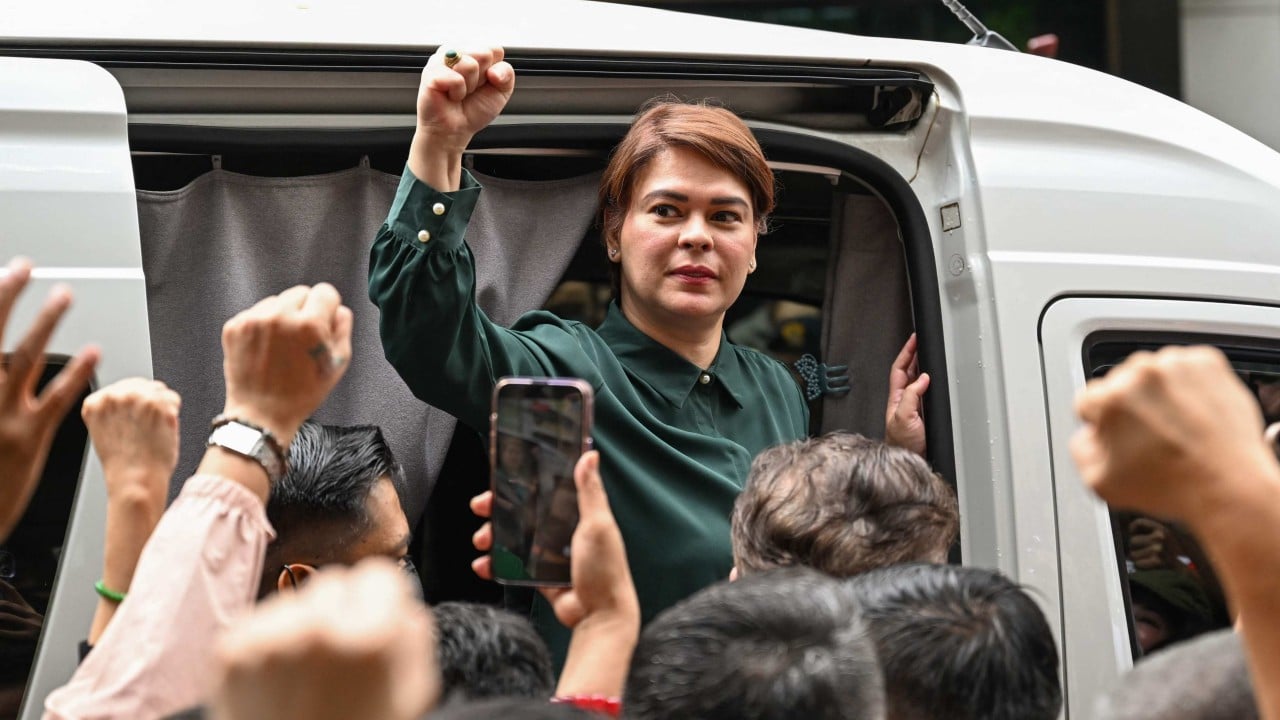
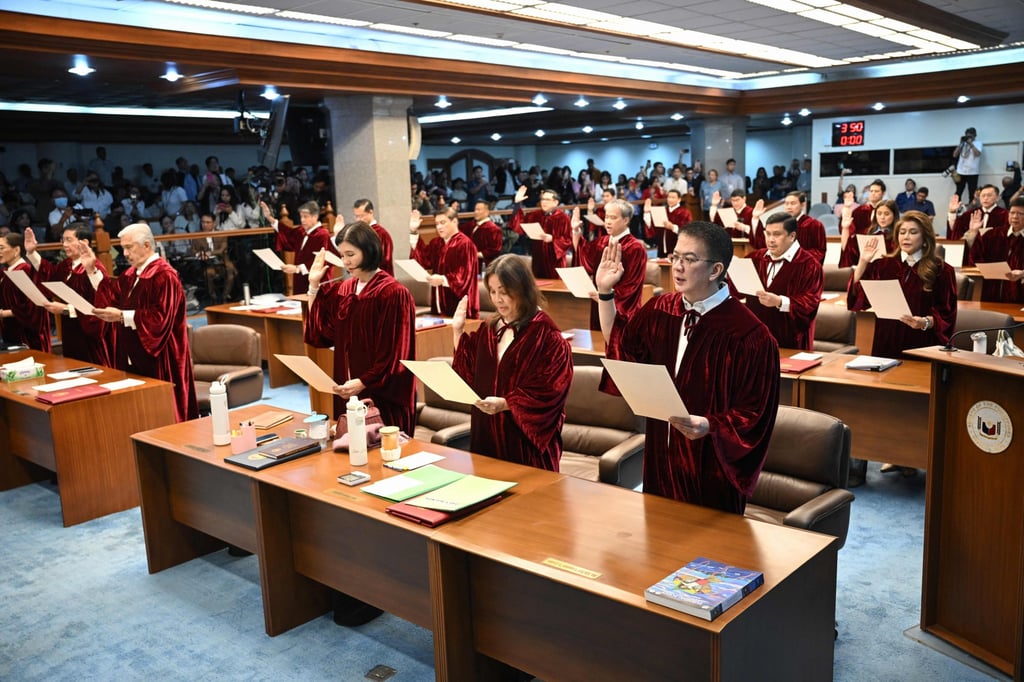
The impeachment trial of Philippine Vice-President Sara Duterte-Carpio may soon draw to a close after the prosecution decided to drop several of her charges, a move that legal experts have said is intended to speed up the trial and secure a conviction by focusing on the strongest evidence against her.
Beyond the trial, the decision could have significant political implications for the 2028 presidential race, with a swift verdict potentially removing a strong candidate, according to analysts.
On October 13, a prosecution panel from the House of Representatives dropped three of the four articles of impeachment against Duterte-Carpio.
Among the withdrawn charges were allegations that she had misused 612.5 million pesos (US$9.7 million) in confidential funds; bribed subordinates while serving as education secretary to circumvent procurement laws; and committed “high crimes” by plotting to assassinate the president, his wife and the House speaker, and boasting about it during a live-streamed press conference.
The one remaining article alleges that she failed to declare up to 1.5 billion pesos’ worth of assets, as required of public officials under the constitution, and failed to divest her corporate shares in violation of the Code of Conduct for public officials.
According to Tranquil Salvador, a former member of the defence team for the late Supreme Court chief justice Renato Corona in his 2012 impeachment trial, the prosecution’s strategy showed that it was confident of securing enough prima facie evidence to convict her on this charge alone.
Among the four articles, the unexplained wealth charge was “the easiest to prove” because it was based on “documentary evidence” and the public could easily understand the issue, Salvador said.
Dino Singson de Leon, a litigation and human rights lawyer, noted the prosecution’s “overwhelming confidence” in relying solely on the charge of unexplained wealth to press its case against her.
However, Jesus Falcis, a lawyer and a political commentator, said: “They’re putting all their eggs in one basket, and you will never do that unless you are sure that one basket is the winning basket.”
Falcis was disappointed that the public was deprived of “closure” because the three other charges were withdrawn. These could have shed light on whether they were “a betrayal of public trust or a culpable violation of the constitution. Does it make a public officer unfit to remain in office?”
He added: “I don’t necessarily agree with the strategy, but I can understand and appreciate the strategy of the prosecution.”
Dropping the three other charges would speed up the trial and prevent the defence – whose turn to present evidence starts on November 9 – from introducing witnesses who could serve as “fall guys” by taking the blame on the other charges and claiming the vice-president had nothing to do with the misuse of confidential funds, Falcis said.
The prosecution would want a conviction soon to allow President Ferdinand Marcos Jnr to appoint the vice-president’s replacement, he said. With Duterte-Carpio possibly no longer on “the political chessboard”, the contenders for the 2028 presidential race could emerge earlier, Falcis added.
Surveys have consistently placed Duterte-Carpio among the leading potential presidential contenders.
In addition to their anger over the case against Duterte-Carpio, members of the Duterte family have publicly vowed to avenge Marcos’ decision to send former president Rodrigo Duterte to The Hague to face trial for crimes against humanity over his administration’s war on drugs.
When viewed from a political perspective, Salvador said dropping the three charges was “a good strategy”.
“Christmas is fast approaching, people are busy with a lot of things so they will not be able to follow [the trial],” he said. If the three other charges had not been dropped, the trial could “drag on” till March, when politicians’ attention would by then be focused on their 2028 political campaigns, he added.
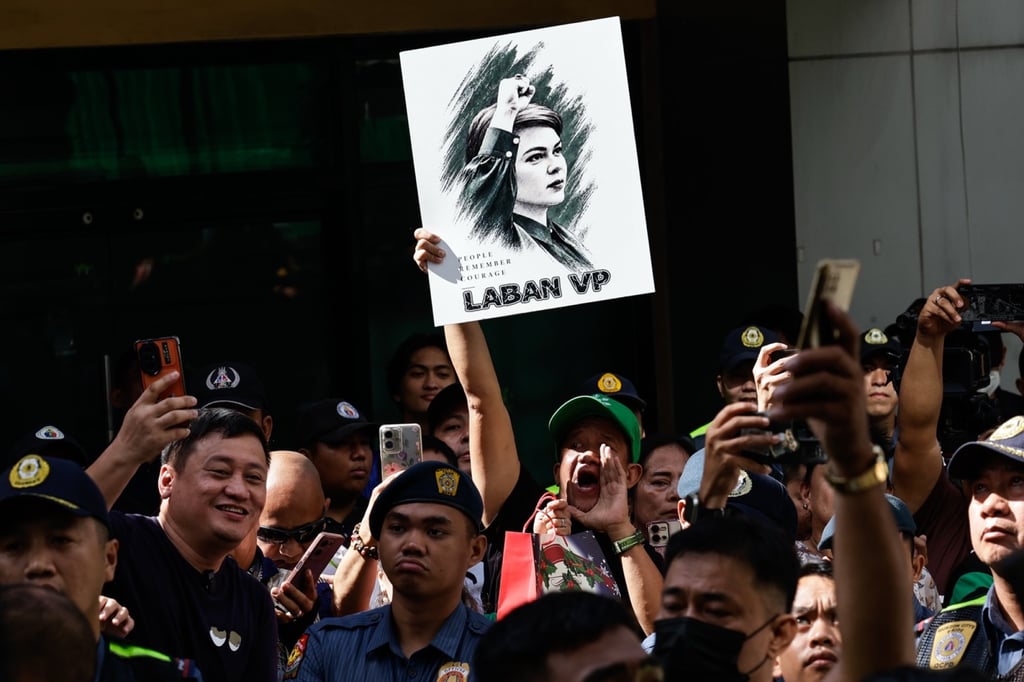
De Leon said the prosecutors, who are congressmen, could have sensed the public’s “growing impatience” with the trial and decided to concentrate on “just one [charge] where the evidence is most damning”.
Nonetheless, “the move surprised me because of how compelling the evidence was in the withdrawn articles”, he added.
According to a survey of 1,401 Filipino respondents nationwide from October 16 to 19 by Momentum Research, 38.8 per cent said Duterte-Carpio should be convicted on “the unexplained wealth charge”, 33.8 per cent supported her acquittal, 22.6 per cent were unsure, and 4.7 per cent refused to reply.
De Leon said the prosecution was “taking a lot of heat” after it suddenly reduced the number of its witnesses. “I do not personally believe, though, that the defence is doing a better job, in light of the evidence we have successfully seen thus far.”
Falcis said the case had shown how society in the Philippines was “deeply polarised”. “The way people consume information and the way people perceive what is a right or wrong action is very much factionalised.”
According to the survey, most middle-income and low-income earners said the vice-president should be convicted. In comparison, 35.3 per cent among the poor wanted her to be convicted, while 36.1 per cent of them said she should be acquitted.
“Across factional groups, the majority of pro-opposition [72.9 per cent] and pro-Marcos adults [63.5 per cent] have expressed their support for Duterte’s conviction,” the survey showed.
01:45
Pets receive a special blessing in Manila every year
In Mindanao island, 53.1 per cent of respondents from the Duterte stronghold wanted her acquitted and only 8 per cent favoured conviction.
The proportions among baby boomers, Gen Z and Gen X who wanted Duterte-Carpio to be convicted were 51.5 per cent, 40.9 per cent and 42.8 per cent, respectively.
According to Falcis, the senator-judges presiding over the case might have already formed their own position.
De Leon expressed confidence that the judges would convict Duterte-Carpio based on “the sheer strength of the evidence” and that they had to “answer to the public for their vote”.
Salvador said: “I don’t think any senator will admit that they will vote on party lines.”
KioskNews shows a cleaned-up reading view extracted from the publisher’s page — the original always lives on their site, not ours.