China’s appetite for Russian farm goods grows despite thaw in US trade ties
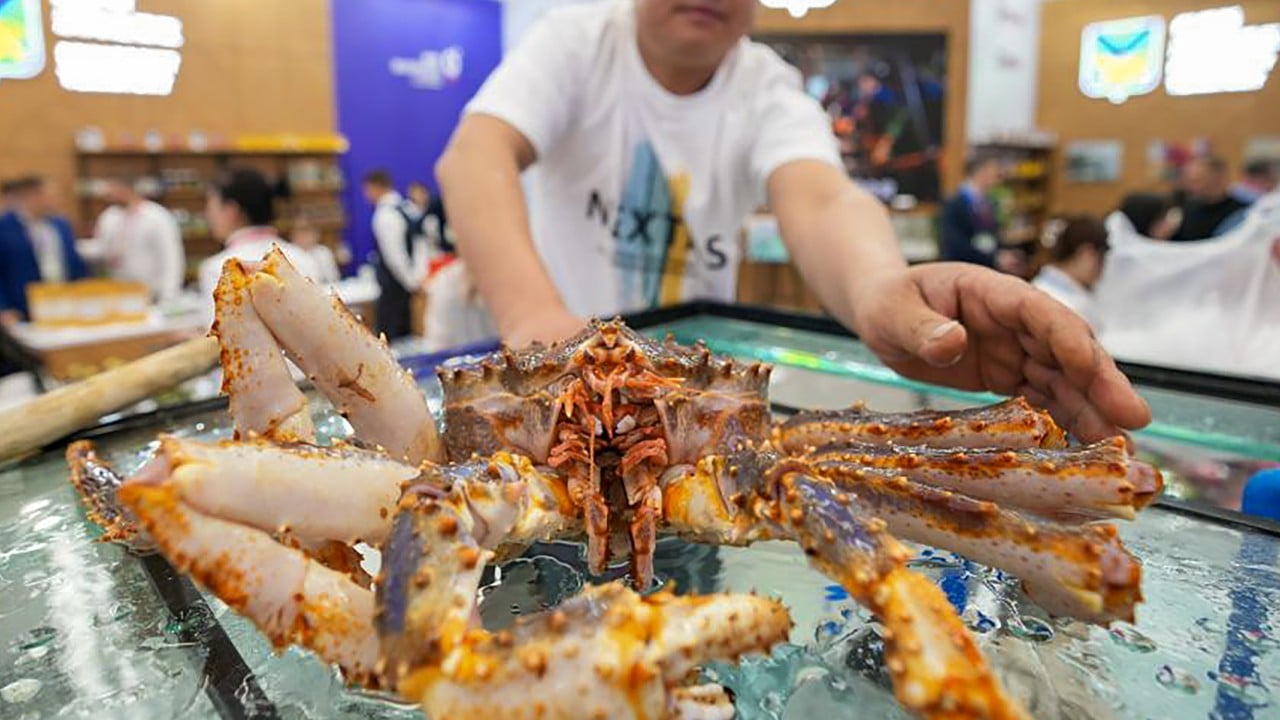
From vegetable oil to seafood, Russia’s agricultural exports to China are hitting new milestones, even as US and Chinese officials move to stabilise a farm trade relationship increasingly overshadowed by geopolitics.
Three Russian exports – rapeseed oil, crab and frozen pollock – each surpassed US$1 billion in sales to China in the first 10 months of this year, the Federal Centre for Agricultural Export Development under Russia’s Ministry of Agriculture said earlier this week.
The records reflect surging bilateral trade, with Western sanctions over the war in Ukraine pushing Moscow to find new markets, while Beijing seeks to diversify its import sources and cut reliance on any single supplier.
China bought nearly US$8 billion worth of Russian farm produce from January to September, a year-on-year increase of 42 per cent, according to calculations by China’s food and agricultural trade chamber based on customs data.
Overall trade between China and Russia rose by more than 30 per cent in value terms during the first 10 months.
The surge came amid talks between China, the world’s largest net importer of agricultural products, and the United States, one of its major suppliers, to strengthen agricultural trade through mutual tariff cuts and Beijing’s specific purchase commitments, estimated to be worth nearly US$30 billion a year.
The two countries held the first meeting of the Agriculture Working Group under the China-US Trade Council in Beijing on Monday and Tuesday. The two sides had “candid, in-depth and constructive exchanges” on issues including agricultural product regulation and market access, according to an official readout, which provided few further details.
The increase in imports from the northern neighbour is quite considerable, but … not enough to have a major impact on trade with the US
“The primary factor driving China’s imports of agricultural products from Russia and the US is the growth in China’s demand for agricultural products,” said Song Guoyou, a deputy director of Fudan University’s Centre for American Studies.
“Diversified agricultural imports also contribute to China’s food security,” he said, adding that Russian and American farm shipments largely served different needs and were not direct substitutes for one another.
Russian shipments of soybeans – the top US agricultural export to China – reached US$548 million from January to October, more than double the full-year total for 2025, according to Chinese customs figures.
However, these imports consisted entirely of non-genetically modified varieties, setting them apart from American supplies. They also remain only a fraction of China’s commitment to buy 25 million tonnes of American soybeans annually, a volume worth more than US$10 billion.
Zhang Zhixian, head of research at Henan-based research firm Cngrain.com, said China was a “breakthrough point” for Russia, pointing to both geographic proximity and Moscow’s declining shipments to other destinations due to the Russia-Ukraine conflict.
“The increase in imports from the northern neighbour is quite considerable, but the absolute volume is not large … not enough to have a major impact [on trade with the US],” Zhang said.
From July to October, overland grain shipments to China surged sixfold from a year earlier, Russia’s Interfax news agency quoted a senior grain industry official as saying last week.
While European and US sanctions have caused trade with the West to plummet, Russia has largely turned towards China, India and economies across the Middle East and Central Asia.
President Vladimir Putin said the Russian economy was “moving at full speed ahead, even faster than expected” at last week’s Apec CEO Summit.
KioskNews shows a cleaned-up reading view extracted from the publisher’s page — the original always lives on their site, not ours.