Fadhlina: SMKA Jempol to become first TVET religious school in Malaysia
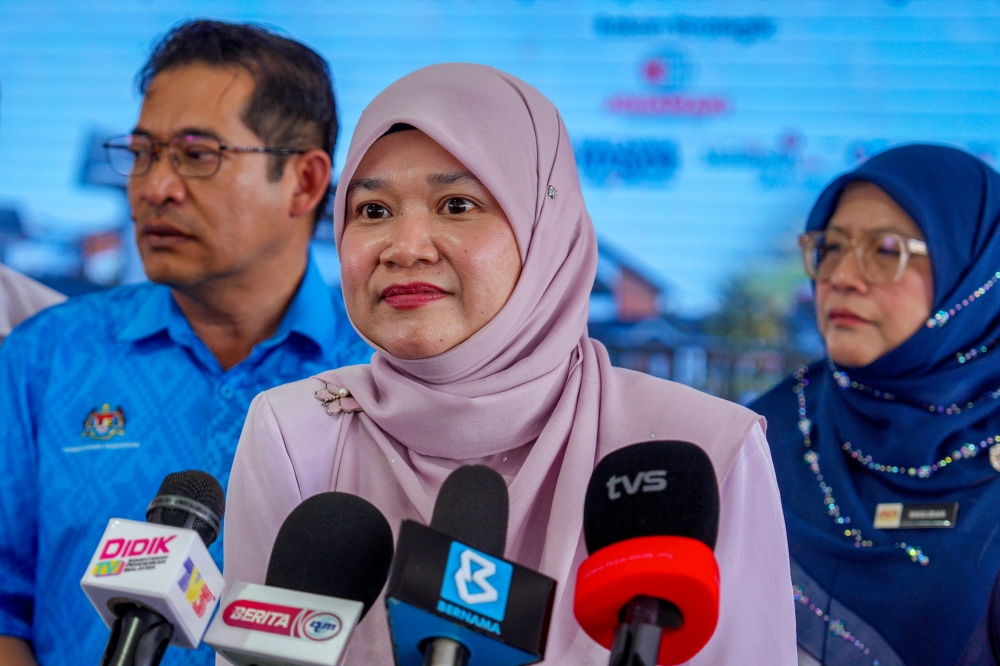

Education Minister Datuk Seri Fadhlina Sidek speaks during a press conference at the ground-breaking ceremony for Sekolah Menengah Kebangsaan Agama Jempol in Jempol on September 25, 2026. — Bernama pic
First Published: Friday, 25 Sep 2026 1:05 PM MYT
JEMPOL, Sept 25 — Sekolah Menengah Kebangsaan Agama (SMKA) Jempol will become the country’s first Technical and Vocational Education and Training (TVET) religious-stream school.
Education Minister Datuk Seri Fadhlina Sidek said the school was being built at a cost of RM98 million on a 14.22-hectare site over a three-year period under the 12th Malaysia Plan.
“Previously, TVET was offered only at vocational colleges or regular schools; we will now bring this TVET model to SMKA Jempol. Insya-Allah, SMKA Jempol will be the first SMKA to adopt or introduce TVET.
“I hope the project can be completed within the stipulated timeframe so that we can immediately develop TVET education to meet not only the needs of the industry, but also the needs of the country at present,” she told reporters after officiating at the groundbreaking ceremony for the construction of SMKA Jempol here today.
Fadhlina said the fully residential school would be equipped with an administration block, an academic block with 25 classrooms, laboratories, workshops, a library, hall, canteen and prayer hall, as well as other facilities and a hostel with a capacity for 720 students.
Meanwhile, she said religious school students in the country were also encouraged to master various languages as an important medium for strengthening the dakwah agenda more effectively.
Taking the example of SMKA Sheikh Tahir Jalaluddin in Penang, which has been recognised as Malaysia’s first ‘dakwah school’, Fadhlina said its students were given exposure to Chinese, Tamil, English and Arabic, in addition to Malay.
“Children in religious schools will certainly master Malay as the main language. At the same time, they must also be given emphasis on other languages.
“We see that these children have the ability to master more than one language. Language is one of the tools that must be mastered to convey matters related to dakwah and explanations about Islam more effectively,” she said.
Fadhlina said the ministry also placed emphasis on character development, values of trustworthiness and integrity among students to prepare them to face current challenges.
She said education should not focus solely on academic achievement, but also encompass intellectual development, cultivating a reading culture and fostering leadership with integrity.
“The need to reject corruption and uphold clean leadership must be taught and emphasised from an early age.
“That is why religious schools have special programmes such as Nadwah Kepimpinan Islam, which are expected to produce future leaders, particularly Muslim leaders with character and who uphold religious values,” she said.
She said the development of religious education institutions involved more than merely the construction of physical infrastructure, but also aimed to instil human values in students so that they would become a principled generation capable of contributing to society. — Bernama
KioskNews shows a cleaned-up reading view extracted from the publisher’s page — the original always lives on their site, not ours.