Would you pay to have the ‘best baby’? Liberal eugenics and the troubling quest for human perfection

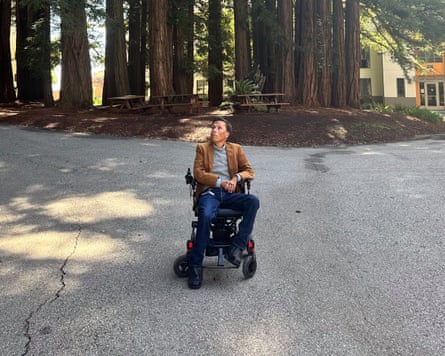
For a very long time, I dreamed of being cured. I was born in 1981. I learned to walk early enough, but I stumbled and fell more easily than other children. My parents began to worry that something was wrong, that my muscles were weaker than they should be. Eventually, at the age of three, I was diagnosed with a form of spinal muscular atrophy (SMA). In the 1980s, the precise mechanics were not yet understood, but the condition was known to be hereditary, probably linked to a recessive gene. It was also known to be progressive. As I aged, my muscles would not keep pace. At eight, I began to use a wheelchair for longer distances. By the time I was 18, I rarely walked outdoors any more.
It is hard to be young and to know that you are growing weaker rather than stronger. I had all the same aspirations that my nondisabled friends did, but I lived in fear of the future in a way they did not. I spent a lot of time thinking about what my life would have been like if I didn’t have SMA. The images in my head were of something like a double: myself, only rid of this one deficit, imprecisely defined, but encoded somewhere in my body.
In the 1990s, the human genome began to be mapped. Medical genetics grew ever more precise. I was vaguely aware of this, of the fact that genetic conditions such as mine were being better understood with every year. With that understanding came the possibility, however faint, that there might be some form of treatment for me beyond the interminable hours of painful, barely-worth-it physical therapy I took after school.
At some point, it did strike me that before medical genetics could even begin to pursue a treatment, an SMA gene would be identifiable in embryos. My other self might be me, cured. Or he might be someone living in my stead, while I’d never been born at all.
As science progressed, this other self came to seem more concrete, more knowable than ever. It was an immensely attractive image. In almost every other respect, I was happy to be me. I didn’t bother to ask who I might have been if my eyes were blue, like my sister’s, instead of brown. I didn’t ask whether I’d have been happier with a talent for music instead of languages. Only this one error in my genome would need to have been corrected, and I would have been me, only better.
Eventually, this perfect shadow-self faded away, for many reasons. But last year it came back to haunt me, as I read about a series of adverts placed by a company called Nucleus Genomics. Throughout the New York City subway system, Nucleus promised prospective parents that they could now have their “best baby”. By way of posters claiming that “height is 80% genetic” and “intelligence is 50%”, potential customers were led to a website detailing an expensive, comprehensive IVF procedure. Up to 20 embryos would be screened for every genetic disorder under the sun, but also for eye and hair colour, and for traits ranging from strength and longevity to insomnia and male-pattern baldness.
It was a sales pitch perfectly tailored to the present moment. We already seek to optimise ourselves in every way, through healthy, precisely monitored living. Through the measurement and quantification of exercise routines, nutrition and even sleep patterns, we can assess whether we are living our lives in the best possible way, so why not have the best baby as well? Although we may not be immortality-seeking billionaires, we are all constantly living under the relentless imperative to strive for human perfection, in our own generation and the next. And although it has taken on a new, consumerist form, centred on the individual self, that imperative has a familiar name: eugenics.
Genomics companies tend to avoid the label eugenics, and for good reason. Although the word derives from the Greek for “good birth”, in the wake of the second world war, eugenics was broadly disavowed as a racist, pseudo-scientific movement. Its stated aim was to improve the human species, but its most tangible results were the involuntary sterilisation and forcible institutionalisation of “inferior” people in many countries and, in Nazi Germany, the mass murder of people deemed a threat to the master race.
In the preceding decades, however, eugenics was popular among scientists, politicians and the general public. Although many of its champions were elitist, sexist and racist reactionaries, there were eugenic progressives, eugenic socialists and eugenically minded feminists. While some eugenicists advocated the forced sterilisation of people deemed unfit to reproduce, some advocated women’s right to birth control as a means of social improvement. After all, the belief that many traits in human beings were strongly hereditary was not incompatible with the belief that humans also needed good sanitary conditions, public health and welfare systems, and access to education if they were to realise their full potential.
It is impossible to understand the appeal of eugenics without realising that it held both utopian and dystopian elements. This is particularly important, because the return of eugenics also involves both. And eugenics really has returned, including under its old name. What may be called the neo-eugenic revival sometimes takes an explicitly racist, white-supremacist form. It talks about birthrates, IQ levels and the impending “civilisational collapse” of the west. It focuses on what it sees as distinct, unequal racial groups. It harkens back to classical eugenic dystopias, such as the influential American writer Madison Grant’s The Passing of the Great Race, published in 1916, an inspiration for Tom Buchanan’s racist rants in The Great Gatsby.
This form of neo-eugenics is easy to dismiss for people who think of themselves as enlightened. However, another form of neo-eugenics is arguably much more pervasive. It is careful about words and labels, and it eschews the state management of populations for a focus on individual freedom of choice. In one sense, this form of eugenics never really went away.
Towards the end of the last century, some philosophers and bioethicists began to defend what they called “liberal eugenics”. Nicholas Agar and Julian Savulescu are among the figures who have argued that this form of eugenics, driven by parental freedom of choice, is something entirely different from the repressive eugenics of the past, which sought to mobilise the state to marginalise or even exterminate entire groups.
The origins of this reorientation are much earlier. According to the historian Nathaniel Comfort, eugenics was already beginning to shift its attention from the population to the individual during the middle of the 20th century, in tandem with the rise of medical genetics. This was partly because repressive eugenic policies were controversial, and partly because medical genetics was a burgeoning science, very different from the pseudo-scientific assumptions of the past. In the US, eugenic records offices kept a hodgepodge of observations based on prejudices about race, class and gender. Medical genetics clinics were building knowledge and tools with actual, and growing, predictive power. Today, prenatal screening procedures have been part of standard medical practice for decades, mostly directed at the identification of disabilities and illnesses. Down syndrome is becoming very rare in countries that facilitate screening. Denmark, for instance, now sees the termination of over 95% of pregnancies where Down has been identified.
Of course we want the best for our children. In a neoliberal society, one obsessed with maxxing every aspect of life, the “best” might easily come to mean competitive advantage. A company such as Nucleus knows this. Playing on the term “generational wealth”, its website suggests that customers can purchase “generational health”, providing a kind of embodied insurance policy against deteriorating public health and social services. In the 20th century, eugenics was a project for the nation state; in the 21st century, it has reinvented itself as the logical extension of capitalist individualism.
There are still problems with the science. Nucleus’s claims about height and intelligence being genetic to a particular degree refer to population-level estimates of how much of the variation in a group is due to genetics (and are contested, at that). They do not mean “you can reliably decide how smart and tall your child will be”, even if that was a likely takeaway for some people. But in a way, applying population-level logic to individuals makes perfect sense. States need to manage their populations for instrumental purposes – to keep the economy growing, to avoid public health emergencies and to have enough soldiers available to fight wars.
For a long time, this management was carried out in paternalistic or authoritarian ways. But, as the philosopher Michel Foucault argued, a signal feature of the modern state is that it operates through governmentality – by providing the incentives for citizens to manage themselves in ways that align with state interests. If we, as individuals, freely decide to treat ourselves and our families as miniature populations to be optimised for health and productivity, that saves the state quite a lot of effort. But what does this mean for our sense of ourselves?
As the biologist and historian Adam Rutherford has pointed out, eugenics was always about control. The word itself was coined in 1883 by Francis Galton, a cousin of Charles Darwin who saw evolution as a process to be managed and directed. With the discovery of natural selection, it seemed obvious to Galton that “what nature does blindly, slowly, and ruthlessly, man may do providently, quickly, and kindly”, as he put it in his seminal 1904 essay, Eugenics: Its Definition, Scope, and Aims.
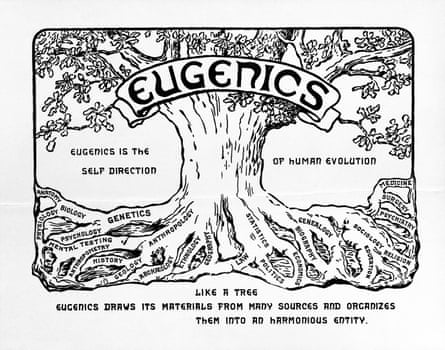
An enduring image from the early decades of the movement is the “eugenics tree” commissioned for the Second International Congress of Eugenics, held in New York City in 1921. Growing from roots labelled with disciplines across the natural sciences, social sciences and humanities, the tree is surrounded by the words “eugenics is the self direction of human evolution”. In that image, the accumulation of knowledge as well as biological processes are provided with a teleology. But what are their goals? What is all the control, management and optimisation really for?
To Galton, and to the generations of committed eugenicists who succeeded him, eugenics was politically and morally necessary in order to prevent societal disaster due to degeneration. Following earlier thinkers such as Thomas Malthus, they worried that too many poor and undesirable people were reproducing. In a short time, the superior peoples, whether defined as the upper class or as “Anglo-Saxons”, “Nordic types” or “Aryans”, would be outbred and outcompeted by their natural inferiors.
Eugenics’ proposal of wholesale management of the population was thus made in service of a particular ideal of humanity, where the universal “best” was defined in a strikingly narrow way. Through the notion of “hereditary genius”, Galton presented the privileges of wealth and class as innate qualities; while he explained undesirable traits such as “vagrancy” and “criminality” as the causes, rather than the consequences, of poverty, deprivation and marginalisation. Galton’s eugenic utopia was an idea that reflected the prejudices of a particular place and time.
The same is true of liberal eugenics in our own time. We may question whether the genomics companies’ promises of “best babies” are credible. But it may be more important to ask what their notion of the “best” is. What do they see as valuable and worthless in a human life?
Liberal eugenics accentuates the positive. In an attempt to distance itself from the forced sterilisations of the past, it prefers to focus, as Nucleus does, on human improvement and enhancement. But as Rutherford notes, in biology you cannot select for something without selecting against something else. Positive eugenics and negative eugenics are two sides of the same coin; without an idea of what is undesired, there can be no notion of the desirable.
For the Victorian eugenicists, the “best” was an amalgam of racial fantasies about “Nordic” or “Aryan” types conflated with the privileges of the upper classes, defined against the undesirable character of brown and black people, and the underclass. For the new eugenics in its liberal form, positive qualities coalesce around productivity and competitive advantage. The ideal human is strikingly close to the ideal worker, someone who is smart, efficient and unlikely to ever take a sick day.
Against this ideal stand the unwanted lives of people with disabilities and chronic illnesses. Intellectual disability was among eugenics’ biggest bugbears, but a range of other conditions recur as targets to be eradicated. In a way, this is unsurprising. Disability really does mean disadvantage. That is something I know in my bones – and my muscles. Disability, as the scholar Tom Shakespeare has written, is a predicament. It means limitation and restriction; it can mean pain and suffering. There are simple reasons why I longed so deeply for a cure. The reasons why and how that longing began to fade are more complex.
As it turned out, medical genetics really did produce an effective treatment for spinal muscular atrophy. About a decade ago, a drug called nusinersen was being developed. Some studies suggest that if it is administered early enough, it can wholly counteract the symptoms of the condition, while arresting its progression in adults. But medical genetics also proved that I didn’t have SMA after all. The original diagnosis was made on the basis of muscle biopsies and clinical guesswork. When a test for the genetic markers for SMA became available, mine came back negative. Instead, I was shown to have an even rarer condition – rarer, and less likely to attract research funding. I am tempted to quote Franz Kafka, who once remarked that there is infinite hope in the universe, only not for us.
But, in truth, that isn’t quite apt. Losing both the original diagnosis and the possibility of a treatment felt like a wave of sorrow, tinged with relief. Strange as it may seem, it also gave me a greater sense of freedom, that my life was really my own.
Don’t get me wrong. If there was an actual cure for my condition, I would take it. But there won’t be one, at least not for me. Too much time has passed; too much of my life is behind me. It is my life as it unfolded, and I try my best not to compare it to lives I didn’t live.
It is easier to think this way in your forties than in your teens. In the company of my nondisabled friends, I see plenty of injuries, illnesses and vaguely defined aches. We all have the markings of life. It’s not exactly that my disability ceases to matter as I grow older. In one way, it’s quite the opposite, as I feel the physical impact of the world on my muscles and joints. But I do feel a sense of convergence with my kith and my kin about the tenuousness and frailty of it all, about the need to take care of each other, as we hurtle towards what is coming.
Call it a kind of realism. Those of us who have kids know another side of it. If you plan to have a particular kind of child, you are setting yourself up for failure. Every parent I know has had to abandon their notions of what they thought their children would be for the reality of their particular children. I don’t think any one of them subscribed to the idea of an ideal baby. I hope they didn’t. Such an ideal is a terrible thing for parents as well as children to live up to.
This is the most corrosive effect of liberal neo-eugenics: in positing that an individual ideal of embodiment is something that can be specified, quantified and realised, it creates a framework for torturing both our children and ourselves. Why are we not this perfect thing? Why are we not fitter, happier, more productive? I’m not particularly sentimental about the value of disability in any particular case, but I think it is crucial to acknowledge disability as part of human variation. In treating ever more traits and qualities as things to be measured, ranked and diagnosed, we are doing the opposite – turning variation itself into something like disability.
For me, hope comes from working to change the world so that it accommodates imperfection. One of the reasons I dislike liberal eugenics is that its individualist ethos runs counter to political measures that have mattered immensely in my lifetime. I believe we should direct our efforts toward making better societies rather than making better people.
During the postwar era, in parallel with the eugenic shift from the population level to the individual level, disability began to become a socio-political issue rather than a medical one. What the sociologist Mike Oliver once called the “personal tragedy theory” of disability was challenged by a social model that explained how people with a range of different impairments and illnesses were made disabled by societal structures.
Essentially, what constitutes “disability” varies with place and time. Although dyslexia can be hugely disadvantageous in the modern world, in a nonliterate society it amounts only to neurological difference. The kind of mobility impairment that I have – that is, being unable to walk for more than a few steps, or get up from the floor – is restricting under any circumstances. But it is orders of magnitude more disabling in a society without wheelchairs, or wheelchair accessibility. In between these extremes, there are conditions, illnesses and impairments that amount to disability in some contexts but not in others.

The goal is not to abolish cures, but to abolish the idea that only cures, or the prenatal optimisation of an embryo, can make for a life worth living. For the disability movement, the aim has always been to make a better world for everyone: a world where people with all kinds of bodies can thrive and flourish. That includes both people who were born disabled and people who had disability thrust upon them. It is a project that accounts for human variation, and the variability of life.
That is why it stands opposed to the neo-eugenic notion that there is a “best baby”; the best, in the singular, is not something the human species should be striving towards at all. It also bears remembering that the majority of disabilities do not stem from wholly genetic causes, but from an interaction of human genetic variation with the wear and tear of the world. There are good reasons to research cures, treatments and interventions whenever possible; there are equally good reasons to temper our expectations for how the human species may be perfected.
Rosemarie Garland-Thomson, a scholar of disability and bioethics, has put forward the “case for conserving disability”. It is a provocative case, for the obvious reason that disability, and chronic illness, are qualities which entail vulnerability and dependence on others. But, then again, so does the human condition. We are born helpless, and we age into helplessness. Even if we come into the world equipped for perfect health, we are always at risk of illness and injury. Neo-eugenics offers a vision of total independence, of a disconnect from society. Measured against such an ideal, all of us fall short. However strong and self-reliant we may think ourselves to be, we are a social species, with few prospects of surviving, let alone thriving, on our own.
The aim of control, and so of predictability, is intrinsic to eugenics’ notion of the ideal society. But who wants to live in a fully controlled, fully predictable world? A world where an external entity tells you how to live your life down to the last detail, what to eat, when and where to move, what to watch, all in the name of becoming your best possible self? Oh, right.
Against this vision of total algorithmic control, we must appeal to the unpredictability of the human condition. Shortly after the second world war, Hannah Arendt wrote her magnum opus The Origins of Totalitarianism, in which she traced the construction of “superfluous people” – whole swathes of the population made disenfranchised and killable by states that saw them as useless at best and dangerous at worst. Eugenics was central to this idea of superfluousness: of people who were incidental to the future of the species, or the nation, or the race.
Arendt described totalitarianism as, among other things, a vision for the absolute closure of the future, against all alternatives. In a subsequent book, titled The Human Condition, she laid out the alternative principle, by which human societies could grow and develop. That principle was plurality – the encounter with difference. Only this encounter provided the possibility for what Arendt saw as humanity’s highest calling – namely action: something with unforeseeable consequences and unpredictable results.
With her notion of plurality, Arendt was not referring to disability as such. But the concept can be extended to human embodiment. As humans, we are very much alike, but we are not the same. We may share the same bodily needs that must be met if we are to flourish, but our varying capabilities, talents and preferences mean that flourishing may look very different from one case to the next. Against the narrow-minded eugenic idea of “the best baby”, we can perhaps set another concept of Arendt’s: what she called natality. With each birth, with each new person, something wholly unique comes into being. And the world is made anew.
KioskNews shows a cleaned-up reading view extracted from the publisher’s page — the original always lives on their site, not ours.