Israeli patient receives new non-invasive treatment for epilepsy in first outside Europe

The EASEE brain stimulation system, first developed in Germany by PRECISIS, is designed to treat epilepsy without opening the skull or inserting electrodes into the brain.
An Israeli patient received a non-invasive epilepsy treatment at Clalit-Beilinson Hospital, making her the first outside of Europe to use the technology.
The EASEE brain stimulation system, first developed in Germany by PRECISIS, is designed to treat epilepsy without opening the skull or inserting electrodes into the brain.
"This is the first time we can treat patients with epilepsy without penetrating the brain or inserting an electrode into it, while potentially achieving a significant reduction in the number of seizures," Dr. Idit Tamir, Director of the Functional Neurosurgery Unit at Clalit-Beilinson, said.
"The technology has demonstrated results comparable to the improvements seen with invasive neurostimulation devices. In appropriately selected patients, it offers a genuine alternative to these treatments."
Approximately one-third of the 100,000 people in Israel living with epilepsy do not achieve adequate seizure control through medication.
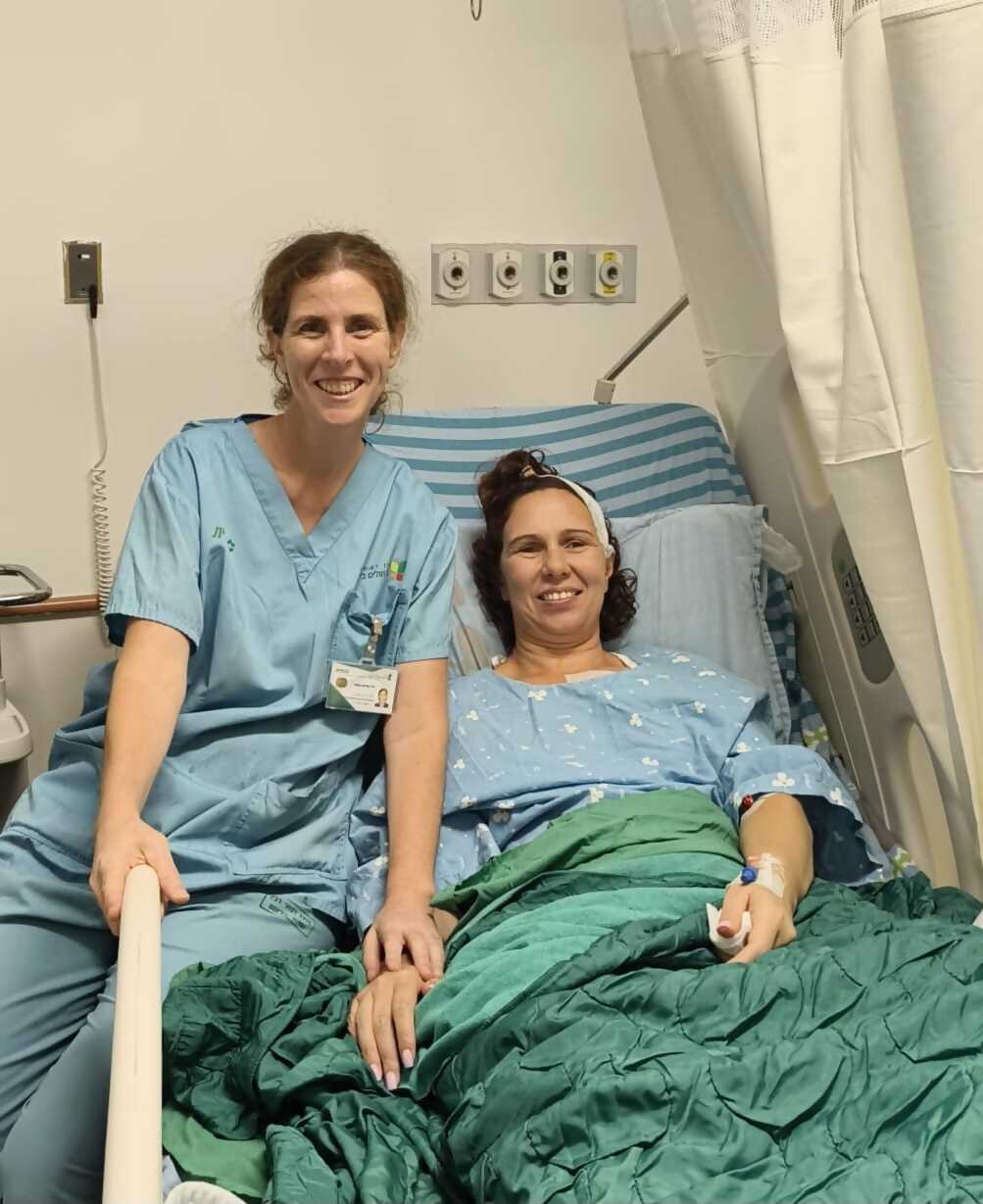
Israeli patient did not respond to medication for epilepsy
The first Israeli patient to undergo the treatment, 42-year-old Olga Moisa, has lived with epilepsy for 15 years and did not respond fully to medication.
"Some patients do not respond to medication. We sometimes try one drug after another, but none succeeds in controlling the seizures," Professor Felix Benninger, Director of the hospital’s Epilepsy Treatment Unit, explained.
On August 31, Moisa received treatment through the EASEE system, which electrically stimulates the seizure focus in the brain from outside the skull. Since then, she has not experienced any seizures, but it is still too early to fully determine its effectiveness.
"At the moment, the device is operating at a low stimulation level, allowing her body to gradually adjust to the stimulation. We still do not know what the outcome will be. We will only know in a few months," her son, Sasha, said. "Even if there is something that can reduce the seizures by 50%, that is already better."
KioskNews shows a cleaned-up reading view extracted from the publisher’s page — the original always lives on their site, not ours.