Bedok South, Xilin and Sungei Bedok MRT stations to open on Dec 26
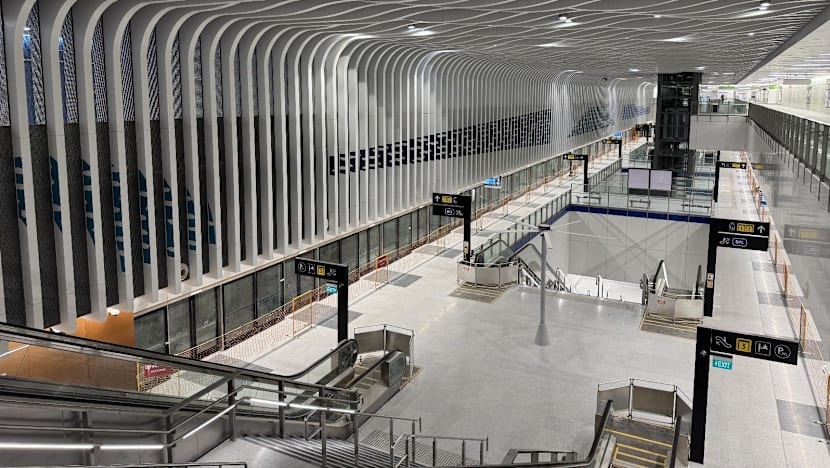
The three new stations on theThomson-East Coast Line and Downtown Line will improve rail connectivity in eastern Singapore, with commuters expected to save up to 25 minutes on some journeys.
New: You can now listen to articles.

This audio is generated by an AI tool.

04 Nov 2026 09:24AM
SINGAPORE: Three new MRT stations in eastern Singapore - Bedok South on the Thomson-East Coast Line, Xilin on the Downtown Line and Sungei Bedok, an interchange connecting both lines - will open for passenger service on Dec 26.
Announcing the opening date on Wednesday (Nov 4), Transport Minister Jeffrey Siow said the stations would link two major rail corridors, providing commuters with new routes and faster journeys.
"In fact, residents in the east may even be able to take the Thomson-East Coast Line continuously into the city centre, up north to Woodlands, and maybe conveniently across the Straits into Malaysia very soon," said Mr Siow, who was speaking at the opening ceremony of the Singapore Urban Mobility Week 2026 at Suntec Convention Centre.
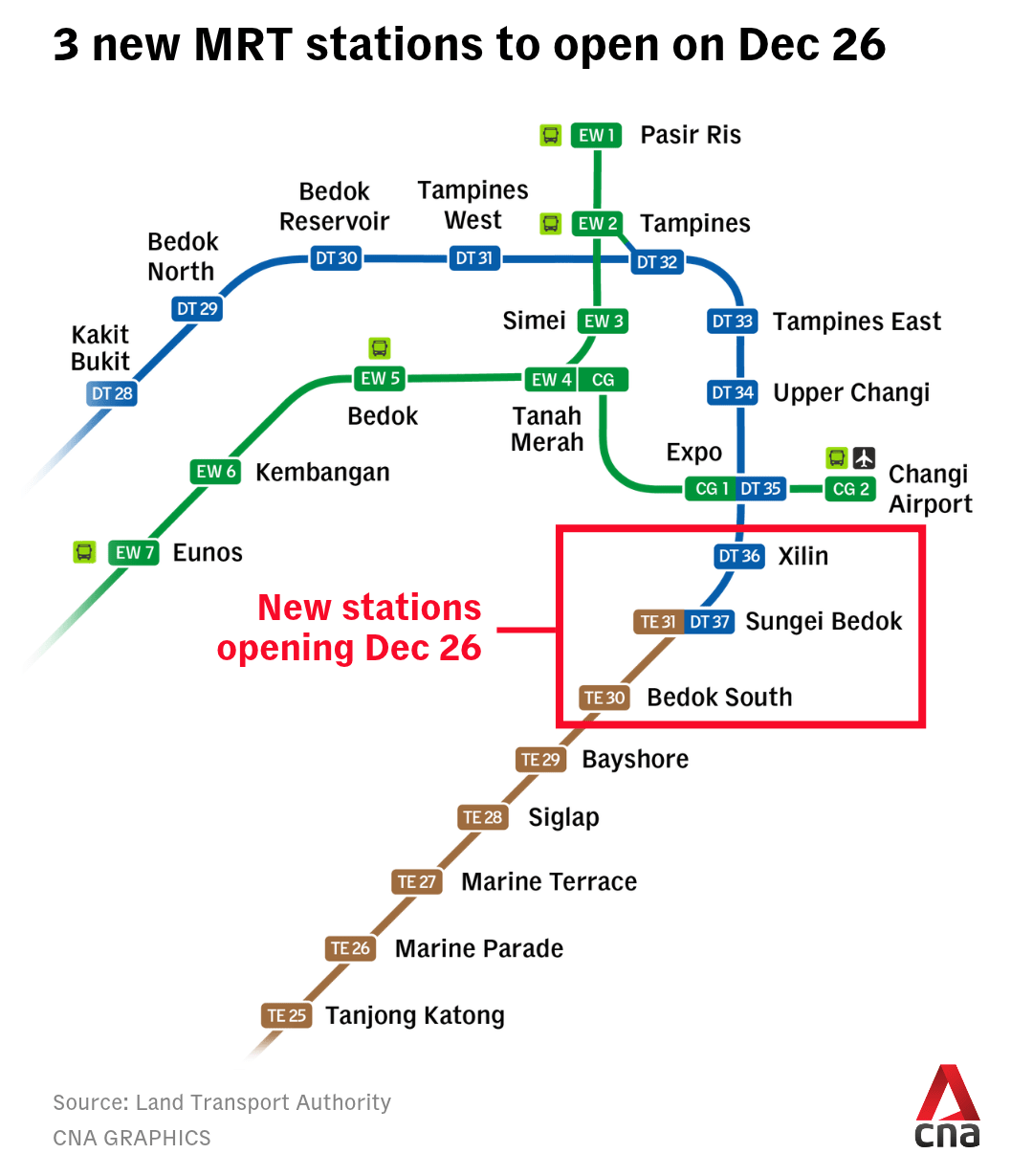
The Land Transport Authority (LTA) said the opening of Bedok South and Sungei Bedok, which make up Stage 5 of the Thomson-East Coast Line (TEL), will bring more than 240,000 households within a 10-minute walk of a TEL station.
With the opening of Xilin and Sungei Bedok stations, which form the Downtown Line 3 Extension (DTL3e), more than 220,000 households will be within a 10-minute walk of a Downtown Line (DTL) station.
Commuters travelling from Havelock to Changi Business Park via the two lines can expect their journey times to be cut from 70 minutes to about 45 minutes, saving up to 25 minutes.
Travelling from Marine Parade to Tampines via both lines will also take up to 10 minutes less than it does today.
IMPROVED CONNECTIVITY IN THE EAST
The new stations span a combined 4.3km of rail extensions.
Bedok South station, located along Upper East Coast Road, will improve rail connectivity for nearby residents and schools, including those in the Bayshore precinct.
Sungei Bedok station, an underground interchange connecting the TEL and DTL, will be the second interchange between the two lines after Stevens station.
Xilin station will improve access to the Changi South industrial estate, Changi Business Park and surrounding employment hubs. It will also provide more direct rail connections between eastern Singapore and the city centre, LTA said.
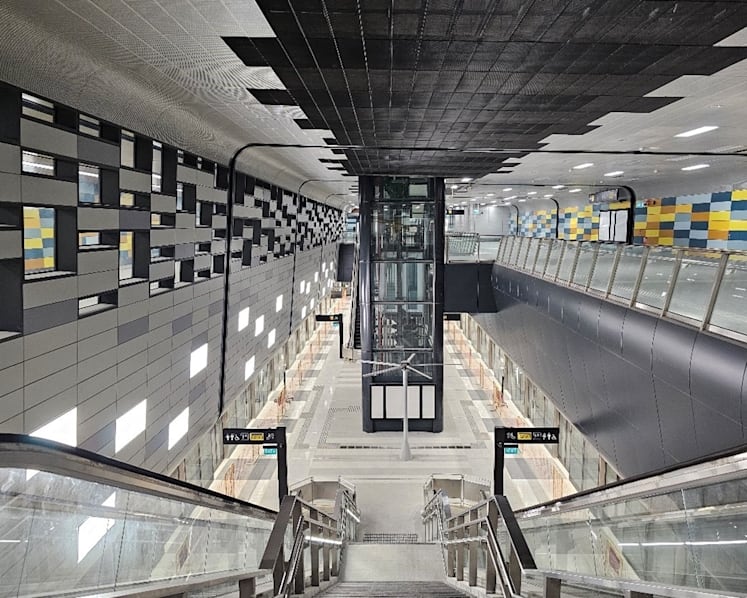
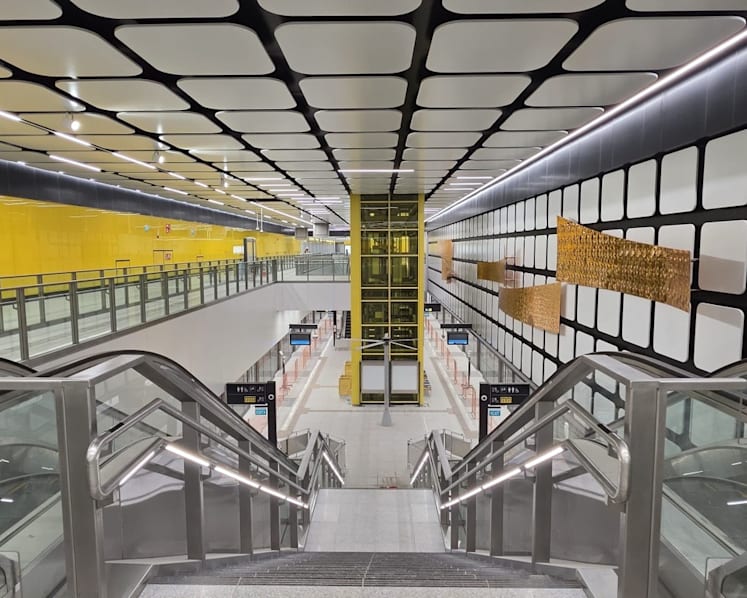
The TEL began operations in 2020 with three stations in Woodlands, before expanding progressively in stages from Springleaf to Bayshore.
The line was initially expected to be completed in 2024, but its completion timeline was pushed back, partly due to the COVID-19 pandemic.
The opening of Stage 5, which extends the line from Bayshore to Sungei Bedok, will complete its planned five-stage opening, bringing the TEL to 29 operational stations spanning 42.8km.
With the future extension to Changi Terminal 5, the TEL is expected to serve about one million commuters daily in the longer term, LTA said.
The DTL, which began operations in 2013, currently runs from Bukit Panjang to Expo, connecting the north-western and eastern parts of Singapore through the city centre.
With the addition of Xilin and Sungei Bedok, the line will have 37 operational stations spanning 44.6km.
Another three stations are planned to link Bukit Panjang to the North-South Line by 2035.

QUARTERLY REPORT ON AUTONOMOUS VEHICLES
In his speech, Mr Siow also announced that Singapore will begin publishing quarterly reports on autonomous vehicle deployments from December.
The reports will cover the scale of deployments, passengers' experiences and safety outcomes, allowing the public to assess the vehicles' performance based on evidence rather than perception, he said.
Singapore currently has 25 autonomous passenger vehicles on its roads, alongside a handful of autonomous commercial vehicles undergoing trials.
In April, the first autonomous shuttle service opened to the public in Punggol.
"Public feedback, especially on the passenger vehicles, has been very positive. Once you're past the novelty of the first ride, actually they find the journeys quite boring, but smooth and comfortable," Mr Siow said, adding that vehicles have proven to be "very safe".
"But as we scale up, we want to do so with complete transparency, so that we can strengthen public confidence in autonomous vehicles," he added.
Mr Siow noted that Singapore has been electrifying its buses, with the aim of having more than 3,000 electric buses by 2030 and beyond.
LTA said on Wednesday that it will progressively deploy 660 new electric buses with driver-assistance systems and longer-lasting batteries from the end of 2026.
The new electric buses have been designed based on feedback from commuters, bus captains and public transport operators, the authority said.
Key features include a low-floor design, with no steps along the main passageway and lower seating platforms, making it easier for commuters to board, alight and move around the bus.
A new full-colour rear electronic display system will show its service number and destination.
From 2027, the displays will also provide real-time visual alerts to other road users, indicating when a bus is stopping, moving off or allowing passengers to board and alight.
The buses will also be equipped with driver assistance systems, including onboard CCTV surveillance, collision warnings, surround-view functions, driver fatigue monitoring and camera mirrors.
These features will help bus captains maintain awareness of their surroundings and respond to potential road hazards, LTA said.
Advances in battery technology will also allow the new buses to travel further on a single charge.
Single-deck buses will have an operating range of up to 310km, compared with 280km previously, while double-deck buses will be able to travel up to 240km, up from 215km.
The longer operating ranges will allow for more flexible and efficient bus operations, LTA said.
KioskNews shows a cleaned-up reading view extracted from the publisher’s page — the original always lives on their site, not ours.