The 10 Best Hard Sci-Fi Movies in Film History

Michael Block is a 14 time GLAM Award nominated writer, producer, and host of the podcast Block Talk. Throughout his time in the entertainment industry, he has worked on and off Broadway as a stage manager, written several produced plays, critiqued hundreds of theatrical performances, drag and cabaret shows, and has produced events randing from drag competitoons to variety concerts!
On Block Talk, he interviews nightlife personalities, covers the wide world of entertainment through features, ranking episodes, and recaps ALL of Drag Race, as well as Dragula and Survivor. He has interviewed hundreds of RuGirls that span the globe at DragCon NYC, DragCon LA, and DragCon UK.
In his free time, he makes one-of-a-kind jewelry and gift baskets with his mom. He is a proud member of the LGBTQ+ community.
Sign in to your Collider account
The wonder of science fiction is the story's ability to take audiences places they never imagined they could go. From traveling through time to explorations through deep space, the genre's place in cinema has remained highly sought after. In movie history, some of the most beloved films have been narratives that are implausible, yet some of the greatest movies are rooted in hard science.
The hard science fiction subgenre is defined by strict attention to scientific accuracy, logic, and the laws of physics. The ten films on this list stick to those rules while still delivering an extraordinarily entertaining story. These films range from sci-fi classics to modern marvels, including one of the greatest films ever made. Though there are certainly many other hard sci-fi films that are good, these ten are simply the best.
1 '2001: A Space Odyssey' (1968)

Hailed as one of the greatest films ever made, 2001: A Space Odyssey remains a timeless classic. Directed by Stanley Kubrick, the film explores human evolution, artificial intelligence, and our place in the universe. From the dawn of humanity to a journey through space, 2001: A Space Odyssey brilliantly tracks time through a visual through-line: a mysterious black monolith. Co-written by Arthur C. Clarke, the film prioritizes scientific accuracy, realistic physics, and genuine technical forecasting over Hollywood tropes.
2001: A Space Odyssey’s greatest asset was having Clarke, a renowned science fiction writer and scientist, on board as they focused on practicality to predict the future. To show how ships simulate gravity on long-range voyages, the production built a massive 38-ton rotating centrifuge. That authenticity allowed the scenes to feel genuine. Long before they became everyday reality, the film accurately anticipated tablet-style computers, flat-screen video calling, and sentient artificial intelligence, with the latter serving as the predictive villain of the narrative. Finally, leaning into the physics of sound in space gave the film a full sensory experience. Without 2001: A Space Odyssey, there simply wouldn't be science fiction films like they are today.
2 'Arrival' (2016)
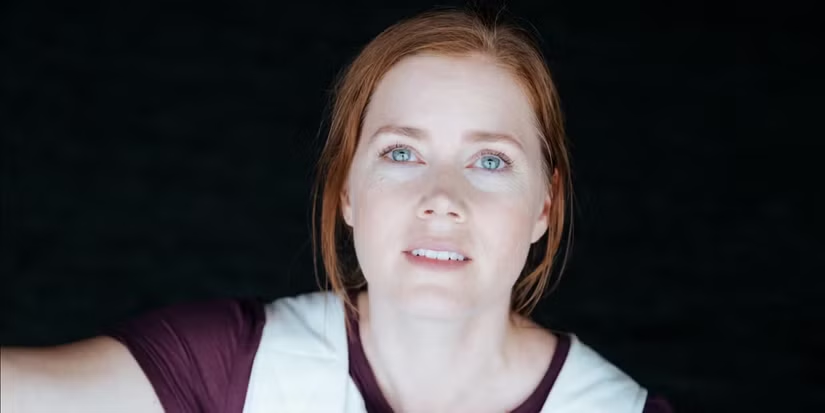
Centering on the power of linguistics, Arrival recontextualized the alien contact genre forever. Directed by Denis Villeneuve, Arrival centers on linguistics professor Louise Banks (Amy Adams) as she works to decode the language of alien visitors before global panic triggers a war. As she learns the language, she discovers the heptapods' written language alters Louise's perception of time from linear to non-linear, letting her remember the future as well as the past. Arrival is a sensational film that examines how human perception, language, and connection shape reality.
Arrival remains a premier hard science fiction film because it centers its plot on real scientific disciplines, linguistics and cognitive science. The movie treats first contact as an intense, methodical fieldwork problem in phonology, syntax, and semiotics. Its major theoretical anchor is its examination of the Sapir-Whorf hypothesis, yet it never overwhelms the entertainment factor. Arrival is a quiet, methodical look at how real governments, academics, and scientists would navigate an existential global event. Still, Arrival is a human-scale story.

One of the most defining science fiction films of the ‘90s is Contact. Directed by Robert Zemeckis and based on Carl Sagan's 1985 novel, Contact follows Dr. Ellie Arroway (Jodie Foster), a passionate astronomer, as she detects a structured radio signal from the star system Vega. She is selected to pilot a transport machine, and she travels to a beach-like alien world. To external observers on Earth, Ellie's capsule merely dropped straight through the machine into a safety net in a fraction of a second, while to Ellie it felt like an 18-hour journey. Proving it and making others believe is now the biggest test. A profound story that explores the battle and intersection of science and faith, Contact proves all you need is a leap of trust.
Contact grounds itself in real astronomical methodology, actual scientific figures, and a patient, methodical depiction of how discovery happens. Sagan’s experience as an astronomer, astrophysicist, and lifetime of studying the cosmos allows the narrative’s DNA to be authentic. With other advisors supporting the story's plausibility, every element is carefully curated with science as its guide. Even Ellie’s process of the unglamorous side of science is treated with consideration over movie magic. Contact allows the audience to decode the message like a tangible puzzle. Nevertheless, at its core, Contact explores empirical scientific proof versus personal experience and faith, leaving the ending deliberately ambiguous to mirror the timeless nature of belief and evidence.
4 'Ex Machina' (2014)
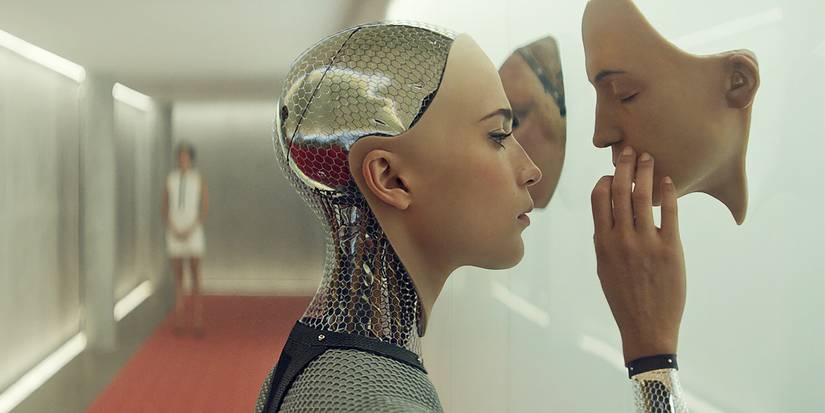
A genuinely underrated masterpiece, Ex Machina follows young programmer Caleb Smith (Domhnall Gleeson) who is invited to test advanced artificial intelligence by brilliant and reclusive CEO Nathan Bateman (Oscar Isaac), only to become entangled in a dangerous game of manipulation and escape with Ava (Alicia Vikander), a sophisticated humanoid robot with artificial intelligence. Ex Machina questions what makes someone truly human and whether an AI can genuinely feel or merely simulate emotion while critiquing the ethics of male creators building obedient, objectified female AI entities to serve their own egos.
Written and directed by Alex Garland, Ex Machina grounds its artificial intelligence concepts in real-world psychology, ethics, and computer science rather than fantastical space-opera tropes. The story explores how hyper-advanced AI won't conquer humanity through brute physical force, but by outsmarting human emotion, exploiting anthropomorphism, and reading human desire better than humans understand themselves. With that daunting concept at its core, the action becomes tangibly terrifying. And nothing is scarier than a real-looking android! Ava is brought to life with a mix of practical polyurethane/metal-powder costumes and groundbreaking digital effects.
5 'Gattaca' (1997)

A truly forgotten splendor, Gattaca is a genius exploration into biology and DNA. The Andrew Nicchol-written and directed science fiction thriller is set in a near-future society driven by eugenics, where people's social class, career, and destiny are determined by their DNA at birth. Vincent Freeman (Ethan Hawke) is a natural-born "in-valid" with a heart defect and a predicted short lifespan, with dreams of traveling to space. Because space travel is locked behind genetic screening, Vincent purchases the identity of Jerome Morrow (Jude Law), a genetically superior "valid" athlete who was left paralyzed, deceptively using Jerome’s biological samples as his own. Gattaca explores whether a person's life is strictly defined by their biology or if willpower, ambition, and determination can break those limits.
Gattaca grounds its dystopian world in plausible molecular biology, biotechnology, and rigorous scientific logic rather than futuristic fantasy. Yet it doesn’t sacrifice the narrative's extraordinary thrills. NASA has deemed Gattaca one of the most plausible science fiction films ever made; its depiction of genetic screening and societal stratification reflects real trajectories in modern genetics. Looking back today, the film is even more haunting for the strides made since its 1997 release. The film presaged real-world debates regarding genetic privacy, discrimination, and designer babies, making it such an important film still.
6 'Her' (2013)

What may have been deemed a fantasy film then is now an eerily predictive story rooted in reality. Her, written and directed by Spike Jonze, follows Theodore Twombly (Joaquin Phoenix), a lonely, introverted man in a near-future Los Angeles who is going through a painful divorce from his wife, Catherine (Rooney Mara). He buys a new, artificially intelligent operating system, whom he names Samantha (voiced by Scarlett Johansson), and develops an intellectual and romantic bond. At its core, Her explores isolation in a hyper-connected, technology-driven world, questioning what defines a real relationship, emotional vulnerability, and whether love requires a physical form.
A truly genius film, Her builds a dedicated future in which human-machine intimacy is common, and technology has evolved into a friendly, warm world. The film anticipated fluid conversational AI, emotional synthesis, and the depth of human bonds with responsive software. In a time when society is glued to a screen and develops an emotional connection with their tech, the film uses its premise to examine real-world isolation, screen addiction, and how hyper-connectivity can paradoxically leave people lonelier. It depicts a future in which robots aren’t seeking global takeover, but rather a desire for AI to learn, adapt, and evolve for its companion. At the rate AI is growing, Her is becoming more and more genuinely possible.
7 'Interstellar' (2014)
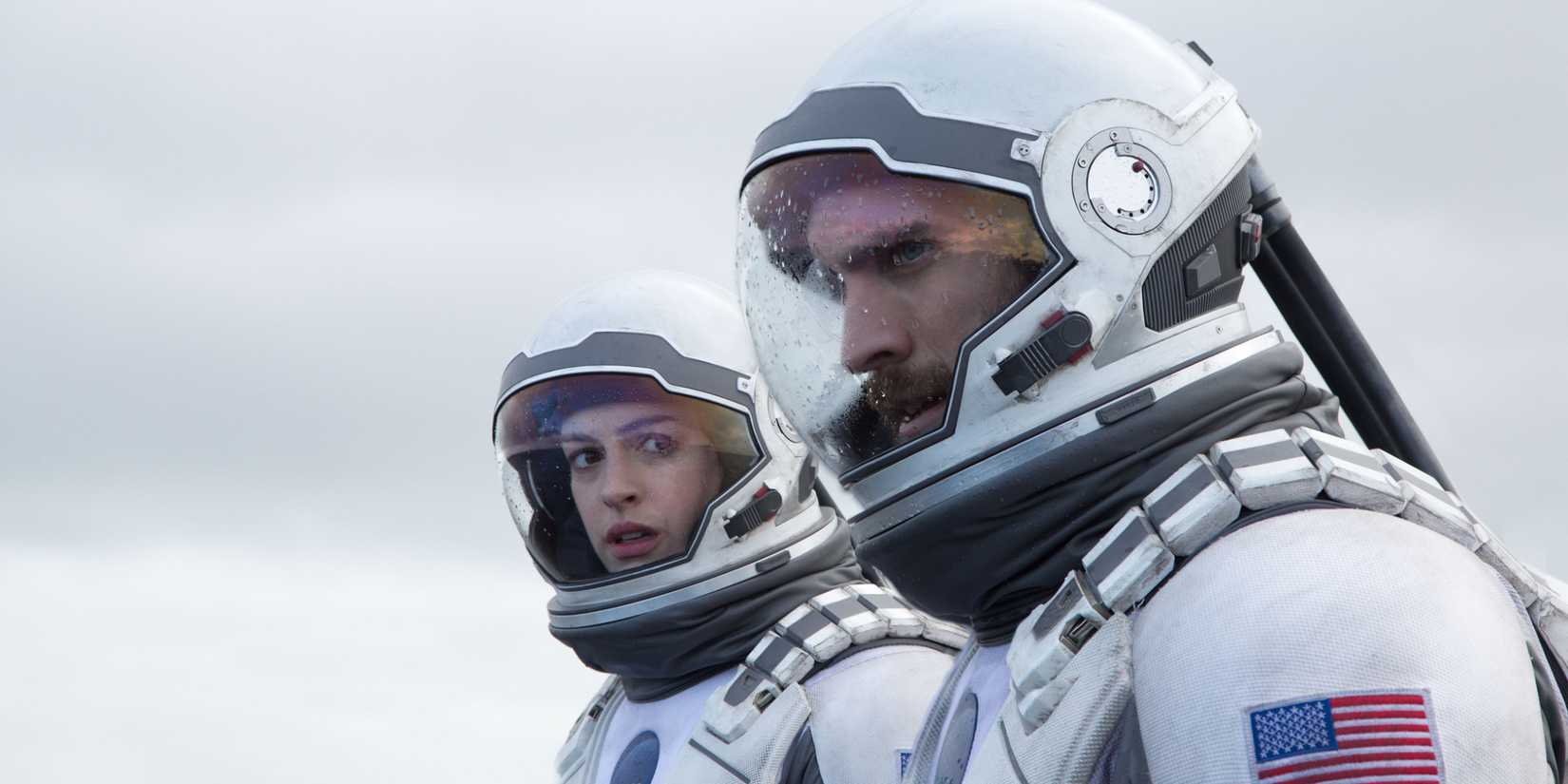
If there’s one visionary director who can tackle an epic in any genre, it’s Christopher Nolan. That's exactly what happens in 2014’s Interstellar. Set in a future in which the planet is experiencing global crop blight and severe dust storms, making Earth uninhabitable, humanity’s survival depends on former NASA pilot Joseph Cooper (Matthew McConaughey) and the crew of the spacecraft Endurance in order to find a durable solution on a potentially habitable world near a supermassive black hole named Gargantua. Nolan grounds his visual and narrative spectacle in real theoretical physics thanks to his bold collaboration with Nobel Prize-winning theoretical physicist Kip Thorne.
A truly harrowing, human story, the genuine emotion comes from the real science. Interstellar ensures core concepts like relativity, wormholes, and black holes follow actual equations. The visual representation of the supermassive black hole Gargantua and its glowing accretion disk was created using specialized ray-tracing software, which then led to new insights and real scientific research. The film realistically portrays the severe consequences of general relativity, making the time-lapse between father and daughter brutally harsh. With grounded human stakes, Interstellar’s emotional throughline centered on parental sacrifice and time makes it an accessible film for audiences of all kinds.
8 'Project Hail Mary' (2026)

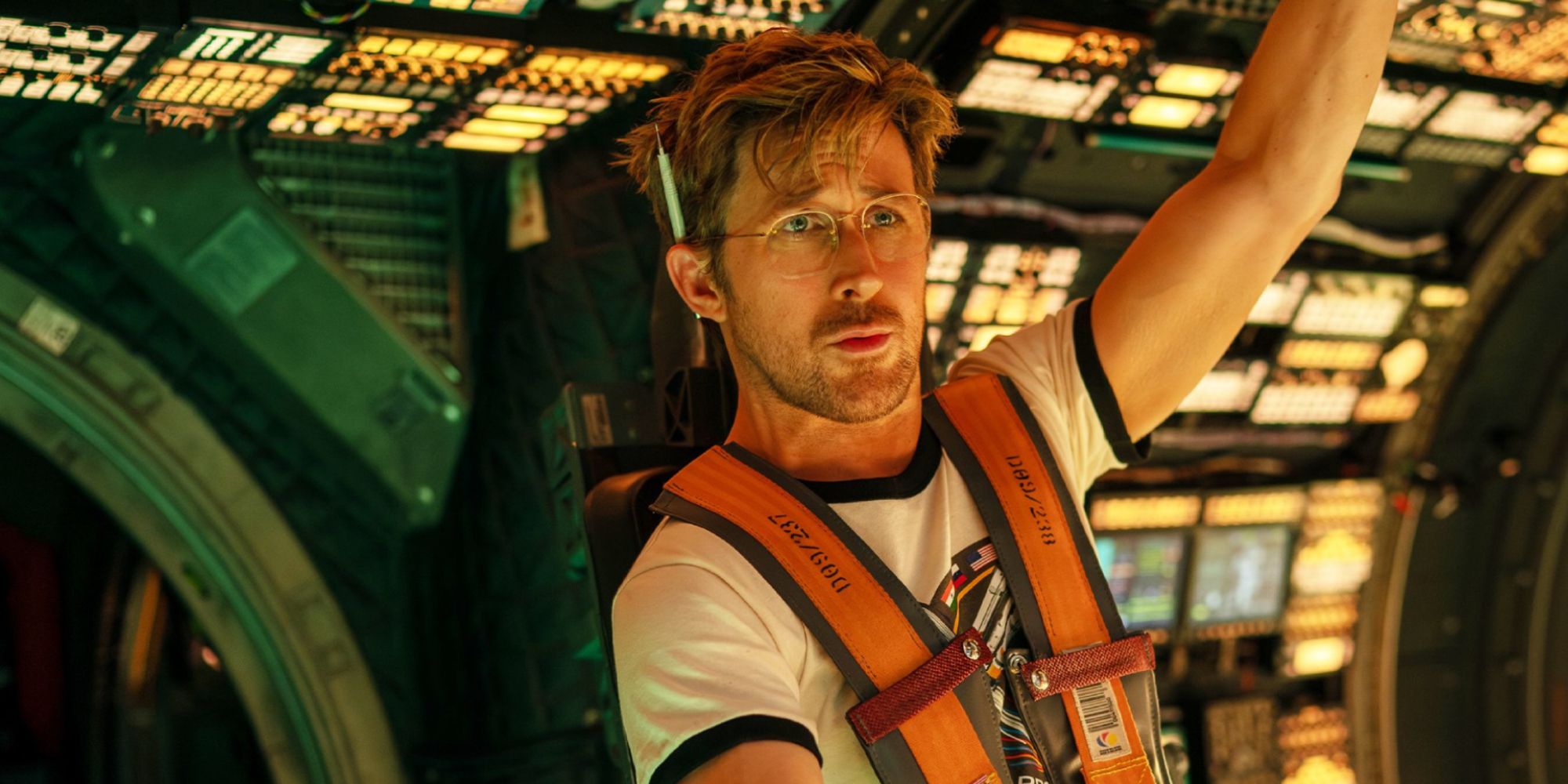
Perhaps the best sci-fi film of 2026, Project Hail Mary balanced heart, humor, and science for a truly sensational story. Directed by Phil Lord and Christopher Miller and written by Drew Goddard, Project Hail Mary lifts Andy Weir’s novel about Ryland Grace (Ryan Gosling), a former science teacher who wakes up with amnesia aboard a deep-space vessel and must find a way to save Earth from a sun-dimming organism. During his journey, Grace meets Rocky, a surviving alien engineer whose star is dying from the same threat. Together, they form a deep scientific partnership and friendship to solve the crisis. Project Hail Mary is a high-stakes survival story centering on real-world physics, active mathematical problem-solving, and realistic scientific methodology.
Audiences flocked to the film because of its accessible storytelling, which makes science look cool. The film meticulously addresses real physical principles, such as time dilation and Lorentz transformations during near-light-speed travel, rotational gravity, space vacuums, and light-emission spacecraft propulsion, yet it’s never overwhelming. It serves as a real-time teaching tool. By watching Ryland use step-by-step experimentation, calculations, and empirical deduction, his exuberant discovery becomes even grander and historic. The movie elevates hard sci-fi by uniting two individuals through the art of collaboration and communication. Project Hail Mary captures the isolation, silence, and scale of deep space with tangible realism.
9 'The Andromeda Strain' (1971)

A highly influential science fiction classic, The Andromeda Strain is a masterpiece in using the scientific process to build stakes and tension. Directed by Robert Wise, the hard sci-fi film is based on Michael Crichton’s novel about a government satellite that crash-lands near the small town of Piedmont, New Mexico, which releases an extraterrestrial crystalline microorganism that instantly clots the blood of almost every resident, killing them mid-step. A team of four elite scientists— Dr. Jeremy Stone (Arthur Hill), Dr. Charles Dutton (David Wayne), Dr. Ruth Leavitt (Kate Reid), and Dr. Mark Hall (James Olson)—is assembled to annihilate the outbreak. The Andromeda Strain meticulously details actual clinical methods, isolation protocols, blood-pH tests, and decontamination stages.
The Andromeda Strain is celebrated for its realistic depiction of a deadly unknown pathogen. Wise cast lesser-known actors, used realistic lab equipment, real hospital settings, and authentic audio recordings from NASA and the Jet Propulsion Laboratory to give the film a cold, declassified-report atmosphere. With a sanitary, sterile aesthetic, the film’s tension comes from brilliant people arguing, making mistakes, running diagnostic loops, and desperately trying to understand a life form. An innovative and proactive film, The Andromeda Strain resonates now more than ever.
10 'The Martian' (2015)

One of the most incredible sci-fi films of the 21st century, The Martian is Ridley Scott at his very best. Based on Andy Weir’s book of the same name, The Martian follows botanist and mechanical engineer Mark Watney (Matt Damon), who is left for dead after an accident on Mars. With limited food and supplies, he uses his scientific training to grow potatoes in Martian soil, manufacture water, and hack the habitat's systems as his team races to rescue him. A powerful story of resilience, The Martian relies on real, achievable science, practical engineering, and botanical problem-solving to sell a realistic science fiction drama.
The Martian is built around real or near-future technologies and orbital mechanics, including a real-world Earth-slingshot trajectory maneuver calculated by the crew and ground teams. NASA scientists and engineers were heavily consulted during production to ensure procedures, communications, and habitat systems reflected real spaceflight logic. The thrill of the film is watching Watney survive through step-by-step troubleshooting, scientific method, and human ingenuity. The sole antagonist is not an evil monster but nature and the hostile Martian environment itself. Though quite stressful to watch, The Martian remains one of the very best.

The Martian
- Release Date
- September 30, 2015
- Runtime
- 141 minutes
- Director
- Ridley Scott
- Writers
- Drew Goddard
KioskNews shows a cleaned-up reading view extracted from the publisher’s page — the original always lives on their site, not ours.