COASTAL EPIC: 50 years, 244km and countless stories — gruelling surf ski race gets its own book
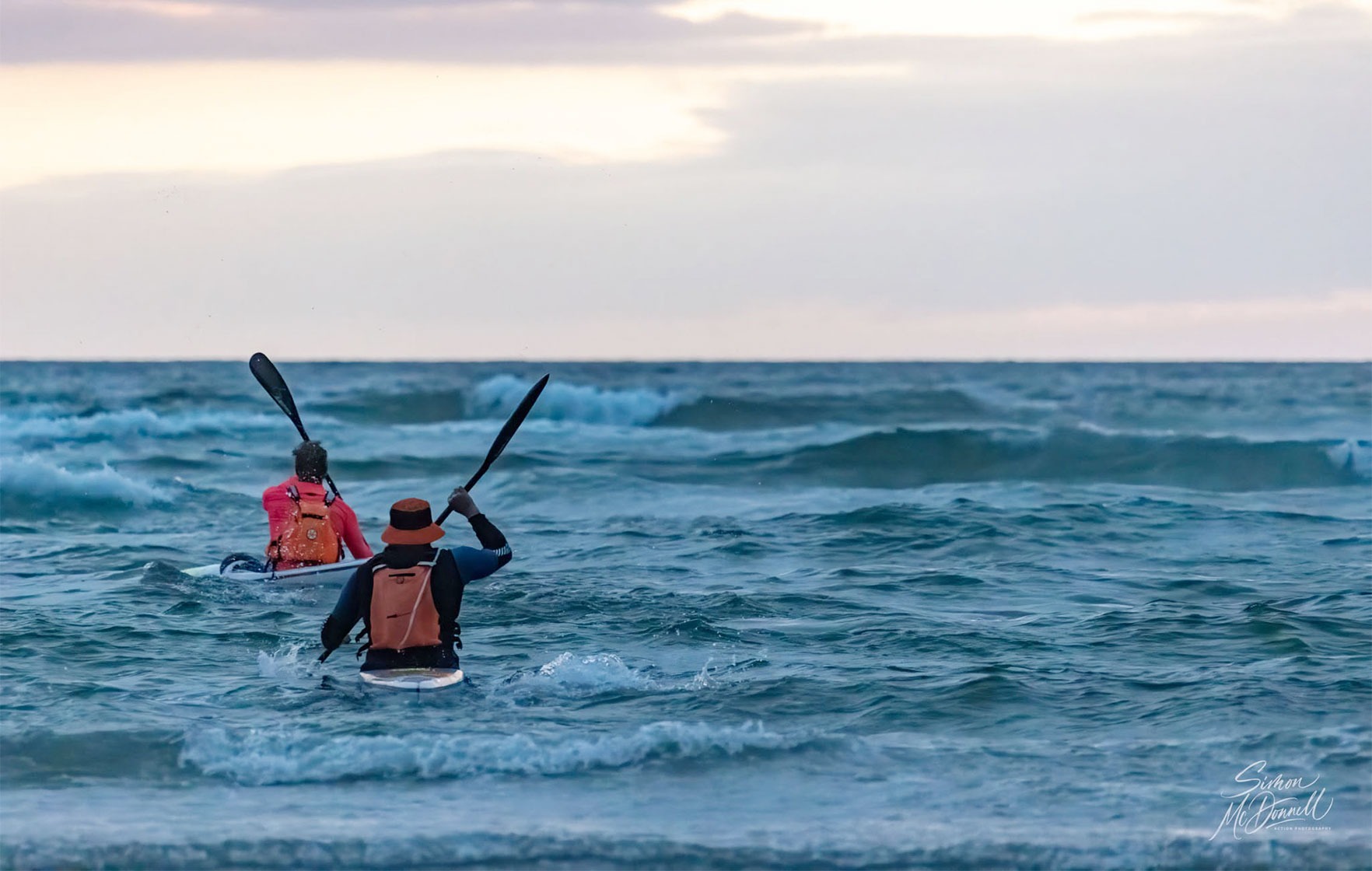
More than 50 years ago, two Johns challenged each other to a race that pushed the limits of their capabilities.
Over the past five decades, that legendary race grew into a life-changing event (some would even say a complete lifestyle) for every person mad enough to take on the challenge.
Two years ago, a team of equally mad enthusiasts took on the mammoth task of documenting the history, the people and the experiences of one of South Africa’s most iconic endurance sporting events.
Earlier this year, their efforts paid off, and the PE2EL Surf Ski Challenge came to life on the pages of the first edition of their coffee table book.
“We like to think of it as an encyclopedia of the event. From the first challenge that started it all and through the years of the event. We wanted to show its beauty – not just the scenic route along the Eastern Cape coastline, but the amazing people that helped to make the race what it is today,” said Gavin Harvey, a member of the publishing team.
/file/attachments/orphans/PE2EL-1_895422.jpg "After more than two years of compiling stories, pictures and life changing experiences, the PE2EL Challenge book was published earlier this year, and several book launches have been hosted across the country. (Photo : Supplied / PE2EL)")
The PE2EL Surf Ski Challenge is a four-day event that sees paddlers take a 244km journey from Bluewater Bay in Gqeberha up to Nahoon Beach in KuGompo, with stop-overs at Woody Cape, Port Alfred and Hamburg along the way.
The history of the event dates back to 1972. Paddler John Woods and runner John Ball challenged each other to a race to see who could make the trek between the two Eastern Cape cities, formerly known as Port Elizabeth and East London – giving the event its lasting name.
There was no prize other than bragging rights, which went to Ball, who claimed it to be the biggest challenge of his life.
The offshore route soon became a regular challenge between paddlers from near and far, and a decision was made to host the PE2EL Surf Ski race every two years, early in December.
“But this event is more than a race. It truly is a life-changing experience for anyone mad enough to take it on. For some people, it is all they can talk about. They put their lives on hold to prepare for this event, and to finish it is an absolutely crowning achievement,” Harvey said.
/file/attachments/orphans/PE2EL-3_837773.jpg "Every two years, dozens of surf skiers make their wat from Gqeberha to KuGompo over the span of four days and 244 kilometres, pushing themselves to the limit of human endurance. (Photo : Supplied / PE2EL)")
Harvey, who has completed the race himself, said the idea of documenting the race in a book had been around for many years, but no one ever dedicated the time to making it happen. And after five decades, the risk of losing people, information and anecdotes became a real threat.
“Living in the age of social media, everything is documented these days. But with older events, especially one so niche as the PE2EL, there are no resources just readily available.
“So, two years ago, a team of us came together and decided it was time for us to tackle this book. But believe me when I tell you, we did not realise the nightmare we were in for,” Harvey laughed.
Gathering of the record
Harvey’s brother, Nigel, took the lead on the project, and together with Francois Gous, Dave Collins and a handful of helpers along the way, they set about gathering contact numbers, newspaper articles, race records, pictures and stories that needed to be finely curated, written, re-written and edited before making the final cut.
From the onset, it was not quite clear what form the book would ultimately take. Over two years, information sometimes flooded in, while at other times it slowed to a trickle. But in the end, with the help of renowned author Dr Dean Allen, PE2EL evolved into a premium, hard-cover coffee table book.
While some pages are dedicated to pictures simply capturing the beauty of the Eastern Cape coastline, others tell stories of camaraderie, endurance and people being pushed to their absolute limits.
A quote from Thomas Murray summed it up: “My pastor asked me a question: ‘Have you even met God?’ I said yes, it was day two of the PE2EL in 1994.”
Participant and race organiser for the past 12 years, Bulla Wood, praised the publishing team for their efforts in putting the book together, saying it would go a long way towards building a lasting legacy and marketing the event locally and globally.
/file/attachments/orphans/PE2EL-4_362812.jpg "Every two years, dozens of surf skiers make their wat from Gqeberha to KuGompo over the span of four days and 244 kilometres, pushing themselves to the limit of human endurance. (Photo : Supplied / PE2EL)")
“I first participated in the PE2EL in 2008 and became involved as the organiser in 2014. At the time, interest in the event had started to fizzle out a little, and I saw an opportunity to revive it.
“I think serious discussions around putting a book together started in 2021, and the focus would be on the people involved and how it changed their lives. The team really did an excellent job.
“If you were ever on the fence about doing PE2EL, reading this book will surely convince you,” Wood said.
Another topic in the book, which Wood felt was important to highlight, was the ongoing partnership between the event and the National Sea Rescue Institute (NSRI).
“For years there has been a very good relationship between us and the NSRI. For us, it is crucial to have them on board for the safety of the participants.
/file/attachments/orphans/PE2EL-5_560728.jpg "The PE2EL Challenge has also become a regular training event for the NSRI along the route, with sea rescue personnel partnering with the event organisers to assist any participants in need over the four day event. (Photo : Supplied / PE2EL)")
“This is not a race where you can simply pull to the side when it gets a bit much. Sea conditions are unpredictable, the coastline can be daunting, and having the NSRI’s support is of the utmost importance.
“And for them, this is one of the biggest training exercises on their calendar, where they need to keep a close eye on up to 100 paddlers in conditions ranging from pristine, calm seas to crashing waves and harrowing surf,” Wood said.
Harvey and the publishing team have been travelling extensively in recent weeks, hosting a total of six book launches across the country.
“What has been great to see is the support and interest from the paddling community, young and old. But there has been a lot of interest from outsiders as well, showing us that it appeals to more than just paddlers, but travellers, tourists and people from all walks of life,” Harvey said. DM
KioskNews shows a cleaned-up reading view extracted from the publisher’s page — the original always lives on their site, not ours.