Chinese chip foundry CanSemi’s IPO oversubscribed 2,360 times as investors chase AI boom
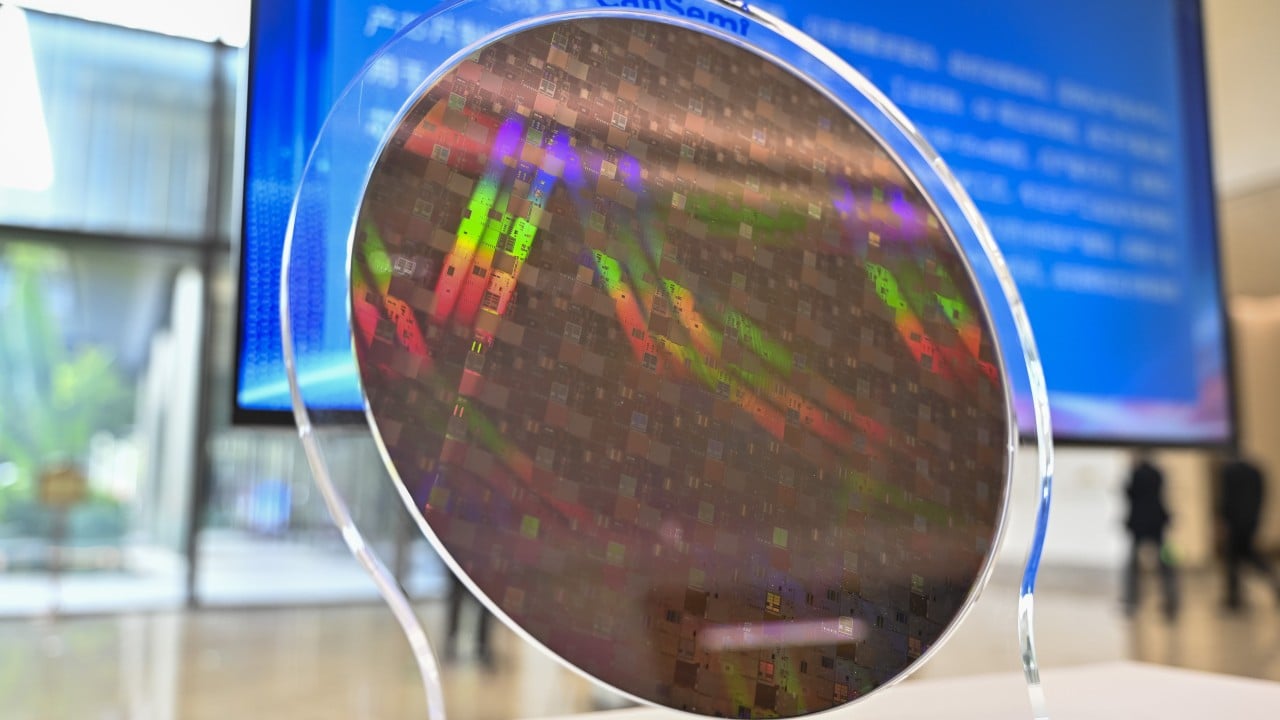
Chinese chip foundry CanSemi Technology’s Shenzhen initial public offering (IPO) is emerging as one of mainland China’s most sought-after tech listings this year, as investors bet on its push into silicon photonics and its role in domestic artificial intelligence infrastructure.
The Guangzhou-based company’s retail tranche was oversubscribed by more than 2,300 times after clawback, according to a stock exchange filing late on Sunday, as investors scrambled for a piece of the domestic semiconductor pie.
When trading begins, CanSemi is expected to set a milestone for the Shenzhen exchange as the first pure-play wafer fabrication company to list on its Shenzhen’s tech-heavy ChiNext board.
Here is what you need to know about the company and the momentum behind its highly anticipated debut.
What chips does CanSemi make?
Established in 2017, CanSemi is widely celebrated as “Guangzhou’s top chip company”. As a contract chipmaker that manufactures wafers for fabless chip designers, it focuses on mature-node semiconductors, including analog and mixed-signal chips used in power management, automotive electronics and industrial sensors.
What makes it stand out, however, is its bet on silicon photonics, a technology that uses light to transmit data and is increasingly seen as critical to next-generation AI infrastructure. The company launched a 90-nanometre silicon photonics technology platform in late 2024 and is now moving to 65nm process nodes.
CanSemi did not rush to squeeze onto the single-plank bridge of advanced nodes, but instead built its business around mature 180nm to 55nm processes
By April 2026, it had become the only enterprise in mainland China capable of large-scale mass production of 12-inch silicon photonic wafers, according to its prospectus, citing data from market research firm Frost & Sullivan.
CanSemi “did not rush to squeeze onto the single-plank bridge of advanced nodes”, but instead built its business around mature 180nm to 55nm processes, according to a recent note by Chinese semiconductor industry consultancy ICWise.
The company operates two 12-inch wafer fabs with planned capacity of 80,000 wafers a month. It had also started construction earlier this year on a third fab, which was expected to boost monthly capacity by 50 per cent, according to its prospectus.

What drove the retail frenzy?
CanSemi, which priced its shares at 12.01 yuan apiece and aimed to raise 7.5 billion yuan (US$1.12 billion), attracted bids from 14.4 million online accounts for a combined 423.4 billion shares, resulting in an initial online oversubscription of 3,303 times.
That triggered a mechanism to claw back 20 per cent of the offline allotment to the online tranche, reducing the final multiple to about 2,360 times and leaving investors with a successful allotment rate of just 0.042 per cent.
It ranked among the year’s most sought-after tech listings, alongside chipmakers Enflame Technology and ChangXin Memory Technologies (CXMT), which made their market debuts on Shanghai’s Star Market earlier this year. Enflame recorded a final online win rate of 0.025 per cent after 7.03 million accounts applied, while CXMT posted a 0.47 per cent win rate after 9.43 million accounts participated.
Investor enthusiasm has been supported by CanSemi’s institutional backing. Its shareholders include state-backed investors such as the Guangdong Semiconductor and Integrated Circuit Industry Investment Fund and the Science City Investment Group, alongside several national-level industrial funds.
Why does the listing matter for China’s chip sector?
CanSemi’s push into photonics through mature-node manufacturing demonstrated that domestic foundries could secure competitive advantages through operational precision, ICWise said, rather than focusing solely on leading-edge nodes.
The company said the bulk of the proceeds from the IPO – around 3.5 billion yuan – would directly fund the third phase of a 12-inch analog speciality-process production line, while 2.5 billion yuan was earmarked for advanced technology research and development, including silicon photonics.
Beyond its optical interconnect ambitions, market observers expect the capital injection to strengthen CanSemi’s position across legacy downstream sectors.
“Demand across the Internet of Things, automotive electronics, industrial controls and 5G communications remains robust,” said Guo Tao, an angel investor and committee member at the Chinese Association for Artificial Intelligence, pointing to rising electric vehicle adoption and smart-driving capabilities that continue to boost chip content per vehicle.
CanSemi was “expected to capture market share on the strength of its local operating advantages”, Guo added.
KioskNews shows a cleaned-up reading view extracted from the publisher’s page — the original always lives on their site, not ours.