US, China should learn from Cold War-era arms control to tackle AI risks: ex-US official
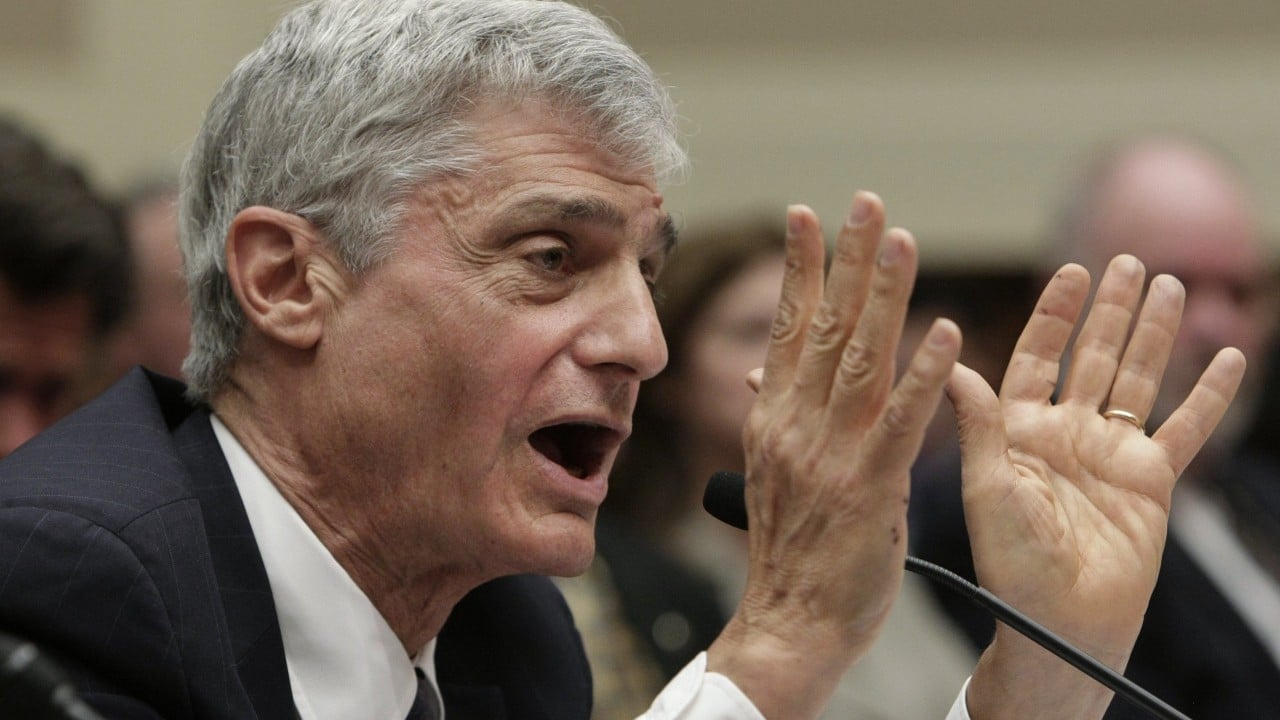
Washington and Beijing should put aside their mutual distrust to address the risks posed by artificial intelligence, much as the United States and Soviet Union cooperated on nuclear arms control during the Cold War, a former US Treasury secretary has urged.
Robert Rubin, who served as US Treasury secretary under former president Bill Clinton from 1995 to 1999, cited the Strategic Arms Limitation Talks (SALT) between Washington and Moscow decades ago as an example of two superpowers working together despite massive differences.
“Unfortunately, the United States and China have this distrust and mutual antagonism,” Rubin said via video at the Bund Summit in Shanghai on Monday.
“Just as happened with SALT and nuclear matters, we should put aside the distrust, put aside the antagonisms and work together on an issue that can so massively and powerfully and adversely, severely affect both our countries.”
During a fireside chat with Huang Yiping, dean of Peking University’s National School of Development, Rubin warned of potentially severe AI safety risks, including cyberattacks. Those dangers, he added, were growing as open-source AI made the technology available to more people and progress towards artificial general intelligence (AGI) continued.
“There’s no ready, permanent answer to that, but one thing I am absolutely convinced of ... is that our political systems in both our countries should be focused on this very carefully, very intensely, and we should be working together,” he said.
“If one country focuses on it and the other doesn’t, that doesn’t work either.”
China and the US held their first AI dialogue last month, led by Vice-Premier He Lifeng and US Treasury Secretary Scott Bessent, days before the summit between President Xi Jinping and US President Donald Trump in Washington.
Beyond AI safety, Rubin also discussed the widely debated issue of global economic imbalances, saying both countries needed to take action. Washington should rein in its fiscal deficits and Beijing should boost domestic consumption, he said.
The strength of the US economy left it well placed to reduce its deficit, although doing so would require a willingness to take difficult steps, he added.
“It does take a certain political will, and my guess is we’ll have to wait for the next administration for that to happen,” he said.
KioskNews shows a cleaned-up reading view extracted from the publisher’s page — the original always lives on their site, not ours.