Why HIFU isn’t one-size-fits-all, and what that means for you
Fine lines, a less defined jawline and sagging skin are among the more visible signs of ageing.
For those looking to address these concerns without undergoing invasive surgery, high-intensity focused ultrasound (HIFU) is one option, says Dr Gerard Ee, medical director and co-founder of The Clifford Clinic.
“HIFU works by directing focused ultrasound energy beneath the skin, creating controlled heat that causes collagen fibres to contract and stimulates the body’s natural repair response.”
“This may lead to gradual improvements in skin firmness and contour,” explains Ee, who has performed HIFU treatments since 2012.
What makes HIFU noteworthy is that the treatment approach can vary depending on what the patient hopes to address.
“The depth at which ultrasound energy is delivered, the areas targeted and the amount of coverage can all be adjusted according to the patient’s anatomy and concerns, allowing the treatment to be tailored to individual skin needs and preferred results,” adds Ee.
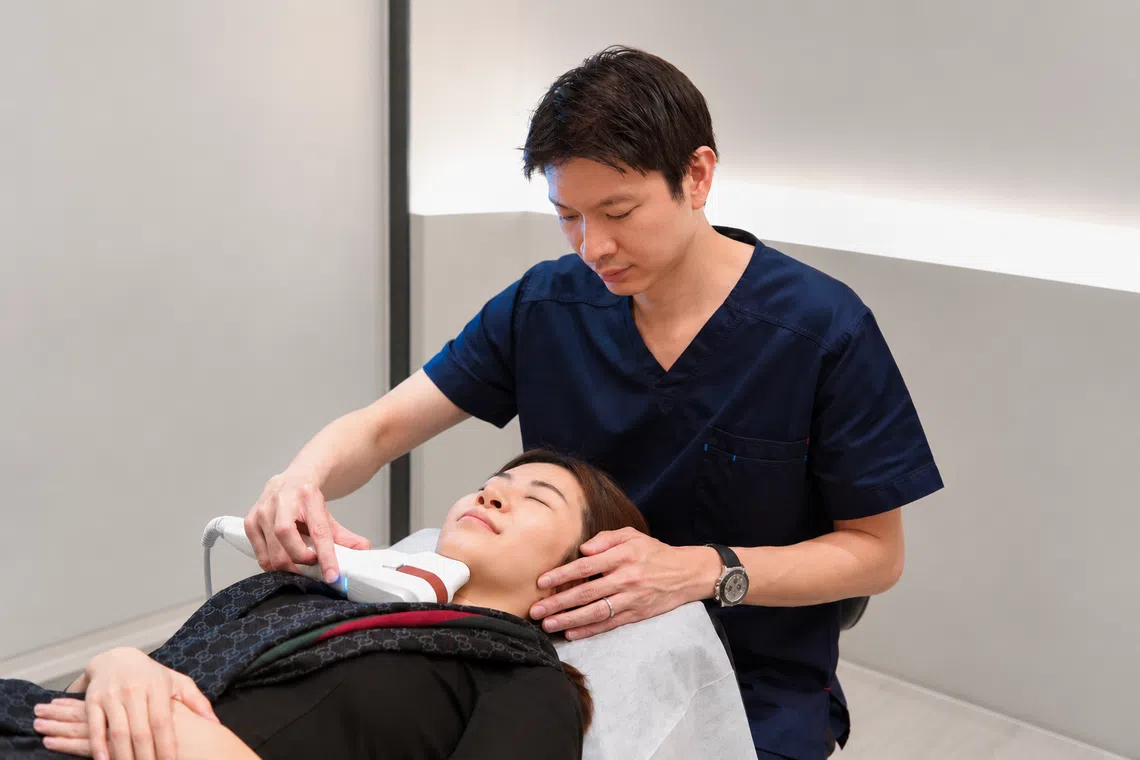
HIFU treatment depth and coverage are tailored to each patient’s anatomy and concerns.
PHOTO: THE CLIFFORD CLINIC
How HIFU is customised for different skin concerns
HIFU may be considered for patients with mild to moderate skin laxity who are looking to improve firmness or facial contours without surgery.
Depending on the technology and treatment settings, it may be used on areas such as the cheeks, jawline and under the chin. Certain approaches may also be considered for fine lines and delicate areas around the eyes.
Ee assesses skin thickness, facial volume, the degree of sagging, areas requiring support and any previous aesthetic procedures before deciding on the treatment approach.
“The face has broad surfaces, narrow areas and changing contours, so having different tools helps with adapting the treatment,” he says.
One consideration is how deeply the ultrasound energy needs to reach, as different skin concerns may require different treatment approaches.
For patients whose concerns involve deeper tissue support and facial contours, one option offered at the clinic is Tightan 2.
“It delivers ultrasound energy at three depths: 1.5mm, 3mm and 4.5mm, allowing different tissue layers to be targeted depending on the patient’s concerns.”
“Shallower depths may be used to address concerns closer to the skin’s surface, while deeper treatment can target the tissue layers that help support facial contours,” explains Ee.
“The deepest setting targets the superficial musculoaponeurotic system (SMAS), a layer of tissue that helps support the face. As ageing affects deeper tissues as well as the skin’s surface, treatment depth can matter when addressing sagging skin or a less defined jawline.”
Patients may experience tingling or a deeper aching sensation during treatment, depending on the area and settings. Numbing cream may be used to manage discomfort.
Beyond treatment depth, the number and placement of ultrasound shots also matter. Energy settings and treatment coverage can be adjusted according to the patient’s anatomy, with additional precautions needed for delicate areas such as around the eyes.
“Too few shots may leave insufficient coverage, even when the shots delivered are well placed. Think of sewing a seam; the stitches must be correctly positioned, and there must be enough of them to support the whole seam,” explains Ee.

The Clifford Clinic offers aesthetic treatments tailored to individual needs, with consultations to assess patients’ concerns and suitability.
PHOTO: THE CLIFFORD CLINIC
Who is suitable for HIFU and what can it realistically achieve?
Not everyone is a suitable candidate for HIFU.
Ee notes that patients with very lean faces may be at risk of unwanted facial fat reduction, while those with significant acne scarring may benefit from addressing the scarring through a different treatment approach.
For more pronounced sagging, HIFU may not provide sufficient improvement. “A facelift or neck-lift consultation may be more appropriate in some cases,” he says.
HIFU may also be considered for selected body areas, including the abdomen, upper arms and inner thighs, using appropriate treatment equipment. “However, it is not intended as a weight-loss treatment,” adds Ee.
Even for suitable patients, improvements are generally modest and may take time to develop.
“Any changes tend to develop gradually over the following months, although the extent and duration of improvement vary depending on the patient and treatment,” he says.
Some patients may see little visible change. Temporary redness, swelling, tenderness, bruising or changes in sensation can also occur.
Ee adds that rather than comparing treatments by price or device name alone, patients should understand what is included, the potential risks and the degree of improvement that may reasonably be expected.
“Your HIFU consultation should explain the expected improvement, limitations, risks and alternatives. The aim is to choose an appropriate treatment and deliver enough of it, carefully, to give the patient a reasonable chance of benefiting,” says Ee.
KioskNews shows a cleaned-up reading view extracted from the publisher’s page — the original always lives on their site, not ours.