Why the Philippines remains a hotspot for transnational drug syndicates
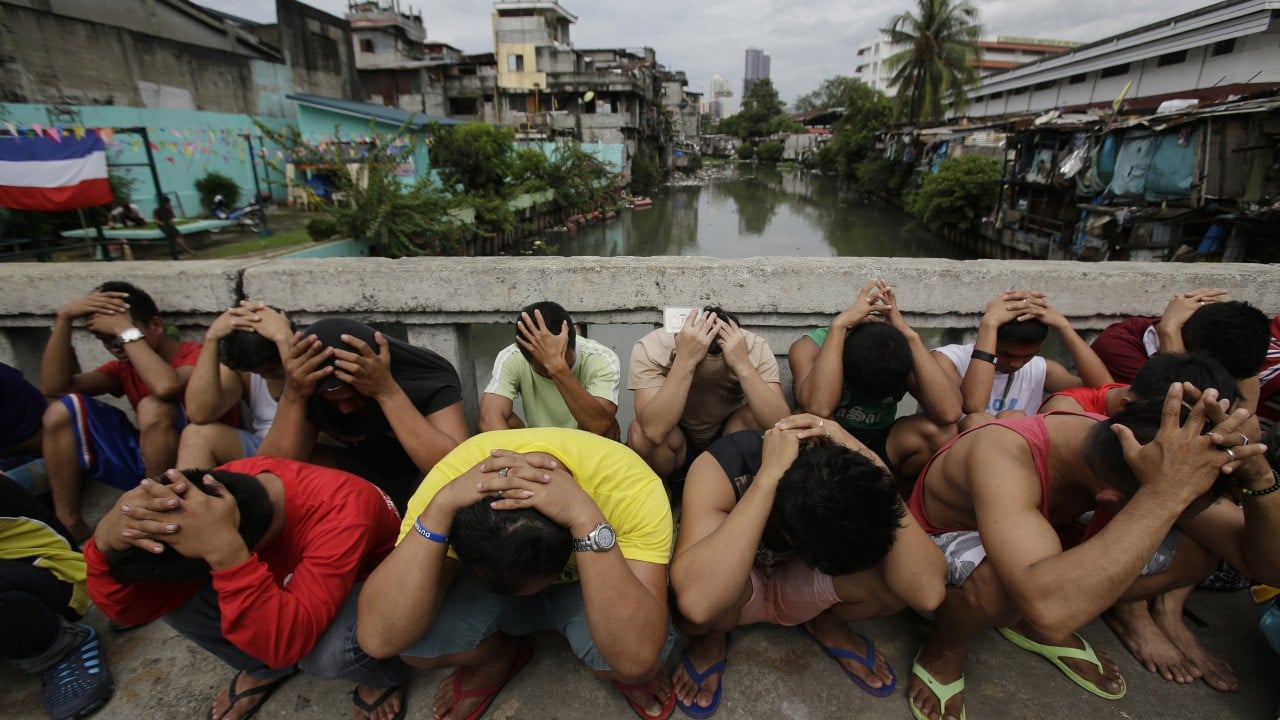
Transnational drug syndicates in the Philippines continue to thrive despite decades of crackdowns targeting street-level dealers, with analysts warning that regional suppliers, financiers and trafficking networks have largely eluded enforcement efforts.
Former drug officials and security analysts say the country’s drug trade remains closely connected to a wider regional supply chain, with criminal groups relying on local partners, maritime routes and established distribution networks to move methamphetamine across Southeast Asia.
A foiled attempt to smuggle US$55 million worth of methamphetamine aboard a private jet in Laos, allegedly bound for the Philippines, has brought renewed attention to these cross-border operations, prompting a House investigation into suspected Philippine connections.
At least five transnational drug networks operate in the Philippines, according to Mark Anthony Santos, chairman of the House committee on dangerous drugs, who cited information from an unnamed senior police official.
Chinese and Chinese-Filipino trafficking groups, as well as Mexican and West African drug cartels, including the Sinaloa cartel, dominated the country’s drug black market, Santos said.

“Drug syndicates do not operate solely through street-level distribution. They exploit private aircraft, maritime routes, financial intermediaries, and gaps in coordination among jurisdictions. Even when a shipment is intercepted, the people financing and organising the operation may remain beyond the reach of investigators,” Santos said in a statement on October 22.
“Authorities must look beyond intercepted shipments, follow the money, and work with foreign law enforcement to identify and dismantle the syndicates behind the drug trade.”
Among the major networks operating in the region is Sam Gor, an alliance of Chinese criminal groups linked to the crystal meth trade. It is estimated to control 40 per cent to 70 per cent of the regional drug market, operating through partners and criminal groups.
At a briefing earlier this month, Philippine Drug Enforcement Agency (PDEA) director general Isagani Nerez confirmed that Sam Gor comprised an alliance of five major Chinese triad groups: the 14K Triad, Bamboo Union, Big Circle Gang, Sun Yee On and Wo Shing Wo, whose leaders are believed to be based in Hong Kong and Taiwan.
This Week in Asia has reached out to PDEA for comment.
Sam Gor is reportedly also present in Vietnam, Cambodia, Laos, Myanmar, Thailand, New Zealand, Australia, South Korea, Japan, mainland China and Taiwan.
An evolution
Former drug officials and analysts said the potential Philippine connection to the foiled shipment in Laos, as well as the presence of transnational drug cartels in the country, reflected a long-standing problem dating back decades.
“These connections have existed for many years, particularly in the methamphetamine trade, where regional suppliers have historically relied on local Chinese and Filipino-Chinese groups for domestic distribution,” a former Philippine drug official, who requested anonymity, told This Week in Asia.
“The Philippines’ geographical location, extensive coastlines, maritime borders, and significant domestic demand make it vulnerable to these activities.”
08:07
Why Southeast Asia is a hotbed for Chinese criminal gangs
Jeremy Douglas, deputy director of operations at the United Nations Office on Drugs and Crime, agrees that the Philippines has long remained a major market for illicit drugs – mostly methamphetamine, known locally as shabu – from the Golden Triangle, the mountainous border region where Thailand, Myanmar and Laos converge near the Ruak and Mekong rivers.
The presence and activities of transnational organised crime groups in the Philippines have been observed for at least the past 10 to 20 years, according to Dr Rohan Gunaratna, a professor of security studies at the S. Rajaratnam School of International Studies at Nanyang Technological University.
“What we are seeing today is largely a continuation and evolution of criminal networks that have long operated across the region,” he said.
Gunaratna called the Southeast Asian drug trade ecosystem “highly dynamic, interconnected and adaptive”.
“It operates through a regional supply chain in which different countries play different roles, from manufacturing and precursor sourcing to transport, wholesale distribution and consumption,” he said.
Chinese transnational criminal organisations are significant actors in this ecosystem as their influence extends well beyond the direct trafficking of drugs, according to Gunaratna. “Their networks and business relationships enable them to connect production facilities with wholesale distributors and established criminal groups in destination markets.”
The region’s major drug markets included Thailand, the Philippines, Indonesia, Malaysia and Vietnam, Gunaratna said, although the scale and nature of consumption and trafficking varied across countries.
“Beyond Southeast Asia, Australia and other Asia-Pacific markets also remain important destinations for regional drug supplies,” he said.

The Philippines’ drug trade
The methamphetamine trade in the Philippines has historically been connected to the wider regional supply chain controlled by Chinese transnational criminal organisations, including networks associated with Sam Gor, according to Gunaratna.
He said Chinese transnational criminal groups played a significant role in establishing the meth trade in the Philippines during the 1990s. Over time, methamphetamine became the country’s dominant illicit drug market.
“At the higher levels, these networks have played a significant role in the sourcing and moving methamphetamine supplies, while local Chinese and Filipino-Chinese criminal groups have traditionally handled domestic wholesale distribution and retail networks,” he said.
Regional suppliers and local distribution networks did not necessarily work as a unified organisation, but through interconnected relationships and supply arrangements, he added.
Aside from its extensive coastline and several islands, the Philippines’ weak governance and corruption among law enforcement personnel and government officials created opportunities for organised criminal groups to operate, Gunaratna said.
He pointed to the Zamboanga-Basilan-Sulu-Tawi-Tawi corridor, which connects the southern Philippines with maritime areas bordering Malaysia and Indonesia, as an area of concern.
“Its geography, combined with informal maritime routes and limited enforcement coverage in certain areas, creates opportunities for the movement of illicit commodities across national boundaries,” Gunaratna said, adding that the Philippines primarily served as a destination and distribution market for drugs, and occasionally a transshipment point for markets such as Australia.
These operations predate former president Rodrigo Duterte’s administration, which launched a controversial war on drugs from 2016 to 2022 that left thousands dead.
But targeting lower-level players in the domestic market “does not necessarily translate into dismantling the larger regional supply chains, which operate across multiple jurisdictions”, said the former drug official.
“The drug problem was significant then, and it is now; the fundamentals of the regional drug market, the use and demand and the supply remain a major challenge the Philippines and [its] neighbours are still grappling with,” Douglas said.
KioskNews shows a cleaned-up reading view extracted from the publisher’s page — the original always lives on their site, not ours.