8 Perfect Sci-Fi Books With No Bad Characters

Diego Pineda has been a devout storyteller his whole life. He has self-published a fantasy novel and a book of short stories, and is actively working on publishing his second novel.
A lifelong fan of watching movies and talking about them endlessly, he writes reviews and analyses on his Instagram page dedicated to cinema, and occasionally on his blog. His favorite filmmakers are Andrei Tarkovsky and Charlie Chaplin. He loves modern Mexican cinema and thinks it's tragically underappreciated.
Other interests of Diego's include reading, gaming, roller coasters, writing reviews on his Letterboxd account (username: DPP_reviews), and going down rabbit holes of whatever topic he's interested in at any given point.
Sign in to your Collider account
Great character writing is not strictly essential to all speculative fiction, but there's a good reason why it's the backbone of most of history's greatest science fiction books. Though worldbuilding, pacing, stakes, and themes are just as crucial for a piece of science fiction to be truly legendary—and, at best, downright perfect—great characters are also important, which is probably why several of the best sci-fi books ever are also among the sci-fi books with the most interesting characters.
There are many things that can make a sci-fi book character great, but the key element is that readers are able to deeply connect with them regardless of whether they're an alien, a cyborg, or a space-faring human. Throughout the years, eight particularly noteworthy sci-fi books that happen to not have a single bad character, on top of being absolutely faultless themselves.
'Gideon the Ninth' (2019)
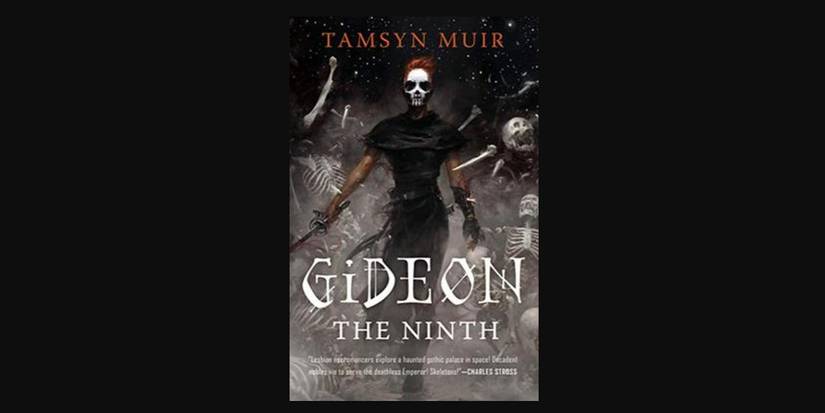
The mere high-concept pitch for Tamsyn Muir's Gideon the Ninth is so deliciously absurd that it makes it instantly clear why this is such an irresistibly fun modern classic: lesbian necromancers exploring a haunted palace in space for just under 450 pages. It's an effortlessly genre-blending gem with elements of space horror, Gothic suspense, and dark fantasy, making it one of the most purely entertaining and original science fantasy novels the world has seen in years.
Another big part of why Gideon the Ninth is one of the best science fantasy books since 1990 is the fact that the whole ensemble of characters is every bit as memorable as the plot. Gideon herself narrates the book with an irreverent voice that feels like a breath of fresh air for this genre. Muir also makes sure to constantly pair characters that may seem disparate on the surface, but this only results in a constant stream of fun moments that make every character come alive perfectly.
'Station Eleven' (2014)

Canadian writers' contributions to science fiction sometimes go underappreciated, which should absolutely not happen when praising the brilliance of Emily St. John Mandel's Station Eleven. Before it was turned into one of the most genuinely perfect miniseries of the last couple of decades, it was one of the most perfect post-apocalyptic novels of the 21st century, breaking away from the genre's usual tropes by celebrating the beauty of life and art rather than dwelling on the grimness of its dystopian premise.
Where a lot of post-apocalyptic fiction tends to flatten its characters into cheap stereotypes, Mandel is careful to never do that. Instead, Station Eleven is built on a large ensemble of characters who, though flawed, feel beautifully human and fully realized. No matter how small their role, every character is given a chance to show off their complexity and moral nuances, including a primary antagonist with so many deep layers that he never feels like any kind of villainous caricature.
'The Dispossessed' (1974)

When it comes to speculative fiction authors, few have ever been as groundbreaking or influential as Ursula K. Le Guin; and when it comes to the sci-fi works of such legends, few have ever been as revolutionary as The Dispossessed. The winner of all three of the Hugo, Nebula, and Locus Awards for Best Novel, this game-changing masterpiece strikes a faultless balance between utopian and dystopian sci-fi, exploring how no sociopolitical system is ever truly finished or beyond any need for change.
It's one of the best soft sci-fi books of all time, written with the utmost intelligence throughout—that intelligence extending to the phenomenal character writing. It would have been abundantly easy for any lesser writer to allow their characters to become mouthpieces for political or philosophical ideologies, but Le Guin never does that. Instead, her characters are vulnerable, psychologically complex, and deeply human. Shevek is one of Le Guin's most enrapturing protagonists, and the rest of the ensemble is just as important in elevating the book's thought-provoking themes.
'Red Mars' (1992)

The 20th century saw the publication of many a great book set on Mars, but remarkably few of them were better than Kim Stanley Robinson's Red Mars. This landmark in modern hard sci-fi writing is a must-read for anyone who loves the genre, setting a new standard for realistic Mars colonization narratives and sociologically complex world-building. It won the Nebula Award and launched the equally successful Mars trilogy; but as great as its sequels are, it's Red Mars that stands out as the best.
On top of the nearly unmatched scientific rigor, the jaw-dropping sense of scale, and the central philosophical question of whether humanity should prioritize terraforming Mars for humanity's benefit or preserving its natural life, you get some of the most human and believable character writing that hard sci-fi literature has ever seen. Every character seems to embody a different attitude toward the core ethical question that fuels the narrative's sense of momentum, but those attitudes feel deeply ingrained into their arcs rather than making them feel like cardboard-cutout archetypes.
COLLIDERInteractive
Long-range scan active
Movies/Science Fiction/Survival Assessment
Collider Survival Assessment
Which Sci-Fi World
Would You Survive?
8 questions · 5 worlds · one honest verdict
Five of the great screen futures, and not one of them is built for comfort. Answer eight questions about instinct, loyalty and the line you would cross, and the scan will tell you which one you would still be standing in. Worlds in range
▦︎The Matrix
◈︎Mad Max
◑︎Blade Runner
▲︎Dune
✦︎Star Wars
Signal lock01 / 08
Question 01 of 08INSTINCT
The world as you know it ends overnight. What is your first move? No wrong answer. There is a wrong hesitation.
Keys 1 to 5 or A to E · Enter to advance
Signal lock02 / 08
Question 02 of 08RESOURCE
You can stockpile exactly one thing. What is it? Choose carefully. You are not getting a second run.
Keys 1 to 5 or A to E · Enter to advance
Signal lock03 / 08
Question 03 of 08THREAT
Which kind of enemy scares you the most? Be honest about what keeps you up.
Keys 1 to 5 or A to E · Enter to advance
Signal lock04 / 08
Question 04 of 08AUTHORITY
How do you handle the people in charge? Every world has them. Even the ones that pretend otherwise.
Keys 1 to 5 or A to E · Enter to advance
Signal lock05 / 08
Question 05 of 08ENVIRONMENT
Pick the place you would rather wake up in: You will be there a while.
Keys 1 to 5 or A to E · Enter to advance
Signal lock06 / 08
Question 06 of 08ALLIANCE
Who do you want standing next to you? Pick one. You only get one.
Keys 1 to 5 or A to E · Enter to advance
Signal lock07 / 08
Question 07 of 08MORALITY
Which line would you cross to survive? Everybody crosses one.
Keys 1 to 5 or A to E · Enter to advance
Signal lock08 / 08
Question 08 of 08PURPOSE
What are you really fighting for? Last question. Make it count.
Keys 1 to 5 or A to E · Enter to advance
Scan completeYou would survive
▦︎ The Matrix The Resistance, Zion You take the red pill, you stay in Wonderland, and I show you how deep the rabbit hole goes.
You would survive The Matrix because you were never fully sold on the version of reality you were handed. You notice the seams. You ask the second question. In a world built to keep people comfortable and incurious, that instinct is the whole fight, and it is why Morpheus would have found you long before you found him. From the Collider file
- The Wachowskis' 1999 film won four Academy Awards, including Visual Effects and Film Editing.
- Bullet time was shot with a rig of roughly 120 still cameras firing in sequence around the actors.
- Keanu Reeves trained in martial arts for about four months before a frame was shot, recovering from neck surgery the whole time.
- It opened the same year as Fight Club and eXistenZ, in a run of films about not trusting the world in front of you.
Red pill energy Pattern spotter Built to question
◈︎ Mad Max The Wasteland Oh, what a day. What a lovely day.
You would survive the Wasteland because you do not waste energy mourning the world that ended. You move, you improvise, and you are very good with whatever is bolted to the thing in front of you. Furiosa would let you drive. That is not a compliment anybody earns easily. From the Collider file
- Mad Max: Fury Road won six Academy Awards in 2016, more than any other film that year.
- George Miller storyboarded the entire film as roughly 3,500 panels before there was a script.
- The chase was shot almost entirely practical in the Namib Desert, with real vehicles and real stunt performers.
- Anya Taylor-Joy and Chris Hemsworth carried the prequel, Furiosa: A Mad Max Saga, in 2024.
Keeps moving Improviser Good with engines
◑︎ Blade Runner Los Angeles, 2049 All those moments will be lost in time, like tears in rain.
You would survive 2049 because you know how to be small in a very loud city. You keep your head down, you do the job, and you hold onto one private thing that belongs only to you. That quiet stubbornness is exactly what both Deckard and K run on, and it is what keeps either of them going when the case stops making sense. From the Collider file
- Blade Runner 2049 won Roger Deakins his first Oscar for cinematography, on his fourteenth nomination.
- The film also took Best Visual Effects, 35 years after Ridley Scott's 1982 original.
- Villeneuve shot it on large-format film and kept the fog and rain practical on set wherever he could.
- Three short films by Luke Scott and Shinichiro Watanabe bridge the 30-year gap between the two movies.
Keeps her head down Private Noir soul
▲︎ Dune Arrakis Fear is the mind-killer. Fear is the little-death that brings total obliteration.
You would survive Arrakis because you think in decades while everyone around you thinks in weeks. You read the room, you learn the customs, you wait. The desert does not reward speed. It rewards people who understand that patience is a weapon, which is the one lesson the Fremen never had to be taught. From the Collider file
- Denis Villeneuve's Dune won six Academy Awards in 2022, including Cinematography and Original Score.
- Hans Zimmer turned down Christopher Nolan's Tenet so he could score Dune instead.
- Dune: Part Two arrived in 2024 and brought in Austin Butler, Florence Pugh and Christopher Walken.
- David Lynch's 1984 version and Alejandro Jodorowsky's unmade one are both their own legends by now.
Plays the long game Reads the room Patient
✦︎ Star Wars A Galaxy Far, Far Away Rebellions are built on hope.
You would survive the galaxy because you never try to survive it alone. You collect people. You end up in the middle of other folks' problems and you stay anyway. Every version of this story, from the Falcon's crew to the Ghost's, runs on somebody exactly like that holding the group together. From the Collider file
- The 1977 original won six Academy Awards plus a special achievement award for sound effects.
- John Williams' score was recorded by the London Symphony Orchestra and became the best-selling symphonic film soundtrack ever.
- Andor took the galaxy somewhere colder and earned Emmy nominations for drama series in both seasons.
- The saga now runs across eleven feature films and a growing shelf of series on Disney+.
Collects people Shows up Hope merchant
Compatibility readout · top three
1
2
3
Copied to your clipboard
Scan filed byCOLLIDERCollider.com · The Sci-Fi Desk
'Leviathan Wakes' (2011)
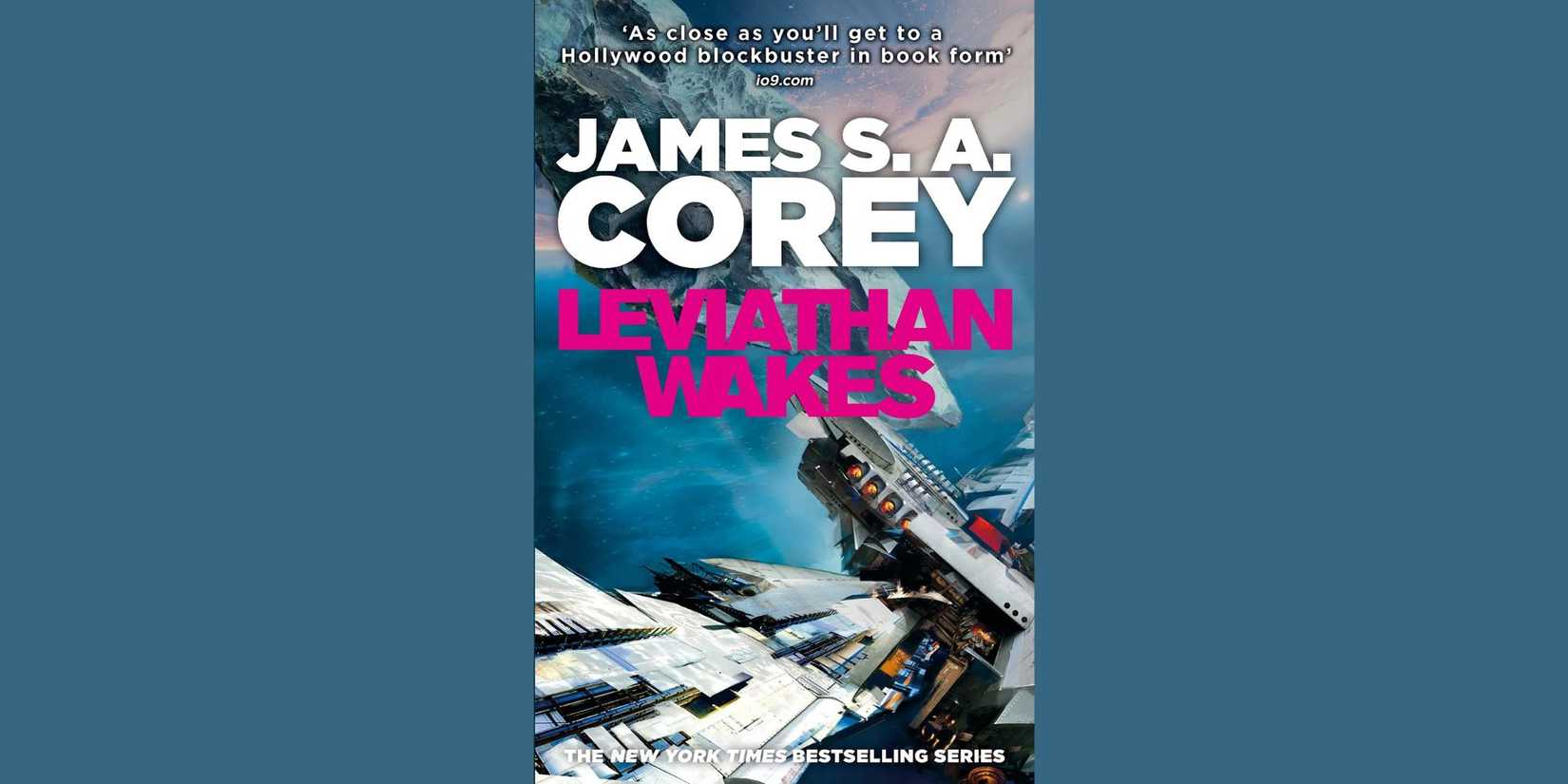
Leviathan Wakes and the Expanse series that it sparked were born as a pitch for a massively multiplayer online role-playing game, which then evolved into a tabletop RPG campaign. The journey culminated when Daniel Abraham and Ty Franck, writing under the pen name of James S. A. Corey, finally put pen to paper and turned the concept into Leviathan Wakes, which ended up being one of the greatest space opera books of all time. Grounded, tonally nuanced, and full of geopolitical complexity, it's a perfect masterpiece through and through.
It should come as no surprise that a book which was born out of an RPG campaign has characters with very distinct skills and personalities, clear motivations, and ensemble chemistry that feels remarkably organic. The rest of the Expanse series also has excellent character writing, but Leviathan Wakes perhaps deserves the most credit for being the one to introduce this incredibly memorable cast. As perfect narrative foils for each other, Jim and Joe are the best dual protagonists that a hard sci-fi space opera could possibly ask for.
'Dune' (1965)
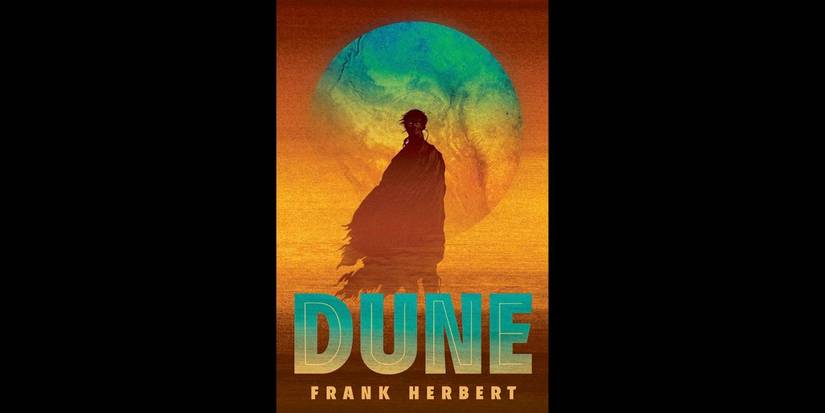
There are many who would still praise Frank Herbert's Dune as the single greatest and most influential sci-fi novel of the 20th century. Regardless of superlatives, there's practically no denying that as far as space opera books go, it doesn't get much more perfect than this. Thematically layered and narratively momentous, this cautionary tale against the dangers of charismatic leaders and religious fanaticism has only kept getting better with age.
It's one of the most essential sci-fi books to read before kicking the bucket, and that's in no small measure thanks to how timeless and memorable the character writing is. Paul is such a complex and layered protagonist that many people back in the '60s (and today) misunderstood him and saw him as a tragic hero rather than a cautionary figure. Then you get villains like Baron Harkonnen and Feyd-Rautha, and secondary characters like Chani and the Lady Jessica, all amounting to one of the most iconic ensemble casts in the history of sci-fi literature.
'Hyperion' (1989)
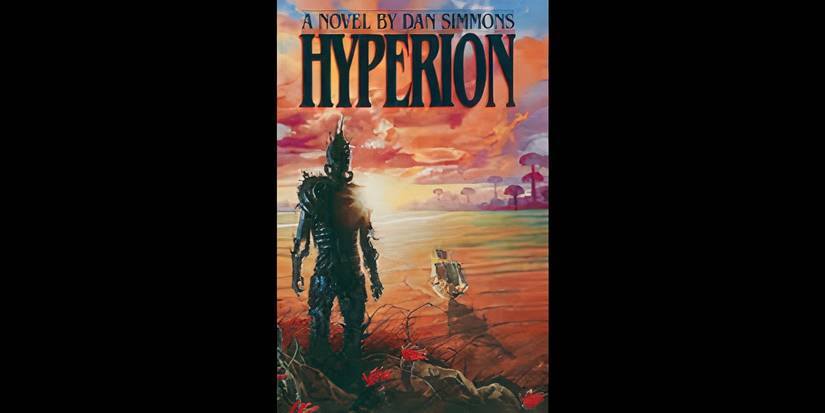
If Dan Simmons' Hyperion is one of the most amazing sci-fi books ever written—and it is— it's in no small measure thanks to the character writing. However, by no means is that the only strength that this masterpiece has going for it. Borrowing the structure of Geoffrey Chaucer's The Canterbury Tales, Simmons gave birth to not only the origin of the incredible Hyperion Cantos series, but also to one of the most ambitious and masterfully genre-blending sci-fi novels ever written.
Indeed, Hyperion is an absolute masterclass in virtually every way that matters in sci-fi writing, which inevitably brings the conversation back to its many fascinating characters. Because each pilgrim in this story gets roughly a novella-length backstory dedicated to their psychology and motivations, the characters become the book's entire plot. No one here is a clear-cut hero, which generates friction between characters that likewise results in the book's most engrossing and unforgettable moments of narrative momentum.
'The Left Hand of Darkness' (1969)

Who, if not Ursula K. Le Guin, could possibly be said to be responsible for not only one, but two of the sci-fi books with the most perfect character writing in the genre's history? When it comes to asking what the most perfect sci-fi novel Le Guin ever wrote could be, it's not actually much of a debate at all: Fans tend to agree that it has to be The Left Hand of Darkness. One of the best sci-fi books written since Dune, The Left Hand of Darkness won the Hugo and Nebula Awards thanks to how it completely revolutionized how sci-fi authors wrote first contact stories.
The novel mainly relies on two of the greatest and most fascinating characters that sci-fi literature has ever produced: Genly, a well-meaning but subtly prejudiced Starfleet captain whose journey of learning how to be humble and open-minded is the emotional heart of The Left Hand of Darkness; and Estraven, a disgraced prime minister whose dynamic with Genly is so enrapturing that it's reason enough for any sci-fi fan to immediately pick up this absolutely perfect novel. Add to that an ensemble of great side characters as the cherry on top, and you get one of the best sci-fi books in history.
KioskNews shows a cleaned-up reading view extracted from the publisher’s page — the original always lives on their site, not ours.