Fake authors, real payments, and AI — what Tamil Nadu’s library scandal reveals
A collection of classical Tamil verses became a philosopher. A book about deepfakes acquired two different authors, neither being its original writer.
Behind these literary transformations, the Tamil Nadu Directorate of Vigilance and Anti-Corruption (DVAC) alleges, was a more consequential administrative one: books that experts had not recommended entered government procurement lists for public libraries and were paid for.
At Coimbatore’s Periyar Arivulagam library, acclaimed Tamil novelist Perumal Murugan flagged several discrepancies. Elsewhere, economist Jean Drèze discovered a book he had never written attributed to him.
The alleged library procurement scam now involves suspect publishers, questionable ISBNs (unique codes for identifying books), inflated prices, questions over the use of artificial intelligence (AI) and five suspended officials. Its central question extends beyond whether AI produced bad books, and concerns how a publicly funded selection system approved them in the first place.
The FIR registered in the matter on Sunday (November 15) names publisher R Mohan and accuses unidentified public servants and others of collusion. It records payments of Rs 1.74 crore to two publishing houses for supplies across public libraries.
How did the controversy begin?
In a November 6 essay, Murugan identified nearly 1,800 books at the newly inaugurated library in Coimbatore, built at a cost of around Rs 300 crore, bearing the imprint of one Agalvilakku Publishing House and more than 100 from Phoenix Publishing House. Murugan flagged how Agalvilakku was not a known name in the publishing world.
Many of these books contained errors. Surya Balu’s Naladiyar: A Guide to Life, priced at Rs 1,445 for 300 pages, described the anthology as a poet and philosopher.
Story continues below this ad
Murugan himself belonged to the recommendation committee for libraries. The FIR now makes a crucial distinction between that committee’s recommendations and the books subsequently submitted for selection. It also records the errors he highlighted, including on Naladiyar, and how Dev Nilan’s Madurai Kanchi: A Literary Journey describes the classical work’s author as a king.
The absurdities prompted alarm bells to ring. The procurement records may explain how they reached readers.
Who does the FIR hold responsible?
The FIR names R Mohan, proprietor of both Agalvilakku and Phoenix publications, alongside unknown officials of the Directorate of Public Libraries, the Anna Centenary Library in Chennai and Periyar Arivulagam, and other unidentified people.
Story continues below this ad
It invokes provisions concerning conspiracy, cheating, criminal breach of trust, fabrication of documents, corruption and copyright offences.
Importantly, it does not name a minister or senior bureaucrat as an accused. Nor does it accuse every expert who recommended books. It identifies a coordination committee comprising S Kamatchi, V Dinesh Kumar, S Santhana Karthikeyan and S Santhana Krishnan, constituted by the director’s proceedings of November 18, 2025. Naming their committee roles is distinct from individually naming them as accused.
The central allegation is that officials and suppliers “colluded with each other”.
How might the books have entered the system?
The FIR offers a specific account: “The Books Recommendation Committee recommended approximately 26,000 books.” The coordination committee then added publishers’ books that the committee had not recommended and placed them before the selection committee.
Story continues below this ad
“The Co-ordination Committee did not mention these additions in the relevant note file.” This is the alleged breach between expert advice and administrative processing. A selection list could appear to carry the authority of a recommendation process without every title having passed through it.
The subsequent stages did not catch the problem, investigators allege. Selection took place on January 9, 2026, price negotiations on January 24, and high-level consideration on February 5. Purchase orders followed from February 7. Agalvilakku and Phoenix’s orders were dated February 14 and 13 respectively.
Who produced the books?
According to the FIR, Mohan principally worked in desktop publishing. Agalvilakku and Phoenix operated from the same Madipakkam address as companies called Sigma Prints and Sigma Publishing Services. He submitted 2,339 titles under Agalvilakku and 99 under Phoenix. The orders covered 1,857 books; a list of 1,779 Agalvilakku books was subsequently forwarded for payment processing.
The inquiry alleges that Mohan created books under fictitious names using material from websites and online applications, including ChatGPT. Their contents were described as: “vague, irrelevant, misleading and of substandard language”.
Story continues below this ad
The author lists suggested extraordinary productivity. The FIR credits “Monika Ravi” with 162 books, “Lakshmi Mohan” with 124, “Thamarai Panneer” with 123, “Thamarai Murali” with 115 and “Jothi Hariharan” with 114, across unrelated subjects.
Seventy-four author names appeared under both publishers. Deepfakes: The Coming Infocalypse appeared under “Manisha Saravanan” at Agalvilakku and “Charulatha Vivek” at Phoenix. The FIR identifies the original author as Nina Schick. A book about fabricated realities had apparently acquired fabricated authorship.
It also flags Tourism: Principles, Practices and Philosophies, credited to “Emily Lawson”, alleging copied contents, a fake author website and no matching ISBN on the portal.
What safeguards should have stopped this?
The Transparent Book Procurement Policy, introduced in March 2024, required ISBNs and subject-expert evaluation, the FIR says. The directorate’s pricing provisions also envisage genre-based assessments accounting for paper, printing, binding, royalties, translation and publisher profit. Printed cover prices were not meant to determine expenditure automatically.
Story continues below this ad
The FIR traces eight checkpoints: recommendation, selection, negotiation, approval, purchase order, receipt, verification and payment, adding that “The lists of the two publishers were accepted without scrutiny.” Rs 50 crore had been sanctioned for Periyar Arivulagam’s books and e-books, with a Rs 30 crore advance authorised. These allocations are not the alleged loss. The FIR separately identifies Rs 1.74 crore paid to the two publishers.
What have the court and government done?
The DVAC began its detailed enquiry on November 7. On November 10, the Madras High Court ordered an FIR, account freezes and disciplinary action, examining alleged breaches of its June 2024 procurement directions. “Actors change, actions do not,” Justices G R Swaminathan and M D Sumathi observed.
The government subsequently reported freezing three accounts containing Rs 22 lakh. Five officials were suspended on November 15: S Kamatchi, Dinesh Kumar, V Santhanakrishnan, S Santhana Karthikeyan and chief accounts officer J Juliet.
The court demanded accountability while reserving findings against individuals. The FIR now supplies a testable allegation: unrecorded additions followed by approvals and payments.
Story continues below this ad
Why is this politically damaging for the DMK?
Chief Minister and TVK chief C Joseph Vijay praised Murugan for exposing the alleged procurement corruption. “The DMK has committed corruption in a slightly different way, turning Coimbatore’s Periyar Arivalayam itself into a world of corruption,” said the CM.
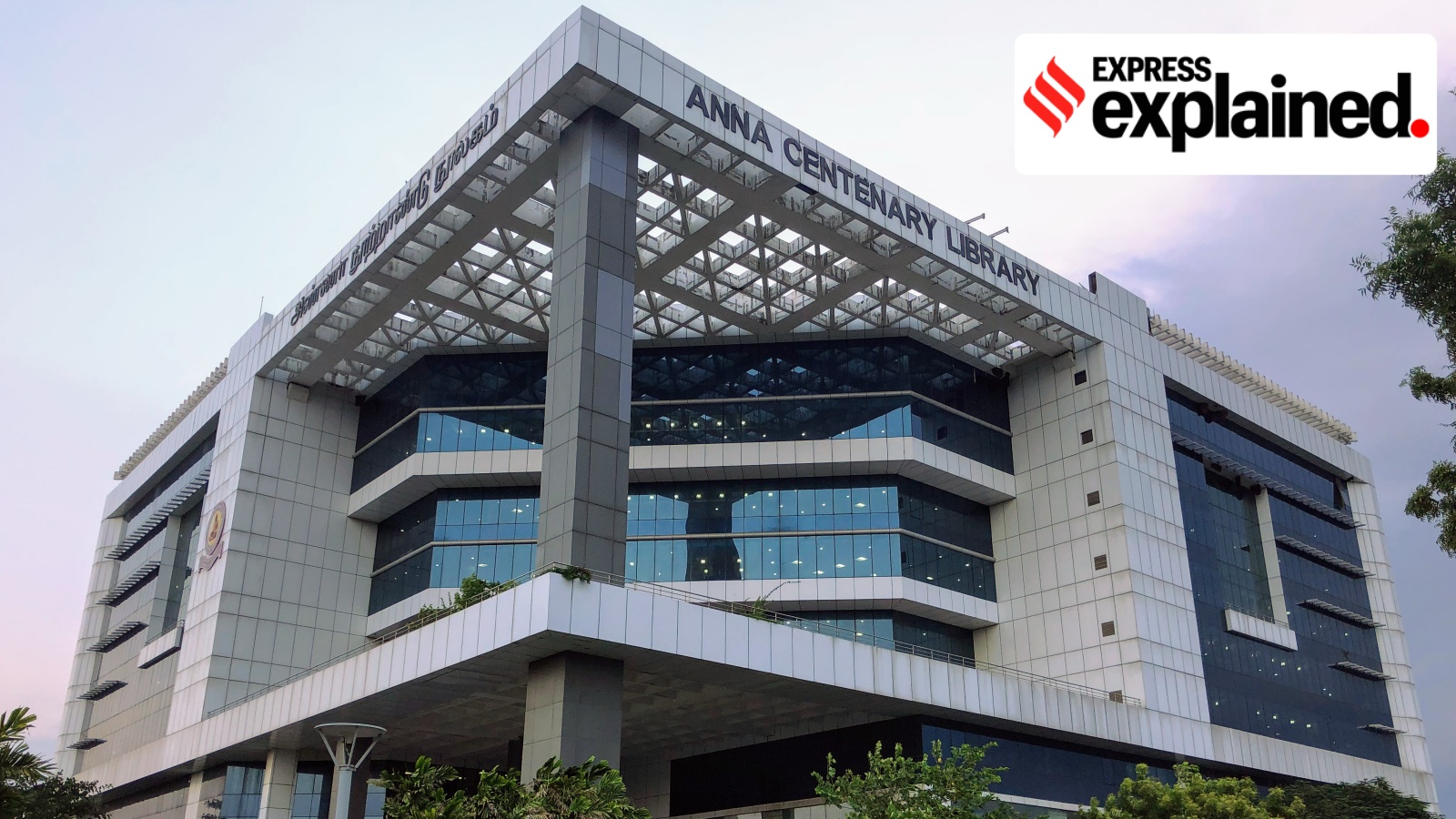
Minister A Rajmohan called it an “ideological failure”, targeting the previous regime ruled by DMK, a party that cultivated writers, celebrated literature and built major libraries, including Anna Centenary Library. The DMK built libraries to showcase its love of knowledge, and someone appears to have discovered how to turn that love into invoices.
The probe must now establish whether those higher up failed to read the books or preferred not to read the files. The DMK has sought an independent inquiry and alleged political exploitation. Its library-building legacy does not resolve the procurement questions. Suspect purchases do not erase those institutions’ valuable collections. For investigators, the task is to establish who changed the lists and enabled payment – political bosses or a powerful bureaucrat who controlled the system.
KioskNews shows a cleaned-up reading view extracted from the publisher’s page — the original always lives on their site, not ours.