Bitchat Removed From Apple's India App Store After Centre's Order
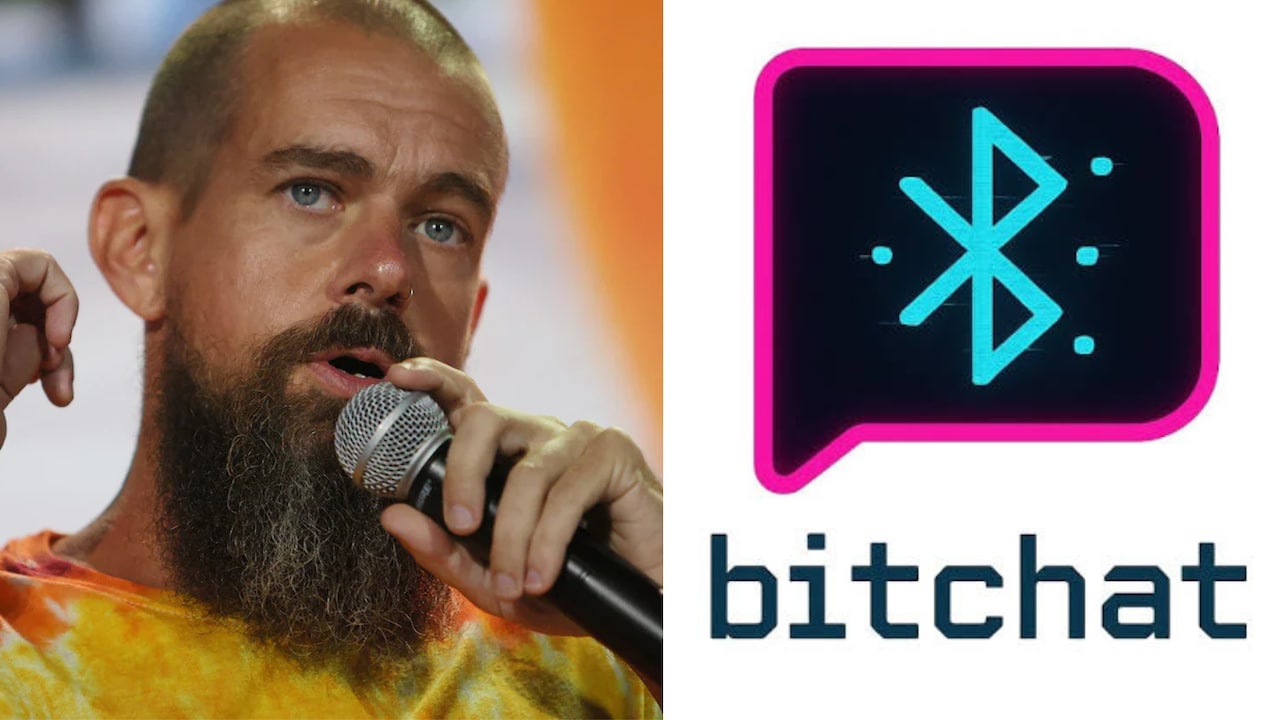
Apple has officially removed the offline messaging application, Bitchat, from its India App Store after a demand from the country's IT ministry, Jack Dorsey said in an X post on Saturday.
"Government of India officially removes Bitchat from the App Store," the app's developer and Twitter co-founder Jack Dorsey wrote in his post, alongside a screenshot of what appeared to be a notice from Apple's App Review team.
Bitchat, built by Dorsey, had come under government scrutiny in July this year as well, when the Home Ministry's cybercrime arm, the Indian Cybercrime Coordination Centre, had ordered GitHub to remove the Bluetooth-based messaging application.
On Saturday, Dorsey tagged Apple's latest notice in his post. In the notice, Apple said the app would be removed "per demand from the Ministry of Electronics and Information Technology (MeitY)" and because "it includes content that is illegal in India".
"We are writing to notify you that your application, per demand from the Ministry of Electronics and Information Technology (MeitY), will be removed from the India App Store because it includes content that is illegal in India, which is not in compliance with the App Review Guidelines," the attached notice said.
That particular section, the notice said, requires apps to follow all legal requirements in any location where they are offered. It says developers are responsible for understanding and complying with local laws, beyond Apple's own guidelines.
According to the post, MeitY issued the takedown demand under Section 69(A) of the Information Technology Act, 2000. The Apple notice said that the developer of the app can contact the ministry directly for more information about the removal or about Indian laws and requirements.
The app remains available in the App Stores of other territories selected in App Store Connect, Apple said.
"The TestFlight version of this app will also be unavailable for external and internal testing in India, and all public TestFlight links will no longer be functional," it said.
Bitchat had previously drawn government action as well, and that time too Dorsey had called it out in an X post. In July, during Cockroach Janta Party protests over exam paper leaks, the Indian Cybercrime Coordination Centre had ordered Microsoft subsidiary GitHub to remove Bitchat.
"The Government of India does not like technologies like Bitchat and wants it taken down," Dorsey had said in an X post at that time while tagging a copy of the July 23 notice.
In that notice, I4C had said that the app enables communication even during network restrictions and creates a substantial risk of misuse by anti-national elements, terrorist organisations, organised criminal groups and cyber criminals seeking to evade lawful detection and continue communication despite legally imposed restrictions.
The July notice had come after several users participating in a protest organised by the Cockroach Janata Party at Jantar Mantar, New Delhi, were observed using Bluetooth-based messaging apps despite the government-imposed temporary restrictions on internet services around the protest site.
According to I4C, since communications occur directly between nearby devices through a decentralised mesh network, the platform could be misused to evade lawful surveillance, facilitate anonymous coordination, and circumvent lawful restrictions imposed by competent authorities during situations involving public disorder, riots, terrorism, organised crime, or internet shutdowns.
"Intelligence inputs indicate that such decentralised communication platforms are capable of being exploited for coordinating unlawful assemblies, violent protests, dissemination of misinformation, radicalisation, criminal conspiracies, and other activities prejudicial to the sovereignty and integrity of India, defence of India, security of the State, public order, and for facilitating the commission of cognizable offences," the earlier notice had said.
It had added that the absence of a centralised service provider also limits the ability of law enforcement agencies to obtain subscriber information, communication records, or timely assistance during investigations.
The application's design, which enables communication even during network restrictions, creates a substantial risk of misuse by anti-national elements, terrorist organisations, organised criminal groups, and cybercriminals seeking to evade lawful detection and continue communication despite legally imposed restrictions, the notice had said, citing violation of Sections 43, 84B and 84C of the IT Act and Section 61 read with 196 and 197.
(Except for the headline, this story has not been edited by NDTV staff and is published from a syndicated feed.)
KioskNews shows a cleaned-up reading view extracted from the publisher’s page — the original always lives on their site, not ours.