‘It really hammers people’: Scottish islanders hit by highest diesel prices in UK
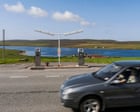
As fuel prices reach the highest level in the UK since Russia’s invasion of Ukraine, Scottish islanders are feeling the pain more than most. On the mainland, the price of diesel has soared to a record high of 200.01p a litre, bringing the cost of filling an average family car to more than £110, according to the RAC. Petrol has risen by a third since the start of the Iran war at the end of February, averaging 174.71p – increasing to 195.64p in motorway service areas.
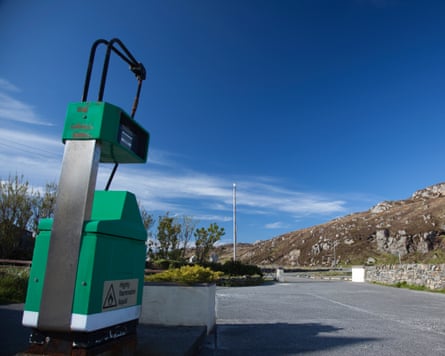
In the Hebrides and Shetland, prices at the forecourt have jumped even higher, with some fuel stations selling diesel for more than 220p a litre during the initial rise.
While European governments appear to have staved off a US export ban that could have sent prices even higher, in Shetland the lack of competition and the cost of shipping to remote areas have made it the most expensive place in the UK for fuel. The ramifications for island life have been immediate.
Adam, 43, who lives in North Uist in the Outer Hebrides, said diesel had reached £2.28 a litre on the island, making his 45-mile round commute particularly expensive. He and his wife have diesel cars that they need for work and transporting their three children.
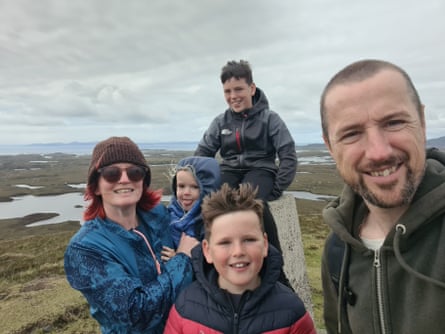
“You accept that things are more expensive, especially food because there’s more distance to travel and we are further from distribution centres. Same with getting things delivered here because you have to drive more miles. But when something like the price of diesel skyrockets, it really hammers people here more than other places around the country,’” he says.
In between work and dropping children off with his wife, Adam says they really rack up the miles. To cut costs, Adam says the family is having to buy the cheapest food they can, given that food prices are also dependent on the price of diesel that haulage companies pay.
“It’s come down a bit in the last week or so. I never thought I’d look up at a £2.18 diesel price and think: ‘Oh, quick, I better fill up now.’ It’s really bad. Although people think of this place as really tiny, you’re in your car all the time. I average 15,000 miles a year, and my wife does even more because she’s a health visitor. She gets the same mileage as someone who’s a health visitor in the central belt, yet we pay a lot more,” he says.
About 26,000 people live in the Outer Hebrides, mainly on the largest islands of Lewis and Harris. Adam says rising prices have also hit accessibility to public services, which are already difficult to reach for islanders.
“The Scottish government say they want to help repopulate places like this but in reality, they are not offering much practical support. For example, my daughter had a referral to a paediatrician for a hearing test so I had to take her to Stornoway for that. It involved booking ferries, driving more than 100 miles and staying in a hotel. We can claim some money back from the patient travel scheme but they only offer you £40-£50 for a hotel. Because of the costs getting there, the NHS stops being free at the point of use because we can’t be treated locally,” he says.
Bob, a postman who lives in Shetland, said that people in the North Sea archipelago were frustrated by rising fuel prices while also being a hub for the oil and gas industry.

“You are resigned to it. It’s always been slightly more expensive than everywhere else, so you have to pay the prices. What can you do? Fuel poverty has always been an issue up here. It’s ironic in a sense given we are near where a lot of the oil and gas arrives from the North Sea. Yet, we are paying higher prices than anyone else. It’s the same with the windfarms,” he says.
Bob says that islanders often have no other choice but to drive, especially when getting to work.
“Most jobs are in Lerwick so unless you live in town, you need to drive. There is a bus service but people who work don’t use it much because it’s difficult to make their hours,” he says. “I only ever drive small cars. I have a Fiat 500 so it’s not too bad. But an awful lot of people have big 4x4s up here because of the weather. Diesel prices will be having a big impact on them.”
after newsletter promotion
Ryan, 25, from the Isle of Benbecula in the Outer Hebrides, says the soaring costs mean many islanders are having to cut back.
“A lot of family and friends up here are taking fewer journeys than they would normally outside work. For a lot of people, it’s a case of just going to work and going to the shops. Even those journeys are not short. The Western Isles span 130 miles. South Uist itself is about an hour top to bottom. A lot of us easily get through a few tanks a month on fuel. It’s a lot of the money that’s getting spent up here,” he says.
Ryan works in a nearby hotel and is paid close to the minimum wage. With almost no public transport, he says he needs to drive to work because of how rural it is. The cost of his commute has meant sacrificing some of the things he likes to do with his girlfriend.
“Me and my girlfriend like to go to restaurants that are a bit of a distance away, around half an hour drive. We’ve not done that in a while. I think it’s safe to say that the cost of fuel will be affecting businesses because they’ll be getting fewer customers,” he says.
As fuel costs rise, islanders have started taking jerry cans to the mainland to stock up on cheaper fuel, even to just save a few pennies a litre, Ryan says. Normally, the cans are used in the winter to stock up when high winds and choppy seas disrupt deliveries to the islands and pumps run dry.
“It’s not often that diesel hits the £2 mark, let along £2.17 or whatever it is now. Whenever people say they’re going to the mainland, they say: ‘We’re going to make sure we will take our jerry cans if we are allowed,’” he says. “Even in Skye, the price of petrol and diesel is about 20p cheaper. So, a lot of people actually take the opportunity when they go down to really stock up on fuel whenever they can.”
But even with the cost of living pressures, Ryan is not considering leaving. He says that people are pulling together in the latest surge of inflation.
“People have a romantic view of the islands as being this quiet paradise where you can really get away from it all. But island life is quite hard, especially when costs are rising so significantly,” he says. “But it’s a nice place with a communal feeling. I think that’s what’s getting people through the situation. Everyone is in it together.”
KioskNews shows a cleaned-up reading view extracted from the publisher’s page — the original always lives on their site, not ours.