Can you drink your way to a longer life? What science says about hydrogen therapy
Living during this longevity-obsessed moment means constantly sifting through countless new trends, all claiming to increase energy, encourage weight-loss and, of course, help us to live longer.
Recently, hydrogen is the wellness fixation du jour due to its alleged antioxidant and anti-inflammatory potential.
At Saint Haven, an exclusive multimillion-dollar health club with locations in New South Wales and Victoria, patrons can drink water infused with molecular hydrogen.
Other wellness centres promote hydrogen therapy, where patrons sit and breathe the gas through a nasal cannula. They claim it will improve energy, cognitive clarity and oxidative stress.
Oliver Jones, professor of analytical chemistry at RMIT University, is sceptical and hasn’t seen any compelling studies on hydrogen therapy.
“I’ve seen a lot of bad ones though,” Jones says.
So, what is hydrogen water? And does hydrogen therapy actually help you live longer?
What is hydrogen water?
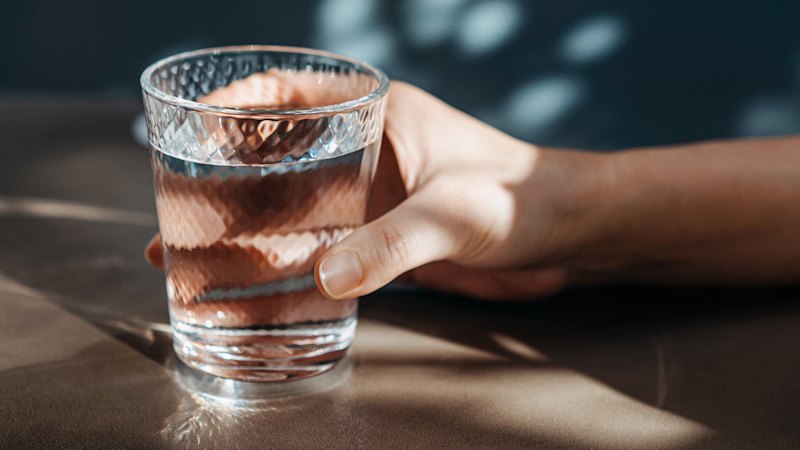
Hydrogen is regular water with hydrogen gas dissolved into it. One popular method adds the gas under pressure, Jones explains.
“You can think of this as a bit like sparkling water, which is normal water with carbon dioxide dissolved under pressure,” he says. “The same is true of hydrogen water. You might not see the hydrogen bubbles, but the gas escapes quickly, it becomes normal water again.”
Other ways to infuse water include dissolvable tablets, but Jones warns the gas would still escape, and you have no way of knowing how much hydrogen you’re drinking.
Another method involves a machine that allegedly uses electrolysis.
“I am rather dubious this is any more effective than any of the other methods, though it is often much more expensive. There aren’t any formal guidelines for this sort of thing, so it is very variable,” Jones says.
Packs of pre-bottled hydrogenated water sell for about $30; electrolysis water bottles for $150 are available to buy online; hydrogen tablets can be bought at chemists, starting at $17 for eight tablets.
Despite the hype, Jones says there is no credible scientific or clinical evidence to support any health benefits of hydrogen water.
“I guess hydrogen water sounds cool and science-y, but I have no real idea why people waste their money on it … You may as well just drink normal water,” Jones says.
Accredited practising dietitian Danielle Shine agrees that existing research is insufficient.
“To establish whether it has meaningful health benefits, we need well-designed human studies with enough participants and follow-up to assess relevant health outcomes,” Shine says.
“We’d also need to know whether any short-term effects translate into meaningful health improvements over time.”
How else is hydrogen being consumed?
Drinking hydrogen water is the most common way people are ingesting hydrogen, but inhalation is an emerging practice.
This is primarily done via a nasal cannula or in a hyperbaric or hydroxy chamber. The latter is a sauna-like enclosed space that fills with oxygen and hydrogen, designed to promote faster recovery.
While Jones hasn’t heard of anyone dying from inhalation, he warns it’s still potentially dangerous.
“It depends on the amount, concentration and duration, but if you breathe in enough hydrogen, it can displace the oxygen in your lungs, and you could potentially asphyxiate. Hydrogen is also highly flammable in air,” Jones explains.
Hydrogen is used in deep-sea diving gas mixes, but Jones notes that’s not relevant to most individuals.
Can I drink and eat my way to a longer life?
The appeal of “quick fix” trends like hydrogen therapy lie in their simplicity, says Shine.
“Hydrogen water is a good example,” she explains. “Adding hydrogen to water sounds scientific and innovative, but there’s no compelling evidence that drinking it delivers meaningful health benefits or extends lifespan.”
The best evidence for a “longevity diet” involves looking at overall behaviour and consumption rather than a single ingredient.
“Research indicates that dietary patterns featuring plenty of vegetables, fruit, whole grains, legumes, nuts and fish, alongside sources of unsaturated fats, are associated with a lower risk of death from any cause,” Shine says.
But even then, the evidence comes from observational studies. So the findings aren’t enough to indicate whether someone lived longer because of the diet alone.
To support your long-term health, Shine recommends putting the hydrogen water away and ensuring you’re perfecting the basics: “Staying physically active, not smoking, getting enough sleep, limiting alcohol, keeping up to date with recommended vaccinations and age-appropriate health screening and protecting our skin from excessive sun exposure.”
Due to the prevalence of misinformation on social media, she also encourages people to be critical of health advice promoted online, particularly by influencers.
“Be cautious of claims that rely heavily on personal stories and testimonials, dramatic before-and-after imagery, fear-based messaging or scientific-sounding terminology without strong supporting evidence from human studies.”
Make the most of your health, relationships, fitness and nutrition with our Live Well newsletter. Get it in your inbox every Monday.

KioskNews shows a cleaned-up reading view extracted from the publisher’s page — the original always lives on their site, not ours.