What is Merchant Discount Rate and how MDR will be calculated after revised UPI charges
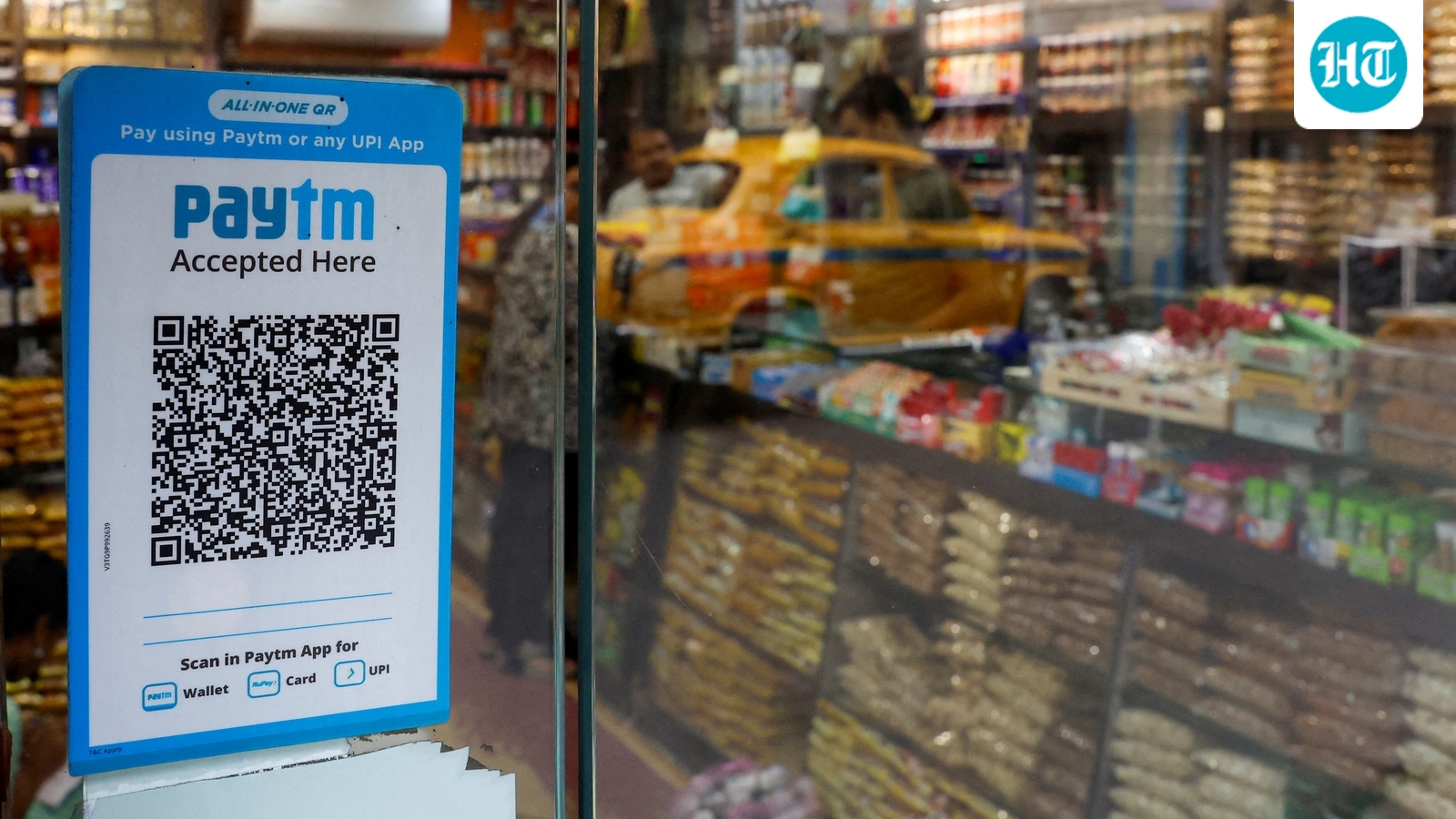
As per the new rules, Person-to-Merchant (P2M) UPI payments above ₹2,000 will attract a 0.4 per cent Merchant Discount Rate (MDR).

 Prefer HTon Google

The National Payments Corporation of India (NPCI) announced on Tuesday that a 0.4% fee will be charged on Unified Payments Interface (UPI) transactions to certain merchants when the transaction value exceeds ₹2,000. It also clarified that customers will not have to pay any fee for making UPI payments under the revised system.
As per the new rules, Person-to-Merchant (P2M) UPI payments above ₹2,000 will attract a 0.4 per cent Merchant Discount Rate (MDR). However, the charge will not exceed ₹300 for a single transaction.
But what is MDR?
MDR refers to the fee charged to merchants by banks and payment service providers for processing digital payments. The amount depends on factors such as the payment method, the type of merchant, the transaction value, and the agreement between the businesses involved.
In a digital payment system, a customer pays a merchant electronically, while the merchant pays a small fee to the company or bank that processes the transaction.
Although merchants are generally expected to bear this cost, some businesses may add the charge to the customer's bill. This is more common with high-value card payments, where MDR rules are different from those applicable to UPI.
Who will have to pay the MDR fee?
The 0.4% MDR will apply to Person-to-Merchant (P2M) UPI payments exceeding ₹2,000. For transactions of ₹75,000 or more, the charge will be limited to ₹300.
For example, a ₹1,00,000 transaction would otherwise attract a 0.4% charge of ₹400. However, because of the cap, the maximum MDR payable for that transaction will be ₹300.
Small merchants covered under the P2PM (Person-to-Person-Merchant) framework will not be charged MDR. The P2PM framework is a separate account category introduced by NPCI for small vendors who receive payments directly into their personal bank accounts.
The small vendor category includes merchants receiving up to ₹1 lakh per month through UPI QR directly into their accounts, the NPCI said in a document. The category is designed to encourage digital payments among small businesses and vendors in the unorganised retail sector.
How will MDR fee be calculated?
The MDR is calculated according to the value of each transaction. For a purchase of ₹3,000, the 0.4% rate would mean an MDR of ₹12, which the merchant pays to its acquiring bank.
The maximum MDR is ₹300 for transactions of ₹75,000 or more, while payments below ₹2,000 will not incur any MDR.
For a ₹50,000 transaction, the same rate would result in an MDR of ₹200. However, for a payment of ₹1,00,000, the 0.4% charge would be ₹400, but the merchant would pay only ₹300 due to the cap.
| Amount paid to merchant | Applicable MDR | MDR paid by merchant |
|---|---|---|
| ₹ 2,000 | - | ₹ 0 |
| ₹ 3,000 | 0.40% | ₹ 12 |
| ₹ 50,000 | 0.40% | ₹ 200 |
| ₹ 75,000 and above | Fixed ₹ 300 | ₹ 300 |
However, the new percentage-based MDR will not apply to all types of merchants.
Merchant categories that qualify for a flat fee
Certain categories, including railways, telecom services, insurance, and fuel, will instead be charged a fixed MDR of ₹5 per transaction for payments above ₹2,000.
In these cases, merchants will not be charged the 0.4% rate. They will pay a fixed ₹5 fee irrespective of the total transaction value.
The fixed fee helps keep costs under control for essential public services, utility payments and low-margin businesses such as fuel retailers, NPCI said.
NPCI said the MDR collected from high-value transactions will be shared among different participants in the UPI ecosystem. The move aims to help fund the expansion of UPI to more users and merchants, while also supporting spending on resilience, cybersecurity and innovation.

Follow the latest breaking news, major developments and agenda-setting stories from India and around the world with the newsdesk at Hindustan Times. Operating round the clock, the desk brings together experienced editors, reporters and correspondents to deliver fast, accurate and contextual reporting across subjects that influence public policy, governance, business, society and international affairs. The HT News Desk covers politics, elections, government policies, the economy, business and markets, science and technology, the environment, law and order, infrastructure, education, climate issues and geopolitics, while closely tracking developments across states, institutions and global capitals. The team also leads coverage of major breaking news events, policy announcements, court proceedings, natural disasters, public emergencies and significant international developments. Reports published by the newsdesk are based on information gathered from reporters on the ground, official statements, government agencies, court records, regulatory filings, recognised institutions and other authoritative sources. Stories undergo editorial scrutiny and verification processes to ensure accuracy, fairness and relevance, and are updated as events evolve and additional information becomes available. Whether covering a key political decision in New Delhi, an economic policy shift affecting millions, a landmark court ruling or a major global event, the HT News Desk aims to provide readers with reliable, fact-based journalism that delivers not only the latest developments but also the context and analysis needed to understand their wider implications.Read More

KioskNews shows a cleaned-up reading view extracted from the publisher’s page — the original always lives on their site, not ours.