Five ways US foreign policy may change with a Democrat-led Congress 民主黨成國會多數 美國外交政策預期之五大轉變
Democrats secured control of the US Senate and House of Representatives in the midterm elections on Tuesday last week, giving them an important slice of power in Washington after two years of Republican control.
During the campaign, Democrats had argued that Republicans ceded Congress’s constitutional war-making and spending powers to the administration of US President Donald Trump. They are now expected to curb those powers.
Here are some ways a Democratic Congress could hem in Trump’s foreign policy.
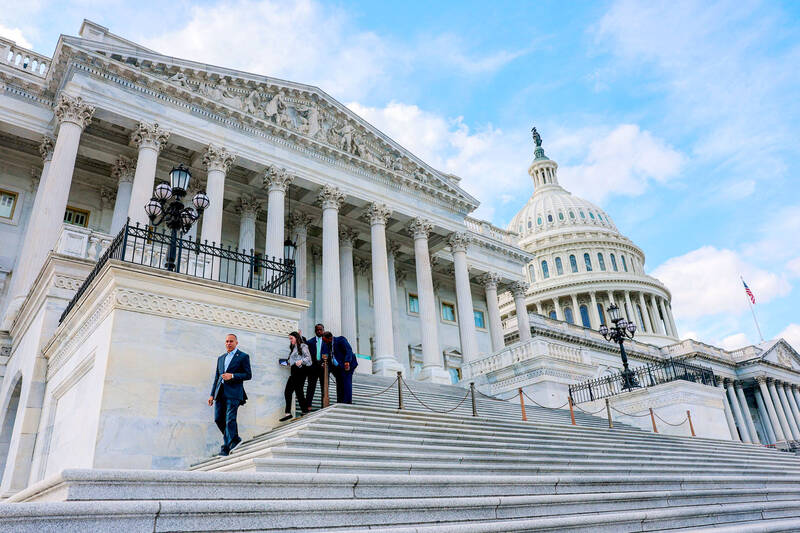
S House Minority Leader Hakeem Jeffries (D-NY) walks down the House steps on Capitol Hill in Washington, D.C., US. 美國眾議院少數黨領袖傑佛瑞斯(民主黨籍,紐約州),9月30日走下華府國會山莊的眾議院階梯。
Photo: Reuters 照片:路透
CURB THE IRAN WAR
Trump did not secure approval from Congress before he launched the war with Iran alongside Israel on Feb. 28, and Democrats have voted repeatedly to end the fighting unless he seeks congressional authorization. One of these resolutions passed both the House and Senate with support from a handful of Republicans, but the Trump administration ignored it.
With their new influence, Democrats could cut defense spending or hold up nominations to pressure Trump to obtain permission from Congress to continue the war. They could also require administration officials to keep lawmakers and the public informed, including at public hearings, about their plans.
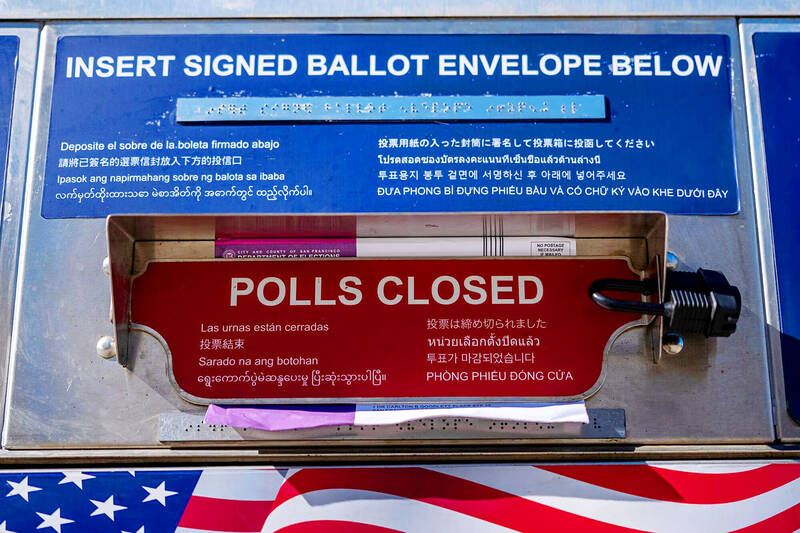
A ballot in a locked “Polls Closed” ballot box outside San Francisco County’s election operations facility inside City Hall in San Francisco, California, US, on Nov. 4. 一張選票被塞進標示「投票結束」的上鎖票箱。11月4日攝於美國加州舊金山市政廳內的舊金山郡選務中心外。
Photo: Bloomberg 照片:彭博社
FRESH SUPPORT FOR UKRAINE
Trump has largely halted direct financial and military aid to Ukraine, which is fighting a Russian invasion, despite broad support for the US assistance from Democratic and Republican lawmakers.
Most recently, he has angered members of Congress, including many Republicans, by lifting sanctions on Russian diesel and waiving sanctions on Russian energy, weeks after signing them into law.
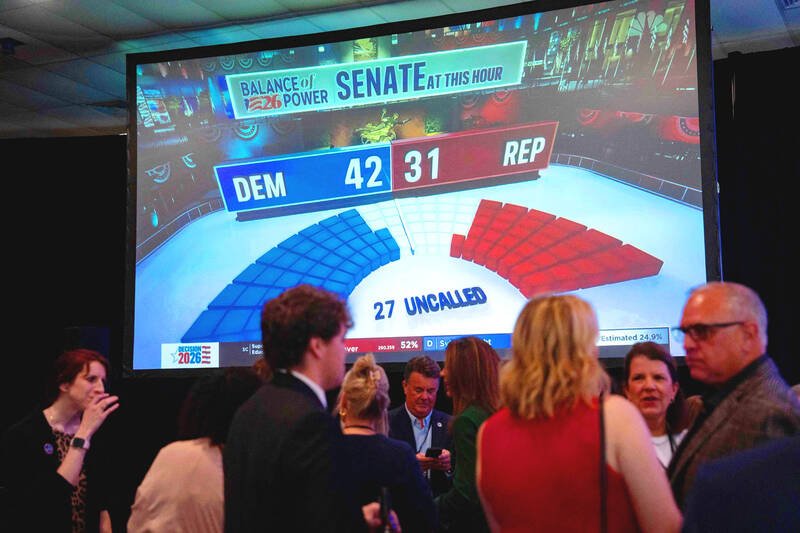
Election results are displayed during a midterm election night watch party for Sen. Darline Graham (R-SC) at the Moore Building on Nov. 3 in Columbia, South Carolina, US. 美國南卡羅來納州哥倫比亞市摩爾大樓11月3日為共和黨籍聯邦參議員葛蘭姆舉行的開票之夜活動中,電視螢幕顯示期中選舉結果。
Photo: AFP 照片:法新社
With control of both chambers starting in January of next year, Democrats will be able to decide what gets voted on and when. That could allow them to approve new aid to Ukraine, which likely would pass with the two-thirds majorities needed to overcome a Trump veto. Democratic aides have said assisting Kyiv is a priority.
They could also target other Trump activities. Democratic Representative Gregory Meeks of New York, who is likely to chair the House Foreign Affairs Committee, has introduced bipartisan legislation to block Trump’s plan to bring Russian diesel back into the global market.
END MILITARY AID TO ISRAEL
Support for Israel has plummeted among Democrats over its conduct in the Gaza war, which has killed tens of thousands of Palestinian civilians. The ongoing violence in the Israeli-occupied West Bank and Israeli Prime Minister Benjamin Netanyahu’s close alliance with Republicans have also been factors.
Democrats could limit or end military aid to Israel, which includes a base US$3.8 billion per year, plus billions of dollars more since the Oct. 7, 2023 Hamas attacks that led to the devastating Israeli campaign in Gaza.
LIMIT MILITARY SPENDING AND RESTORE FOREIGN AID
Democrats are far more likely than Trump’s Republicans to limit military spending. Trump asked for an unprecedented 67 percent increase in the military budget this year, to US$1.5 trillion, but Democrats blocked it in the Senate, citing his refusal to consult Congress about the Iran war and his steep cuts to social programs.
Trump has also withheld or canceled billions of dollars in foreign aid approved by Congress. Many Democrats have been angered by the cuts and say they will try to restore funding. In the past, including during Trump’s first term as president, both Democrats and Republicans strongly supported foreign aid.
MORE SCRUTINY OF LATIN AMERICA POLICY
Trump has been far more aggressive in the western hemisphere than recent presidents, including the US military’s ousting of Venezuela’s president and more than a year of deadly strikes on boats off the country’s coast.
He also has imposed sanctions seeking to hurt Cuba’s communist government, with threats of military action to force a change in government. The US administration has also sought to influence elections in Honduras, Argentina, Colombia and Brazil.
Some Democrats have called for investigations and hearings on Trump’s actions in Venezuela. Others have denounced what they term cruel sanctions punishing civilians in Cuba and called for an end to involvement in foreign elections.(Reuters)
上週二舉行的美國期中選舉,民主黨取得參議院及眾議院的控制權,結束共和黨長達兩年的國會主導局面,重新掌握華府的重要政治權力。
民主黨在競選期間指控,共和黨將憲法賦予國會的戰爭決策權及預算權,拱手讓給川普總統政府。如今,民主黨預料將採取行動,限制川普在這些領域的權力。
以下是民主黨掌控國會後,可能制衡川普外交政策的幾種方式。
限制對伊朗戰爭
川普2月28日與以色列聯手對伊朗發動的戰爭,事先並未取得國會批准。民主黨議員已多次投票要求,除非川普取得國會授權,否則必須停止戰事。其中一項決議在少數共和黨議員支持下,獲得參眾兩院通過,但川普政府並未理會。
隨著民主黨在國會的影響力擴大,他們可以削減國防預算,或延後政府官員的人事任命案,以施壓川普取得國會批准,才能繼續對伊朗作戰。民主黨也可以要求政府官員透過公開聽證會等方式,持續向國會議員及社會大眾說明相關計畫。
重新加強對烏克蘭的支持
儘管民主、共和兩黨國會議員普遍支持美國援助烏克蘭,抵抗俄羅斯入侵,川普仍大幅停止了對烏克蘭的直接財政及軍事援助。
最近,川普更因解除對俄羅斯柴油的制裁,以及豁免俄羅斯能源相關制裁,而激怒國會議員,包括許多共和黨人。這些制裁措施才在數週前由川普簽署成為法律。
民主黨明年1月開始掌控國會兩院後,將能決定哪些法案可以付諸表決,以及何時進行表決。這可能讓民主黨推動新的烏克蘭援助方案,而相關法案很可能獲得足以推翻川普否決權的參眾兩院各三分之二多數支持。民主黨幕僚表示,援助基輔將是優先事項。
民主黨也可能針對川普的其他政策採取行動。例如,預料將出任眾議院外交委員會主席的紐約州民主黨眾議員米克斯(Gregory Meeks),已提出一項獲得兩黨支持的法案,試圖阻止川普讓俄羅斯柴油重新進入全球市場的計畫。
終止對以色列的軍事援助
由於以色列在加薩戰爭中的軍事行動造成數萬名巴勒斯坦平民死亡,民主黨內部對以色列的支持度已大幅下降。以色列占領的約旦河西岸持續發生暴力事件,以及以色列總理納坦雅胡與共和黨關係密切,也是民主黨對以色列支持度下降的因素。
民主黨可能限制或終止美國對以色列的軍事援助。美國目前每年對以色列提供的基本軍事援助為38億美元。此外,自2023年10月7日哈瑪斯(Hamas)發動攻擊、引發以色列對加薩展開毀滅性軍事行動以來,美國又額外對以色列提供了數十億美元援助。
限制軍費並恢復對外援助
相較於川普所屬的共和黨,民主黨更可能限制軍事支出。川普今年要求將軍事預算大幅提高67%,達到史無前例的1.5兆美元,但民主黨在參議院阻擋了這項提案,理由是川普拒絕就伊朗戰爭與國會協商,而且他大幅削減社會福利計畫經費。
此外,川普也扣住或取消了國會已批准的數十億美元對外援助。許多民主黨議員對這些削減措施感到憤怒,並表示將設法恢復相關經費。過去,包括川普第一個總統任期中,民主、共和兩黨都曾強力支持美國對外援助。
加強監督拉丁美洲政策
相較於近幾任美國總統,川普對西半球採取了更具侵略性的政策,包括美軍推翻委內瑞拉總統,以及在該國沿海持續一年多、造成多人死亡的船隻攻擊行動。
川普也對古巴實施制裁,試圖打擊古巴共產黨政府,並威脅採取軍事行動,迫使古巴政權更迭。此外,美國政府也試圖影響宏都拉斯、阿根廷、哥倫比亞及巴西的選舉。
部分民主黨議員已呼籲針對川普在委內瑞拉的行動展開調查及舉行聽證會。另一些民主黨議員則譴責美國對古巴實施制裁,認為這些制裁是對平民的殘酷懲罰,並呼籲美國停止干預其他國家的選舉。
KioskNews shows a cleaned-up reading view extracted from the publisher’s page — the original always lives on their site, not ours.