90% of 33 lakh SIR cases ‘resolved’ or ‘parked for final roll’ in Delhi
Around 29.5 lakh or nearly 90% of the nearly 33 lakh cases involving unmapped electors and logical discrepancies during the Special Intensive Revision (SIR) of electoral rolls in Delhi have been “resolved” or “parked for the final roll” by electoral registration officers (EROs) and assistant electoral registration officers (AEROs), the office of the Delhi Chief Electoral Officer (CEO) said on Friday.
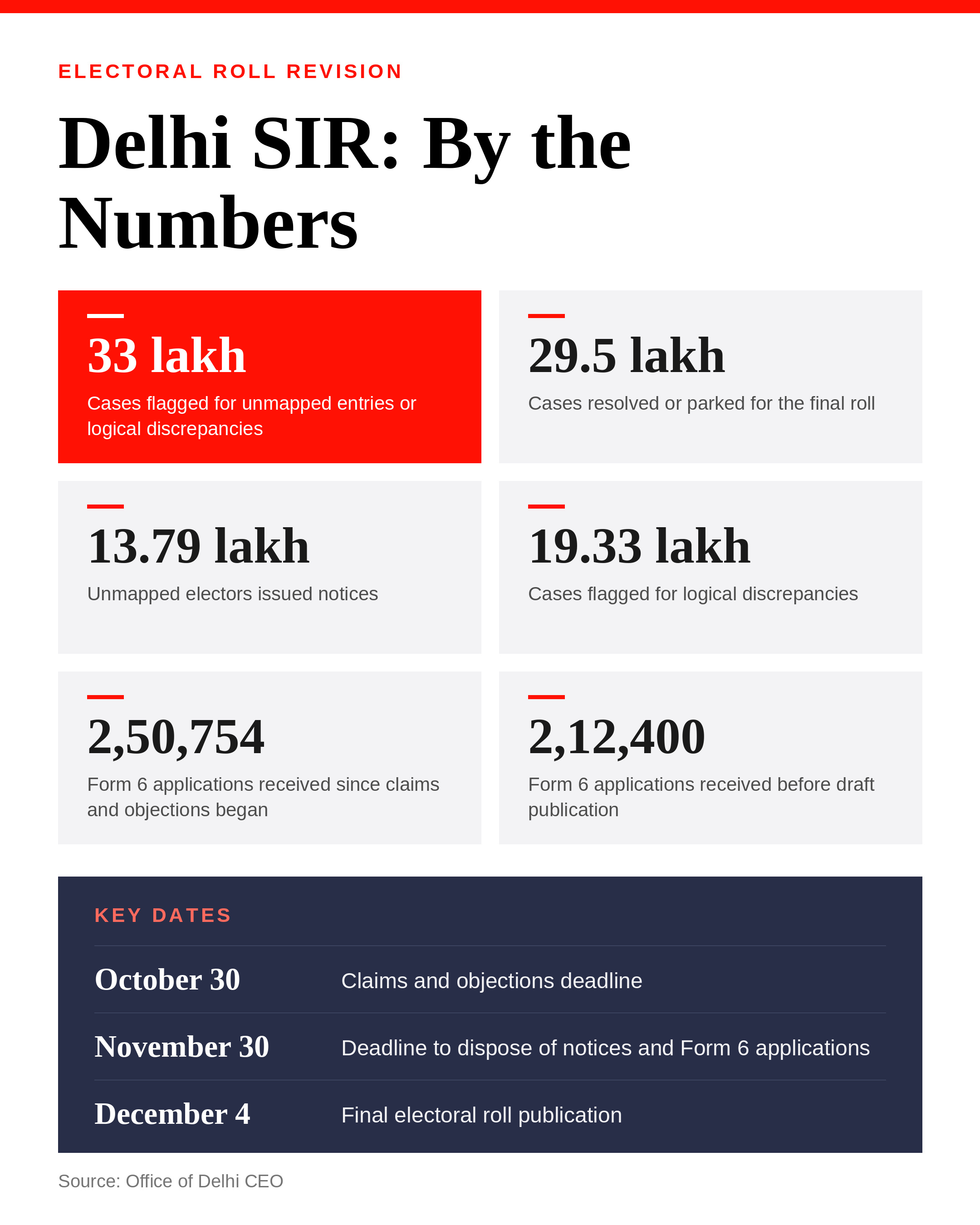
The cases include 13.79 lakh electors who could not be linked to the electoral roll of the previous SIR – conducted in 2002 – and 19.33 lakh whose enumeration forms were flagged for logical discrepancies. The CEO’s office did not disclose how many cases had been rejected.
Delhi had around 1.45 crore electors before the SIR began. When the draft electoral roll was published on August 31, around 97.5 lakh names were retained, while around 47.5 lakh electors were classified as uncollectible after booth level officers (BLOs) found them to be absent, shifted, deceased or having duplicate entries.
 ㅤ
The disposal process was initially slow, prompting the Election Commission of India (ECI) to simplify hearing procedures. BLOs were asked to visit electors and collect supporting documents in cases involving logical discrepancies and unmapped entries, while the number of AEROs was increased.
Further, since September 30, EROs have been able to dispose of notices without conducting a hearing. A letter from the BLO stating that the elector’s details had been verified to their satisfaction is sufficient for the ERO to take a decision, said sources.
According to the CEO’s office, 13 district election officers, 70 EROs, 902 AEROs and 14,947 BLOs were involved in the exercise. The deadline for disposing of notices is November 30, while the final electoral roll is scheduled to be published on December 4. (See box)
The period for claims and objections, which began on August 31, will end on October 30. Electors can apply for inclusion in the electoral rolls or file objections to names appearing on them until then.
Story continues below this ad
The CEO’s office said 2,50,754 Form 6 applications for enrolment had been received since the claims and objections period began, in addition to 2,12,400 applications received before the draft roll was published. All these applications will be disposed of by November 30.
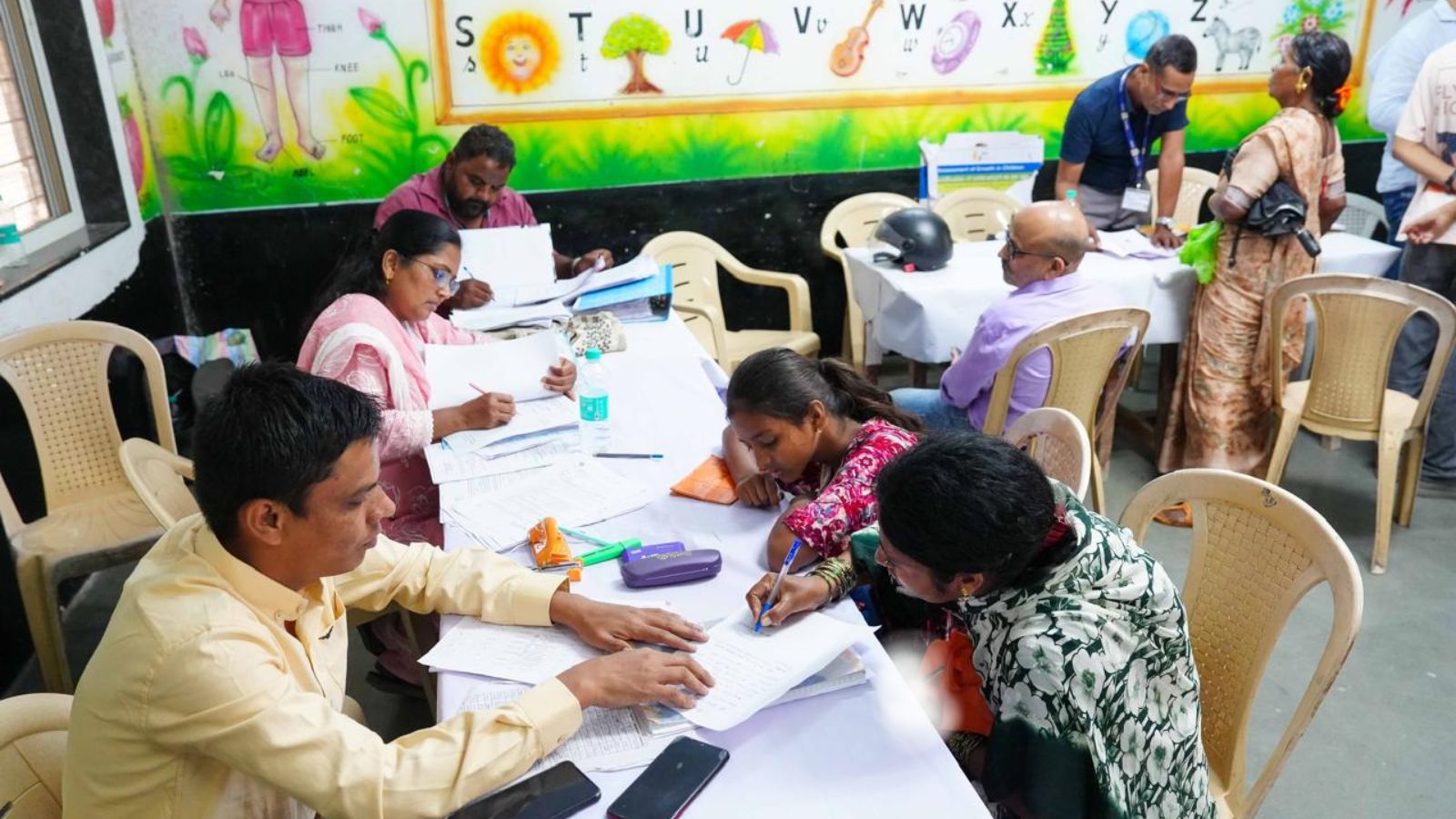
To reach eligible voters left out of the draft roll, special camps have been organised at educational institutions, night shelters and other locations to assist young voters, homeless people, transgender persons and sex workers. Camps were also held in colonies affected by demolitions.
According to the CEO office, more than 89,000 special camps had been organised across Delhi’s 14,947 polling stations over six Sundays. Another round of camps is scheduled for October 25.
On September 29, the ECI ordered a special drive across the 20 States and Union Territories where the SIR had been completed to enrol voters left out of the rolls, directing them to apply using Form 6, prescribed for new voters.
Story continues below this ad
In Delhi and Maharashtra, where the SIR is still underway, Form 6 is also being used to bring back voters whose names may have been deleted from the draft rolls.
Last week, the office of the CEO in Maharashtra sent a proposal to the ECI to amend Form 6 so that voters deleted during the SIR could seek re-enrolment without declaring that they were enrolling “for the first time”. A false declaration can attract criminal penalties.
KioskNews shows a cleaned-up reading view extracted from the publisher’s page — the original always lives on their site, not ours.