How A Series Of Mistakes Pulled Saudi Arabia Back Into Yemen War
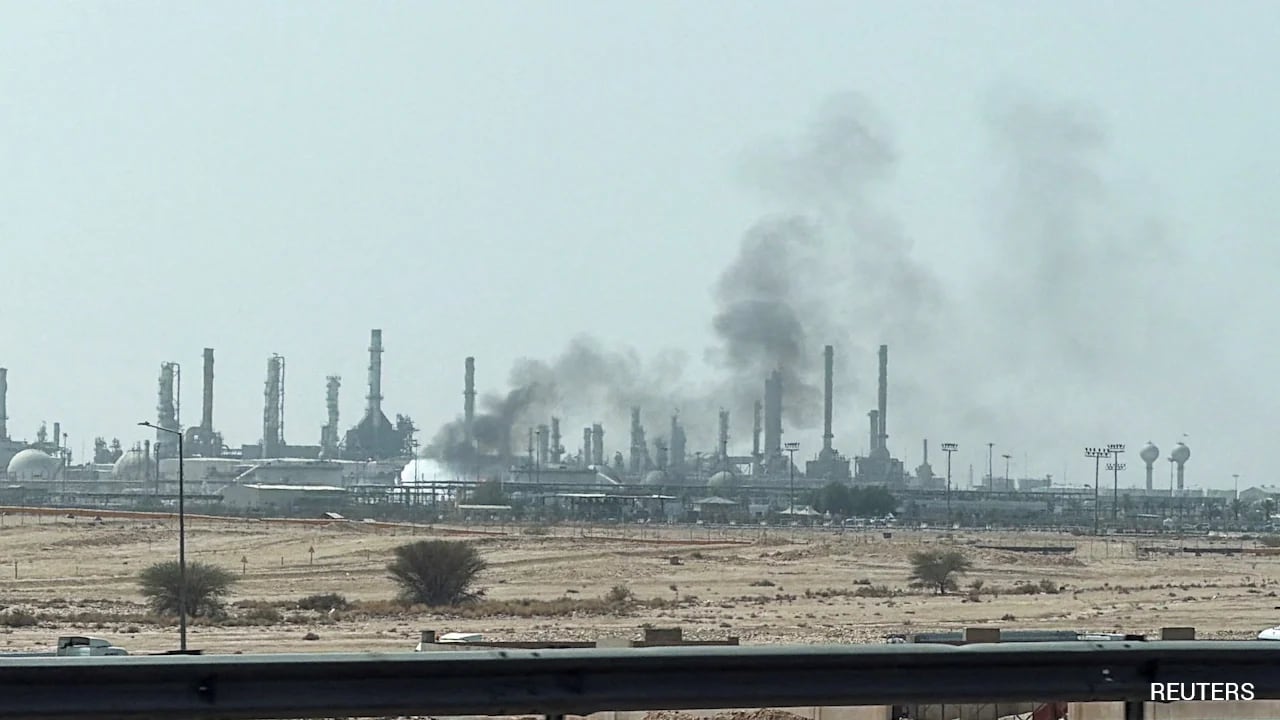
Saudi Arabia is once again fighting a war in Yemen after years of trying to keep the conflict under control. A series of mistakes has pulled the kingdom back into the conflict. These include a fallout with the UAE, poor preparation for Houthi attacks and uncertainty over US support.
Saudi Crown Prince Mohammed bin Salman wants to turn the country into a major destination for tourists, investors and global sporting events. But the war has once again put these plans at risk. Missiles and drones from Yemen have hit Saudi cities and oil facilities in recent weeks.
Some major projects have been cancelled, while concerts, film festivals and award shows have been suspended because of the regional conflict. At least three people, including a Saudi pilot, were killed this week after Houthi attacks on several airports in Saudi Arabia, according to the Saudi government.
Saudi Arabia has been involved in Yemen's civil war for 11 years. It first fought the Houthis but later tried to make peace with them. It also restored ties with Iran, which supports the rebels. However, the kingdom is once again caught in the conflict.
Michael Ratney, a former US ambassador to Saudi Arabia, told CNN that Riyadh wanted to keep the conflict away from its borders so it could focus on its plans for the country.
"They just needed the conflict to stay (as) far away from them as possible without the Houthis disrupting their transformation plans," he said. "Now they find themselves in the middle of it."
Saudi Arabia and the UAE had worked together for years to fight the Houthis in Yemen. But the two countries later fell out over their plans for Yemen. The UAE supported a group called the Southern Transitional Council (STC). The group wants southern Yemen to become a separate country. Saudi Arabia opposed this.
The problems arose after Saudi warplanes attacked a shipment of military vehicles sent by the UAE to Yemen last year. The vehicles were reportedly meant for the STC. The dispute ended the two countries' partnership in Yemen. The UAE pulled its forces out and left Saudi Arabia to handle the situation alone.
“There wasn't a proper transition when the Emiratis left,” a southern Yemeni official told CNN. The official said the UAE had a well-organised system to manage its forces. Saudi Arabia, however, failed to replace it.
Saudi Arabia's problems grew when the Houthis launched a fresh attack in Yemen. Things got worse after the US and Israel went to war with Iran and killed its Supreme Leader, Ayatollah Ali Khamenei.
The Houthis had earlier agreed to stop fighting in Saudi Arabia. But the situation escalated in July when Iran sent a plane carrying Houthi leaders to Tehran for Khamenei's funeral. The flight violated Saudi Arabia's restrictions on air travel to Yemen.
Saudi Arabia then attacked the airport in Sanaa, which is controlled by the Houthis, to stop the plane from landing.
In response, the Houthis ended the truce with Saudi Arabia and announced a blockade on Saudi ships. They then launched a fresh attack along Yemen's coast and captured key areas near the Bab al-Mandeb Strait, an important route for ships carrying goods between countries.
The Houthis later attacked Saudi oil facilities and pipelines and then Saudi Arabia responded with hundreds of airstrikes.
Ahmed Nagi, a senior Yemen analyst at the International Crisis Group, told CNN, "The Saudis have made several mistakes and failure. Riyadh hadn't prepared for a Houthi offensive and lacked coordination with allied Yemeni forces it inherited from the UAE."
Another problem for Saudi Arabia is its reliance on the US for military support.
The kingdom signed a new defence pact with Washington last year and was named a Major Non-NATO Ally by the US. However, reports state that Riyadh has been disappointed by what it sees as a decline in American support for its security.
According to sources cited by CNN, Crown Prince Mohammed bin Salman spoke twice with US President Donald Trump last month. He urged Trump to strike the Houthis, but the US president declined to intervene. Instead, Washington held talks with the Houthis in Oman to protect its own ceasefire agreement with the group.
The Houthis said their fight was with Saudi Arabia and allowed US ships to continue travelling through the Red Sea.
Saudi Arabia has now started reaching out to other countries.
Crown Prince Mohammed travelled to Egypt last month to meet President Abdel Fattah el-Sisi. He later invited UAE Vice President Sheikh Mansour bin Zayed to Riyadh for talks on regional developments.
France has agreed to send defence assets, including military personnel. Britain has said it would send an aircraft to help refuel Saudi fighter jets. More than 100 American military advisers are also on the ground.
Saudi Arabia, Turkey and Pakistan have agreed to work together on defence measures under the Mecca Joint Defence Agreement. The decision came after an emergency meeting in Riyadh.
Hisham Al Omeisy, a senior Yemen adviser at the European Institute of Peace, told CNN that the different groups needed to work together and settle their disputes.
"They need to unify their command centers, they need to resolve the issues they have between the various factions within the group," he said. "Territorial gains they've made would mean nothing if the (Saudi-backed) Yemeni government cannot maintain control over those areas."
KioskNews shows a cleaned-up reading view extracted from the publisher’s page — the original always lives on their site, not ours.