Unpacking the brawl that sparked the Naga-Kuki conflict in Manipur
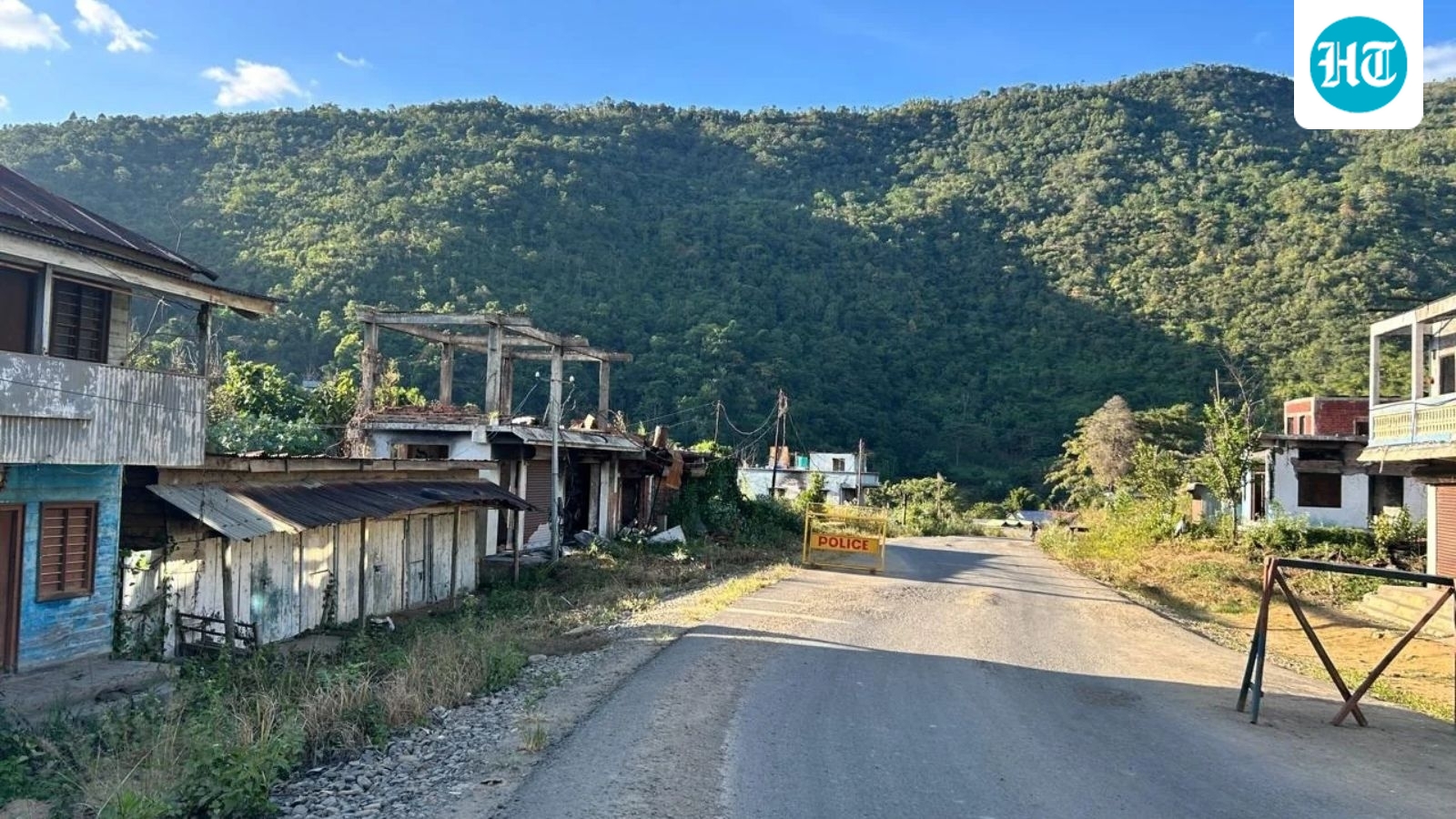
Personnel from the Central Reserve Police Force (CRPF) and the Border Security Force (BSF) were tasked with keeping the two communities apart.

 Prefer HTon Google

A pitch-dark road, a flash of torchlight, flaring tempers and a drunken brawl. On February 7 this year, a Manipur village that was until then spared from the ethnic violence that had engulfed much of the state became the site of an altercation that opened a new front of conflict.
What appeared to be a minor street tussle in a region besieged by brutality and bloodshed went on to expose decades-old Naga-Kuki fault lines, which were overshadowed at the time by the Meitei-Kuki conflict that erupted in 2023.
In the months that followed, violence spread across Manipur’s districts, with Nagas and Kukis ransacking villages, laying ambushes and mutilating bodies. The clashes have claimed 65 lives, including three in Noney district on Saturday, taking the overall death toll from ethnic violence in Manipur in three years to at least 363. Thousands have been displaced.
The events that unfolded that night in Litan village remain contested, with conflicting accounts of who started the fight and what followed. HT spoke to those involved in the brawl and witnesses to its immediate aftermath to reconstruct how a confrontation in an Ukhrul district village sparked a fresh wave of violence in Manipur.
The night it began
Stalin Shimrey, a 48-year-old Naga man, said he had finished conducting tuition classes at his home around 5 pm and went to his friend Leishi Yui Kasar’s house, less than 100 metres away, to have a drink on that Saturday evening. At 7 pm, the two stepped out as Shimrey prepared to return home. The stretch between their homes was shrouded in darkness, he said.
“We saw our friend Akamboi across the road flashing a torchlight to help us. He was slightly drunk and waving the torch around. The light fell on the faces of three Kuki men, who were also drunk. They got angry and confronted him,” Shimrey said.
He said he and Kasar intervened, asking the men to leave. “They walked away while I stopped to buy paan at a shop,” Shimrey said. But the men returned with more associates, he said.
“They came back with seven or eight others and started beating Kasar. When I tried to intervene, someone punched me on the back of my head, and I fell to the ground,” he added. People aware of the matter said Shimrey lay unconscious for around 30 minutes, bleeding from his face. A crowd gathered, and he was eventually taken to a hospital.
Nemneikim Baite, a Kuki woman, disputed Shimrey’s account. According to the 24-year-old, she, her husband Tonggoulen Baite and her brother Lungsanglen Baite were the only ones involved in the confrontation.
“My brother was returning home after visiting us when Akamboi flashed a torch in his face. Stalin and Kasar, whom I know, began abusing him,” she said.
She said her brother called out for help. “When we came out, my brother was telling Kasar to go home, but they started hitting him. I tried to separate them by holding Kasar, while my husband held Lungsanglen. Shimrey then joined the melee. My brother managed to free himself and punched Shimrey on the back of his head, causing him to fall. He hit the ground and started bleeding,” she said.
Shimrey suffered a broken jaw and was admitted to the Regional Institute of Medical Sciences (RIMS) in Imphal, roughly 39km away. He remained hospitalised for around two months.
HT tried to contact Lungsanglen, but his phone was switched off. Nemneikim said he was training for the army but did not disclose his location.
Also Read | 17 Kuki militants under SoO deal arrested in Manipur; mismatch found in identities
Tribal code
Inhabited by both Kukis and Nagas, Litan is nested in the hills of Ukhrul, a Naga-dominated district. It had 192 houses before the clash and a population of nearly 1,000, with the residents employed mostly in the agriculture sector and continuing to remain entrenched in their traditions.
Nemneikim said that under tribal custom, a fight takes a more serious tone when blood is spilt. “The person who caused another tribal to bleed has to give an animal for sacrifice to the victim,” she said.
Calling the police was never considered. “It was decided to settle the matter through customary tradition and not involve the police,” she said.
The same night, Naga elders approached the Kuki village chief, seeking to resolve the dispute through traditional means, people aware of the matter said. The following morning, however, the effort to broker a settlement ran into trouble. From there, the two accounts of what happened again begin to diverge.
Also Read | At least 150 Kuki militants missing from Manipur camp, security agencies alert Centre
A failed peace bid
Shimrey’s cousin Asayo, 51, said around 50 Naga villagers went to the Kuki chief’s house demanding that Lungsanglen be handed over to them so that he could be reprimanded and made to pay compensation. He alleged that the chief, who was related to Lungsanglen, had hidden him.
“That morning more than 100 Kukis started gathering at the Kuki chief’s house. There were Kuki militants among them. When Lungsanglen did not show up, our Naga villagers went straight to his house and shattered everything. Kuki people started throwing stones, and our people started firing blank shots. Everyone retreated, but at around 10pm they started burning the Naga houses in the village,” Asayo said.
Siema Vaiphei, Lungsanglen’s cousin, gave a different account. She said Naga militants had begun searching for Lungsanglen on Saturday night, forcing the family to hide him. The family had also bought a pig and other items as part of the customary settlement, she said.
“But when the meeting was underway, Naga militants started demanding that Lungsanglen be handed over. They went to his house and started damaging it, but the Kuki villagers gathered. There was firing, and the meeting could not happen. Around 10pm Naga people started burning the Kuki houses in the village,” Vaiphei said.
Also Read | More ethnic groups caught in vortex of violence in Manipur; Kuki man killed in fresh clashes
A widening divide
The accounts might differ over who first resorted to violence, but the consequences were soon visible across Litan. Both sides agree that between February 8 and 10, Naga and Kuki villagers burnt each other’s homes. As the violence escalated, residents retreated to opposite sides of the village, with central security forces deployed between them.
Personnel from the Central Reserve Police Force (CRPF) and the Border Security Force (BSF) were tasked with keeping the two communities apart. Litan, where Nags and Kukis earlier lived next to each other, was now divided, its residents separated by a security line — like many other parts of Manipur.
At the Litan police station, officers said establishing who started the fight was no longer their immediate concern.
“Tribal people here do not involve police and settle their disputes in the customary way. Our priority is not to probe that brawl but to ensure these villagers don’t kill each other and also to save ourselves. Both sides have heavily armed groups,” a police officer said on condition of anonymity.
What unfolded in Litan did not remain confined to the village. The arson, violence and deployment of central forces to keep Nagas and Kukis apart became a pattern repeated in other hill districts of Manipur, where the two communities had lived alongside each other before the violence.
In the last week of February, reports of clashes involving the two communities started trickling in from Kamjong and Kangpokpi districts. Then on March 11, the bodies of two Kuki men, Thangboimang Lunkim and Thengkhogin Baite, were found a day after they were abducted along with five others. Clashes have continued since then, with casualties on both sides.
Old wounds reopen
The police and the state government have cited the February brawl as the trigger for the Naga-Kuki clashes. But for community representatives, the confrontation was a culmination of tensions brewing for years.
Lun, a spokesperson for the Kuki Inpi, an umbrella organisation representing the Kukis, alleged that attacks on Kukis in Naga-dominated areas had preceded the February incident.
“Everyone was focused on the Kuki-Meitei conflict, but there was also violence against the Kukis in Naga-dominated areas... Litan village was originally owned by a Kuki, and Nagas were allowed to live temporarily by our forefathers. Nagas always wanted to evict our people from there and used the February incident to kill Kukis and displace us,” Lun said.
Naga representatives rejected the Kuki account of the village’s history and maintained that it was their ancestral land. Rimithem Shinglai, secretary of the Naga Tangkhul Litan, said the village belonged to the Nagas and accused the Kukis of occupying the land illegally since the early 1900s.
“Kukis were allowed to live temporarily here but took advantage of our gratitude. They have been wanting to evict us from our own village and pick up fights with us,” Shinglai said.
Competing land claims between Nagas and Kukis triggered a series of clashes between 1993 and 1998, leaving around 750 people dead. Although large-scale violence subsided by the late 1990s, underlying disputes over land ownership and ethnic boundaries remained unresolved.
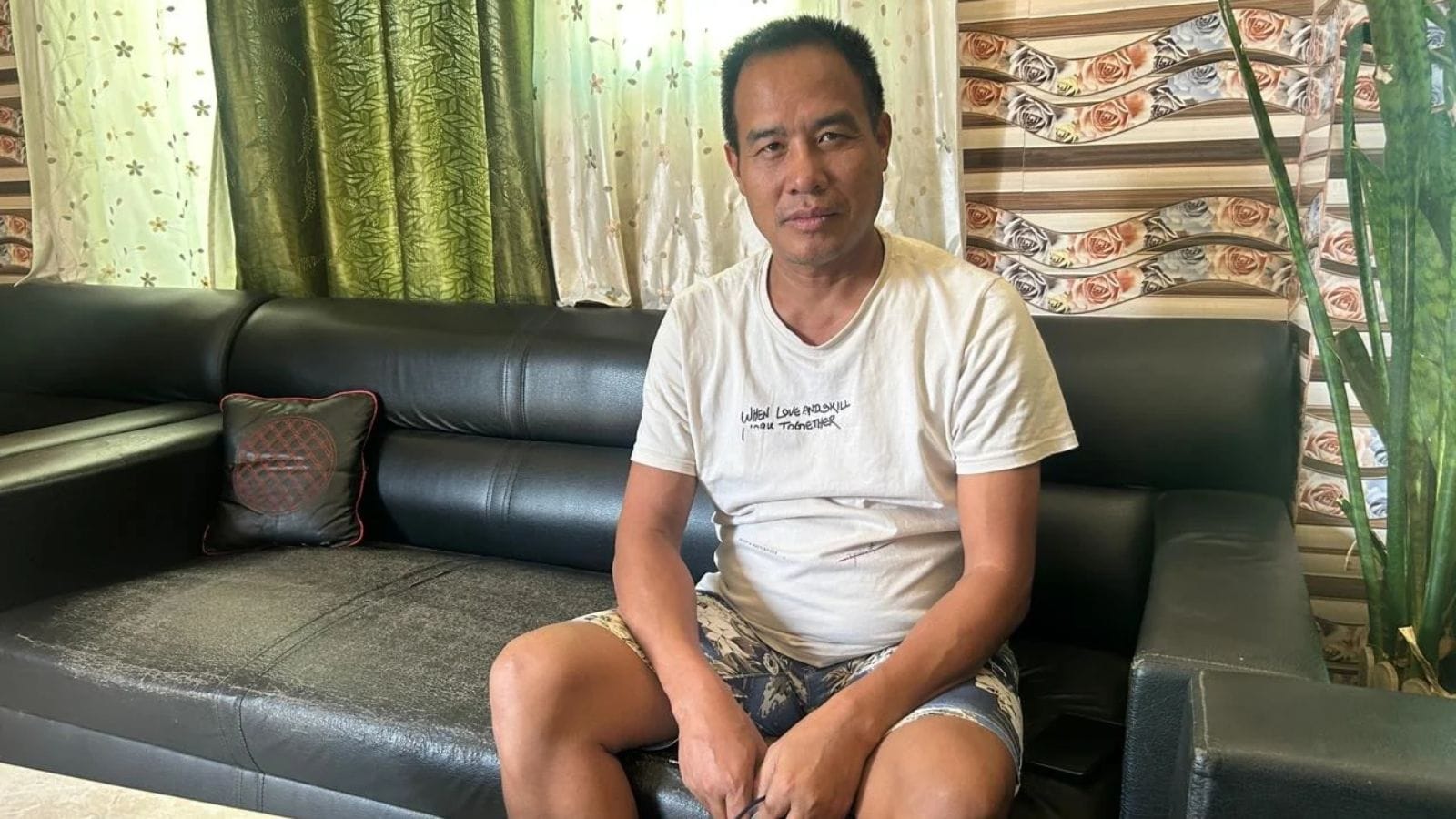
Shimrey has not returned to Litan since he was discharged from the hospital. He stays in the state capital, away from the village where a torchlight and a drunken confrontation set off a chain of events that has left fresh scars.
Watching the violence spread through the hills, he now believes that the tensions between the two groups were simmering for a while. “I was just the trigger,” he said.

Prawesh Lama, an Associate Editor at Hindustan Times with nearly two decades of frontline reporting experience across India’s conflict zones, border regions, and disaster-hit areas. He writes on internal security, insurgency, the Northeast, and Left-wing extremism and has reported from India’s hinterland and some of the most sensitive and strategically critical regions.Read More

KioskNews shows a cleaned-up reading view extracted from the publisher’s page — the original always lives on their site, not ours.