Blog: Opinion | How Prepared Is Mumbai To Prevent An October 7-Like Israel Terror Attack?
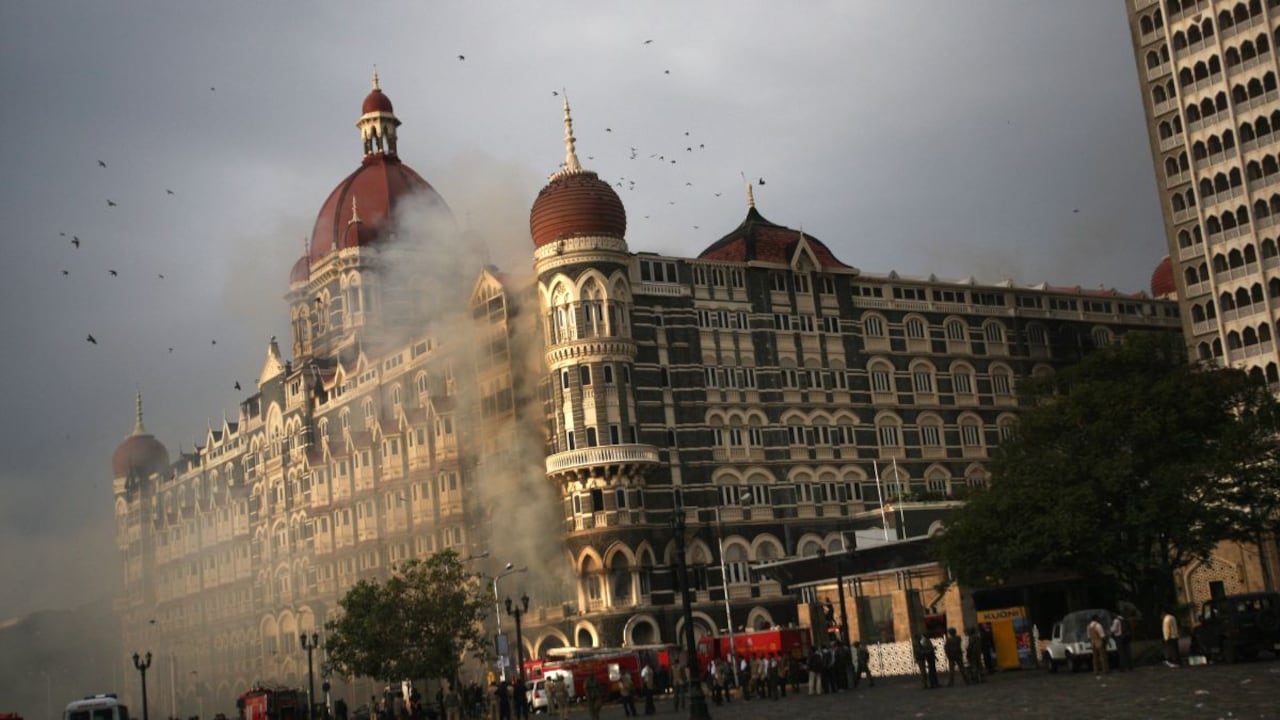
The November 26, 2008 attack was the last big terror attack on Mumbai.
Comparing Mumbai with Tel Aviv in the context of terrorism may seem far-fetched. On October 7, 2023, Israel came under attack from air, sea and land. Over 5,000 rockets were launched to target buildings in Israel and terrorists used paragliders to land at public places and massacre people. Hundreds of Israelis were abducted at gunpoint.
Although Mumbai has endured some of the biggest terrorist attacks in India, none of them have been of this magnitude.
However, Mumbai continues to be on the radar of terrorists. And the question that comes to one's mind is: How safe is Mumbai from a Hamas-like attack?
From March 11, 1993, to July 11, 2011, Mumbai witnessed over 10 terrorist incidents in which around 700 people lost their lives and over 2,000 were injured.
The attack on November 26, 2008, was the last big terror attack on Mumbai, not in terms of the number of people killed, but due to the multiplicity of locations and the number of hours it stretched.
There are some parallels between the attacks on Israel and Mumbai. The 26/11 attacks were the first since the terrorist attack at Kalbadevi on 14 September 1946 where the gunmen landed at public places and indiscriminately shot people. In the 26/11 attacks, the terrorists captured two seven-star hotels, attacked Mumbai's prime railway station and a hospital. The Jewish cultural centre at Colaba was also one of the targeted locations. They planted bombs in two taxis which exploded at Wadi Bunder and Juhu.
There were hostage situations at the Taj Mahal Hotel, Trident Hotel, and Nariman House. At Trident and Nariman House, most of the hostages were killed. It took 59 hours for the National Security Guard (NSG) to clear all the locations by eliminating the terrorists, but not before the Chief of the Anti-Terrorist Squad, two commandos and many policemen were killed.
Just like Mossad is being held responsible for intelligence failure, the Indian security establishment too failed in pre-empting the attacks, although it reportedly had intel on Pakistan-based terrorists planning to infiltrate via the sea route.
There were intelligence reports sent to the Mumbai Police alerting them about imminent attacks. The attacks also posed questions about the efficiency of coastal security agencies. It was a war-like situation and neither the intelligence agencies nor the Mumbai Police anticipated the scale of the attacks.
But the concern now is whether the security apparatus is prepared to deal with another 26/11-type attack or one similar to what Hamas did in Israel. I covered those attacks on the ground and have followed the aftermath.
During the last fifteen years, I have reported several times on Mumbai's vulnerability to terrorist attacks. I still find the city vulnerable and its counter-terror preparedness is down to an alarming level.
A few years ago, the Comptroller and Auditor General (CAG) published a damning report on Mumbai's coastal security. After the attacks, as a knee-jerk reaction, the state government spent millions of rupees procuring speed boats, jet skis and amphibious vehicles for coastal security. However, within a few years, most of them were defunct due to lack of maintenance and unavailability of replacements for malfunctioning parts. The adequate supply of diesel was another issue.
Once, a policeman deployed on a patrolling boat fell into the sea and drowned. It was revealed that most of the cops on duty in the coastal security units weren't even skilled in swimming.
Evening boat parties at the Gateway of India have been restricted due to the "terror threat". At most railway stations, one can see door-frame metal detectors and X-ray machines to check luggage, but there aren't enough personnel to man them.
Most of the measures taken in the name of security after 26/11 have sadly been an eyewash.
After the 26/11 attacks, the Ram Pradhan Committee was set up to investigate the attacks and suggest measures to tighten security. However, nothing concrete has been done on its recommendations.
The only positive development that I could see is that Mumbai now has three kinds of commando forces deployed in the city. The first is the QRT (Quick Response Team) of the Mumbai Police, the second is Force One of the state police and the third is the NSG, which has opened a regional headquarters in Mumbai.
In case of a terror attack, the QRT would be the first responder. However, these commando forces would be required only when an attack happens. The bigger question is what has been done to pre-empt another attack?
Obviously, everything couldn't be revealed to the public. I trust that the intelligence and security agencies have learnt their lessons and Mumbai is safe from evil eyes.
KioskNews shows a cleaned-up reading view extracted from the publisher’s page — the original always lives on their site, not ours.