AFTER THE BELL: We don’t talk anymore — the case for voice calls in a text age
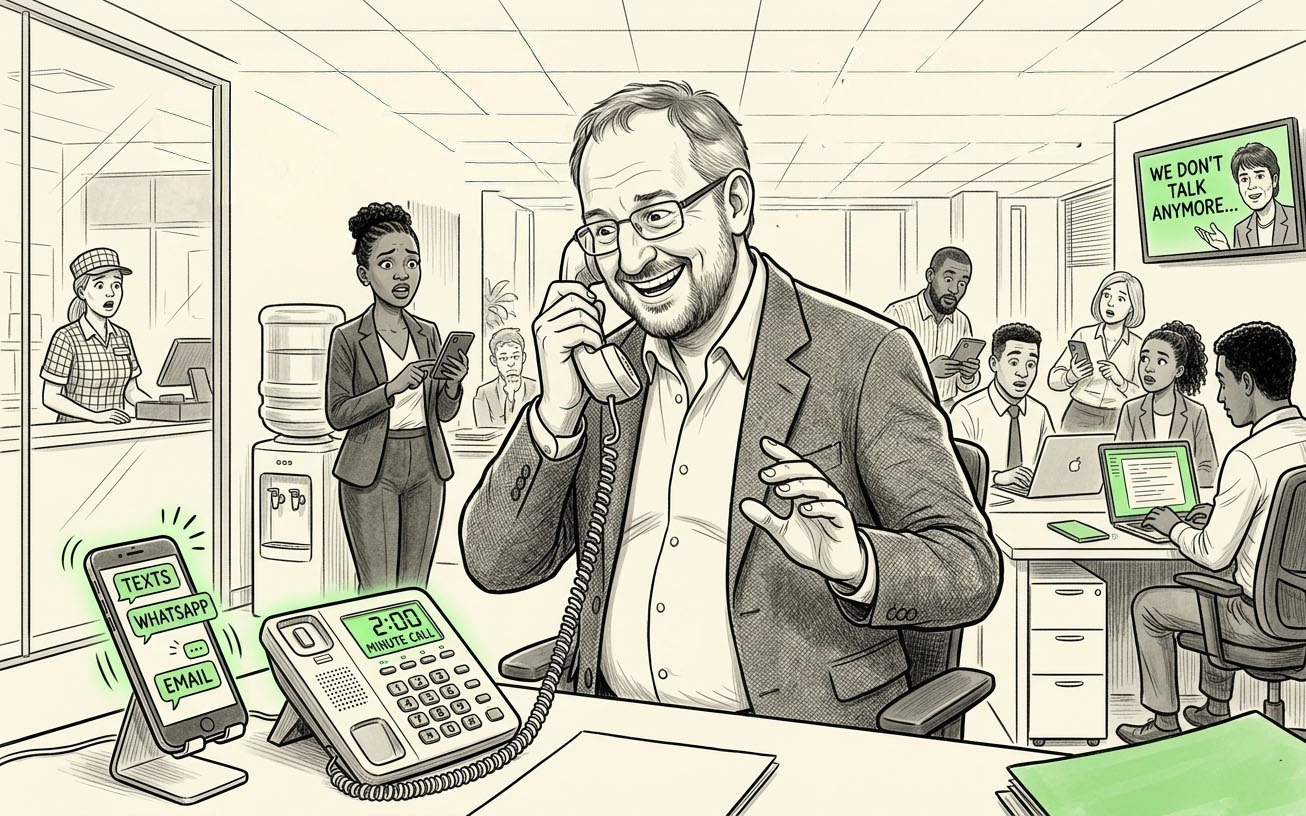
The other day something happened that was once incredibly common but has become very unusual.
I was tapping away at my desk in the very vibey office in which I spend my mornings when my phone rang, with a number I didn’t recognise.
Instead of doing the rational thing and just ignoring it, for some reason I can’t explain, I answered it, prepared to dismiss it with the look of disgust I reserve for those pre-recorded AI injunctions to buy more car insurance.
Amazingly, it was a person I once knew who had been trying to contact one of the teams I work with urgently.
In two minutes we said hello, worked out how to resolve the issue, came to an agreement and made the necessary plan.
With a slightly joyful “good to hear from you again”, we rang off, our business concluded.
This is the kind of thing that almost never happens nowadays.
Instead, every communication starts off with a WhatsApp or an email, and things can take forever to conclude with a whole lot of back-and-forth involving communication via some form of text.
Whenever I have a slightly difficult problem, whether it’s a person I’m slightly unhappy with, or when I need to communicate with a person who is slightly unhappy with me, I call them.
They can tell immediately from my tone that I’m being genuine, that there is a problem and I want to resolve it.
Several years ago I was involved in a long, complicated and vaguely public dispute with an institution that does good work regulating the media.
When it was finally over, I phoned the other party to the case.
When they answered I just said, very quickly: “I can’t make any comment on the case and I won’t. I just wanted to acknowledge to you that this happened and that this dispute is now over.”
My heart was in my throat as I said it. Would they fight, swear, shout?
Instead, the joy and the relief in their voice was incredible. They breathed out, and just said: “Thank you, Stephen, I really appreciate that.”
While that person and I have not crossed paths often since, having gone in different directions, I feel we have an understanding. I know they’re a classy person and that we respect each other.
The psychologist who spends so much time thinking about workplaces, Siphiwe Moyo, suggested on The Money Show last night that the sound of your voice actually matters in a conversation.
He’s not talking about how your voice sounds. He’s talking about how we use tone to really communicate when we speak to each other.
And in-person communication really matters.
He gave an example of the CEO of a company who has to deliver news that workers don’t want to hear. Perhaps there will be no bonus this year. But it might be a lot more serious than that, and some of the people in the room will be losing their jobs.
He says that if you deliver information like that through any kind of text communication, email or whatever, it loses humanity.
In that case the CEO is just the “CEO”, a faceless person sitting in a fancy office somewhere, kicking the little guy.
But if that same CEO stands up in front of the people they’re responsible for, the message is completely different.
You can see a person wrestling with a difficult problem, with evidence of sleepless nights, as they explain how they have to let some people go to save the jobs of the others, and the company itself.
They are a person, not just an office.
I think the same might be true for voice calls. When you speak to someone you get a sense of them, you touch their blood in a way that you just don’t with textual communication.
There’s something else.
I’m one of those people who really enjoys other people. For as long as I can remember, I’ve been described as “loud” and “confident” (I often think confidence might be the most important element of success … just look at Elon Musk…).
As a result, I enjoy talking to people and, more importantly, listening to them.
When you have a phone conversation there is always the chance that the conversation will change tack.
And that leads you down the most constructive path you would never have imagined.
This is something younger people are missing out on.
So often when I call a younger person I can see they’re completely taken aback, they’re almost worried that something really bad must have happened.
For them, it seems, a voice call is a special occasion. They have grown up doing all of their communication via text.
How awful!
You’re cutting yourself off from so much communication.
That incredibly boring and often worryingly dressed British singer of a previous generation, Cliff Richard, was right when he vocalised: “We Don’t Talk Anymore.”
KioskNews shows a cleaned-up reading view extracted from the publisher’s page — the original always lives on their site, not ours.