Cenote hunters’ love for exploring the Yucatán Peninsula inspires new guidebook
For Canadian forester David Palmer, a deep dive into the history and majesty of Mexico’s crystal-blue cenotes has been a decades-long fascination. Palmer and his wife, Doris Demers, are cenote hunters.
Sometimes, this involves visiting two or three per day, during a month-long visit to the country. Palmer says this challenge has been nothing short of awe-inspiring.

“I’ve never seen a cenote I didn’t like,” Palmer says. “Our aim was to cover the whole [Yucatán Peninsula], physically and geographically, taking in as many cenotes as we could. We’re at about 140.”
Scattered throughout the Mexican states of Yucatán and Quintana Roo, there are believed to be around 10,000 cenotes. However, only around 250 can be visited. That’s because many of these cenotes are buried underground.
The Yucatán has very few permanent surface-level rivers; many of them are subterranean. Rainwater infiltrates the porous limestone landscapes and makes its way into these cenotes and caves.
The name for the natural sinkholes scattered throughout the Yucatán Peninsula comes from the Maya word tsʼonoʼot, meaning accessible groundwater. They have been regular water supplies and also used for sacrificial purposes throughout Mesoamerican history. Without them, the National Institute of Anthropology and History notes, the growth of Maya civilization would have been very difficult.
A guidebook to Mexico’s cenotes
For Palmer and Demers, their great endeavor to hunt down as many cenotes as they could spawned an idea for an English-language guidebook.

On a chance encounter with a fellow Canadian couple who owned a bookstore in Puerto Morelos, Quintana Roo, Palmer said he knew there was an opportunity. The owners told Palmer that, despite growing demand and questions from visitors about an English-language guidebook, they did not have one available for the region’s iconic natural wonders.
“Now that piqued my interest,” Palmer said. “Since we were going around looking at them anyway, we started to keep an account.”
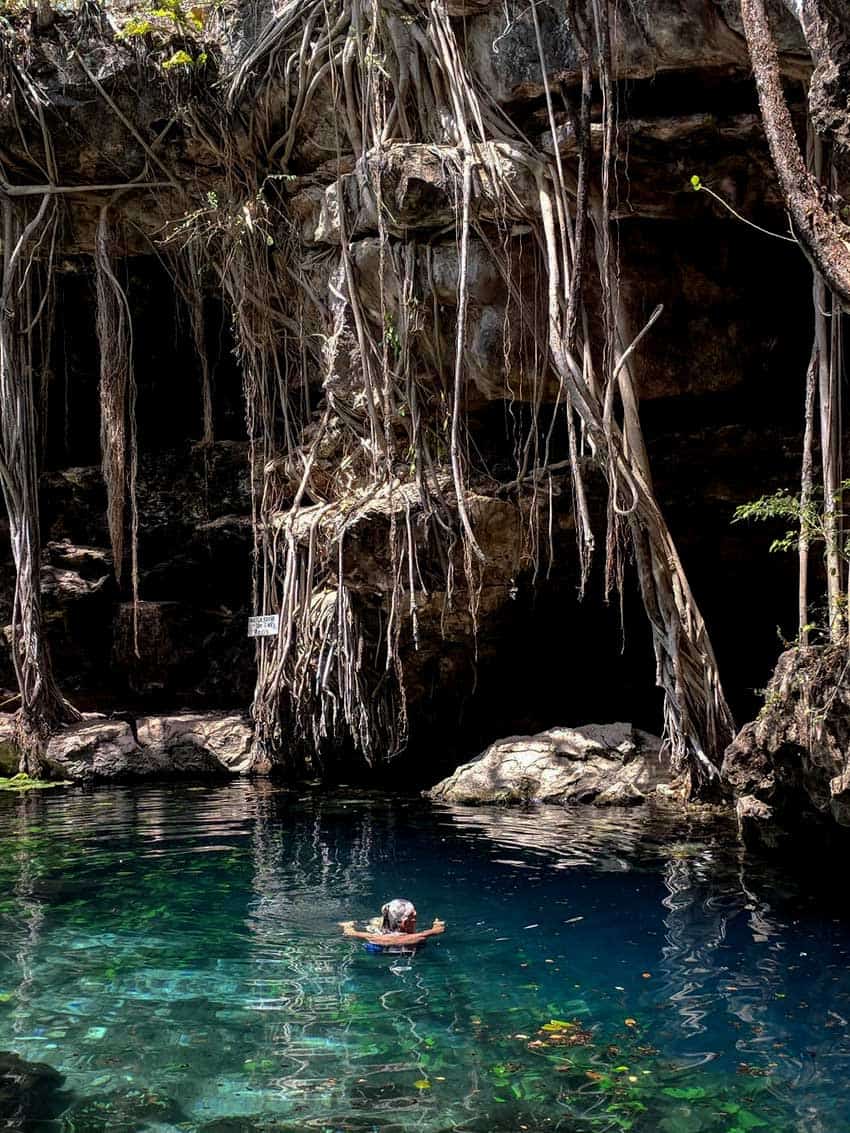
He set out to capture their majesty and beauty, one sinkhole at a time. The new book, “A Guide to the Cenotes of the Yucatán Peninsula,” is expected to be published in the coming weeks.
“The caverns may remain hidden for centuries until a probing tree root pokes an opening into the ceiling of the cavern, revealing the wondrous world below,” the book reads. “Sometimes, in sinkhole fashion, an entire section of the surface will collapse into this watery underworld.”
Scientists have established that the Sistema Ox Bel Ha, covering vast stretches of the Yucatán Peninsula, is the longest underwater cave system in the world and the second-longest general cave system ever explored, behind the 686-km-long Mammoth Cave National Park system in Kentucky in the U.S.
Their special place in Mexico’s landscape and cultural identity has been brought into focus over the years through investigations into wastewater management and increased urbanization.
Where are the best cenotes?
Nestled between Calle 37 and Calle 39 in the city of Valladolid, you will find Cenote Zaci.
“It’s 50 meters across and 80 meters deep,” Palmer says. “I thought it was gorgeous, absolutely stunning.”
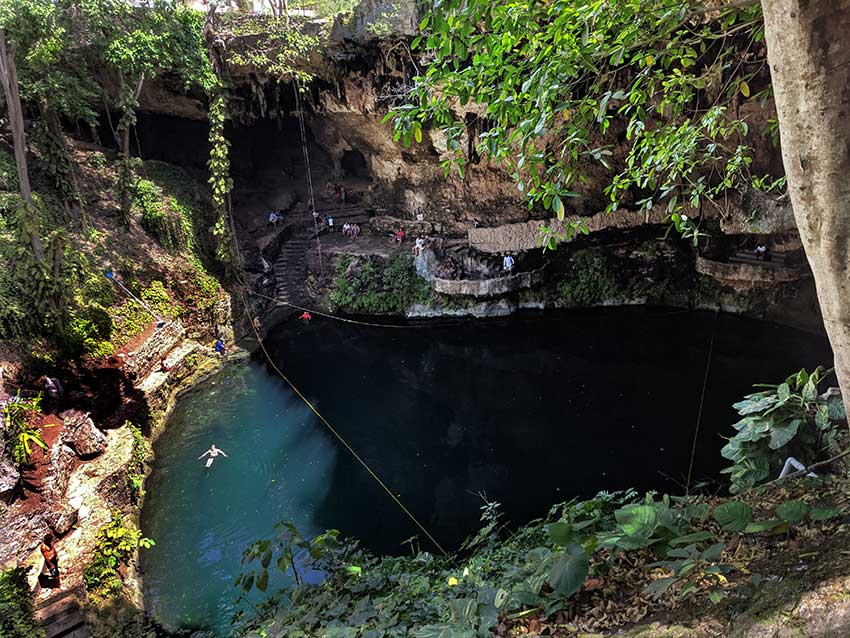
However, when a local hardware store owner heard those comments, she told him that Zaci was nothing when compared to the magnificent Dzitnup.
“(It’s) 10,000 times better,” the owner told Palmer.
Palmer said some locals took their entrance fees and pointed towards the direction of the cenote. The concerning part for Palmer and Demers was that the entrance was a small hole in the ground.
“Down we went, a little bit warily. We’d never been in an underground one before,” Palmer says.
According to the forthcoming guidebook, “A shaft of light from the hole in the ceiling plays over the shimmering mystical water and some of the most spectacular limestone formations in the region are on display. [It’s] the cenote that made cenotes famous in 1995 when National Geographic featured it on its cover.”
Forget your worries at X’Batun and X’ooch
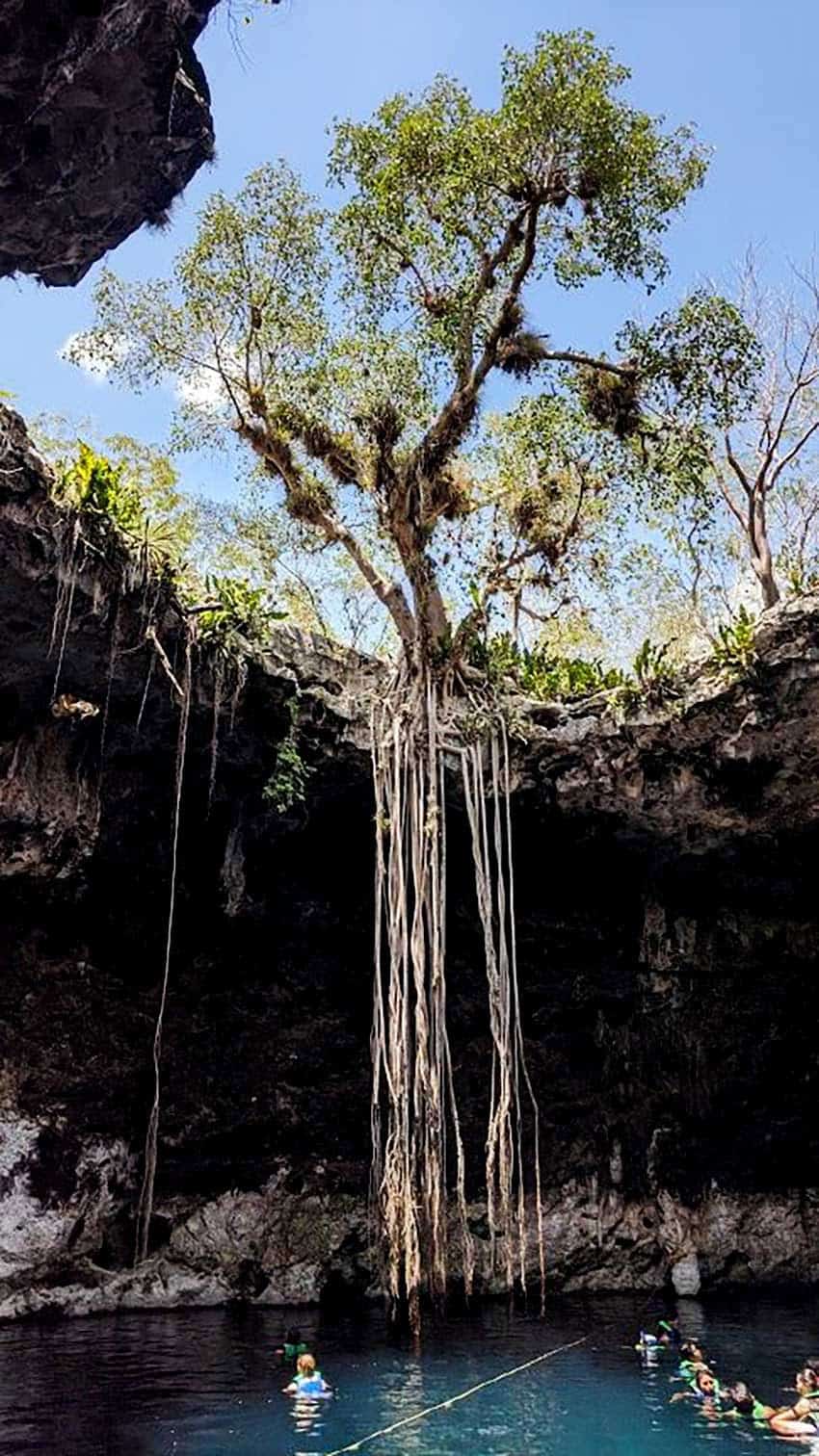
As you snake your way down the 20-meter stone staircase towards Cenote X’Batun, its glassy water has an alluring quality. Located a stone’s throw from San Antonio Mulix and 50 kilometers south of Mérida, there’s a good reason it featured prominently on Palmer’s list.
“It is an open, low-walled oasis where the jungle comes right down to the gorgeous turquoise water, and so does the bird life,” he said.
Within the guidebook, visitors to this cenote are told to keep their eyes peeled for several bird species, including colorful kiskadees, orioles and motmot.
However, Palmer said people need to take care when approaching the water, as there are slippery steps that require attention.
“Once in the water, it is heavenly,” Palmer said.
Meanwhile, Cenote Xooch’s image is one that has been made world-famous through travel magazines and nature photography. The cascading Alamo tree roots fall into the shimmering blue cenote. It’s an image that continues to go viral through travel influencers. Snorkeling is also very popular at this vast circular cenote due to the clarity and depth.
John Pint has lived near Guadalajara, Jalisco, for more than 30 years and is the author of “A Guide to West Mexico’s Guachimontones and Surrounding Area” and co-author of “Outdoors in Western Mexico.” More of his writing can be found on his website.
KioskNews shows a cleaned-up reading view extracted from the publisher’s page — the original always lives on their site, not ours.