Developing nations face triple shock from energy crisis, El Niño and borrowing costs, UN warns

Developing countries face a triple shock from the energy crisis, El Niño and surging borrowing costs and need urgent support from the international community, the UN’s development arm has warned.
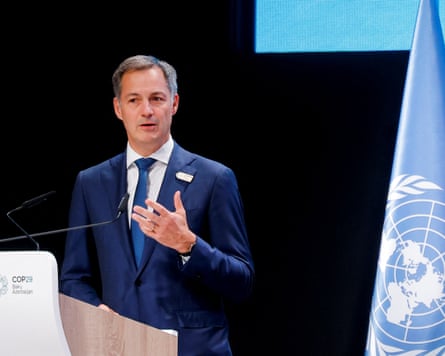
Speaking before the International Monetary Fund (IMF) and World Bank annual meetings in Bangkok this week, the UNDP’s administrator, Alexander De Croo, called for “solidarity and global action”.
“Developing countries, their hands and legs are being pulled in different directions: it’s truly hard for them,” he said.
Before the meetings, the UNDP published a report, No Time to Recover, which lays out the risks of what it calls the “compounding crises” of energy, climate and debt.
Oil prices have been driven back above $100 a barrel in recent weeks since hostilities resumed in the Middle East.
The report says that since the Iran war broke out earlier this year, up to 130 million of the world’s poorest people have been shielded from the full impact of high prices by emergency government measures.
But it warns many of them are now at risk, as governments run out of the resources needed to keep cushioning their populations against soaring costs.
“What we see now is that countries are pivoting their policy and letting the price hikes flow through. They’re pivoting the policy because they have no choice, because their fiscal space is completely eaten up,” De Croo said.
“We are witnessing a perfect storm that could throw tens if not hundreds of millions of people back into poverty.”
Meanwhile, the worst El Niño climate pattern in perhaps 1,000 years is expected to cause widespread crop failures and increase the risk of extreme weather events, while at the same time the global bond sell-off is driving up government borrowing costs.
De Croo said: “The cost today for bond financing for developing countries, it’s 9%. That is really, really high.”
He added that the situation was expected to deteriorate between now and the spring. “For each of the three things that we mentioned – fuel prices, El Niño and the bond markets – unfortunately for each of those at the moment, we don’t see any light at the end of the tunnel.”
His warning chimes with the findings of separate research published on Sunday by the campaign group Debt Justice, underlining the social impact of high debt servicing costs.
It shows that low-income countries classified by the IMF as either in, or at risk of, debt distress have cut their education budgets by an average of 8% since 2019, and wider public spending by 2%.
Heidi Chow, the executive director of Debt Justice, said: “High levels of debt are having a devastating impact on people’s access to healthcare and education.”
Debt Justice is calling for the outright cancellation of some of the most burdensome debts, and overhaul of the IMF-administered common framework for debt restructuring.
Chow said: “We urgently need debt cancellation – especially from the highest interest lenders like banks, hedge funds and oil traders.”
De Croo said the UNDP did not oppose efforts to secure debt relief for some of the hardest-hit countries – but argued it would take many months to negotiate, and instead called for more urgent action.
“We urge the international community – multilateral lenders, donors, and partners – to step up access to affordable finance so countries can sustain support for their most vulnerable households,” De Croo said.
He praised the IMF managing director Kristalina Georgieva’s recent call for spending restraint in developed countries, in the hope of taming bond yields.
But he said: “We also need to have a coordinated policy for developing countries. And that coordinated policy for developing countries cannot just be, ‘you are at the end of the line and we’ll see what happens’.”
He declined to say what the specific response should be, but stressed that it should create “time and space” for developing countries to carry out much-needed changes.
During the Covid crisis, G20 nations implemented a temporary standstill on debt repayments for developing countries.
De Croo also pointed to liquidity measures available to central banks, such as the currency swap lines implemented by the US Federal Reserve during recent financial crises, to prevent markets seizing up. “What would help is a certain level of liquidity,” he said.
KioskNews shows a cleaned-up reading view extracted from the publisher’s page — the original always lives on their site, not ours.