China sentences 3 more Myanmar crime bosses to death in scam centre crackdown
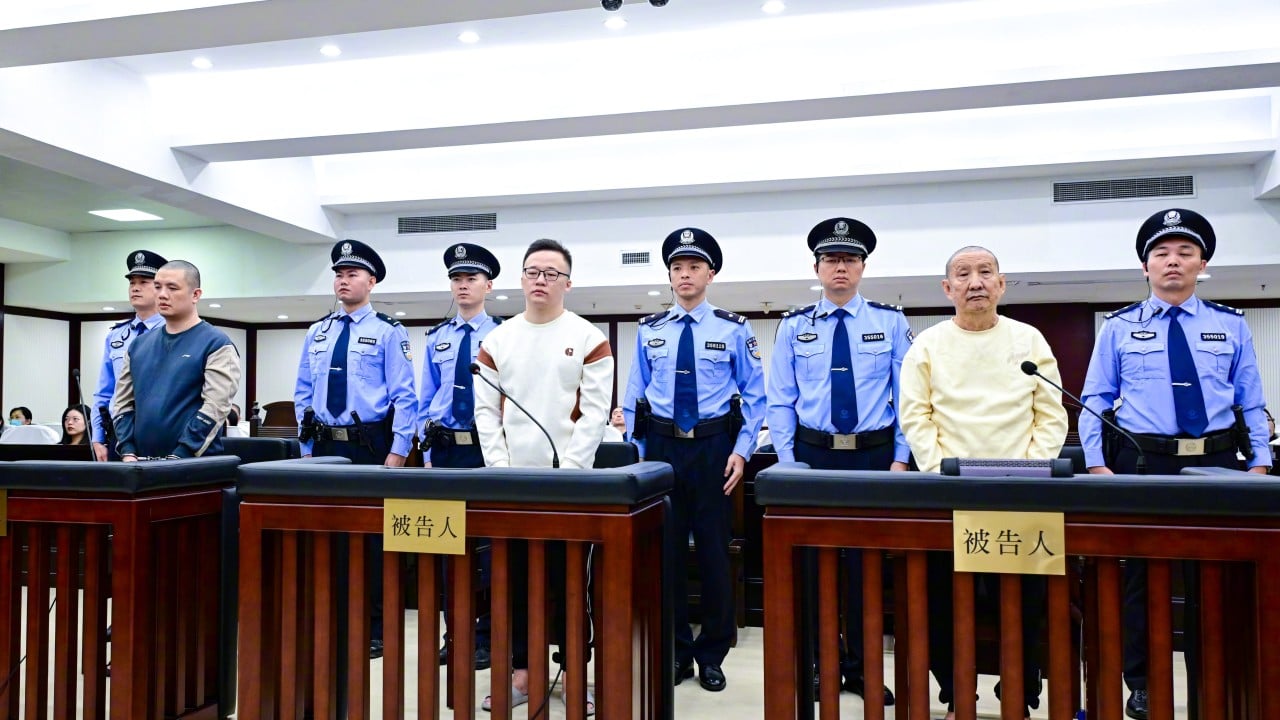
Courts in China have sentenced three key figures of a notorious Myanmar crime syndicate to death for operating large-scale cross-border telecoms fraud networks and causing the deaths of four Chinese nationals.
The Quanzhou Intermediate People’s Court and the Nanan City People’s Court in southeastern Fujian province handed down the rulings against syndicate head Wei Huairen, his nephew Chen Dawei and accomplice Liao Jingfang on Tuesday, following a trial held in May, state broadcaster CCTV reported.
They are among 61 members of the family-run Wei syndicate convicted of running massive cyber scam centres as well as illegal detention and extortion rings out of northern Myanmar targeting victims across China.
Three other key defendants – Wei Qingtao, Kang Min and Xiong Hengxing – were sentenced to life in prison, while 55 accomplices received fixed prison terms ranging from 39 months to 24 years.
The courts – designated by central authorities to lead the prosecution – also ordered extensive asset confiscations, heavy fines and deportations where applicable.
The ruling marks China’s latest high-profile legal milestone in systematically dismantling the violent transnational scam empires that once operated with near-total impunity along its southwestern border with Myanmar.
01:47
Chinese state-media documentary offers behind-the-scenes look at scam centre crackdown
According to the verdict, the syndicate was spearheaded by Wei Huairen, a former border guard militia commander and head of the Wei clan – one of northern Myanmar’s infamous “four families” of Kokang. He also headed the family’s Henry Group conglomerate.
The Wei family leveraged its political and military influence in Kokang to set up multiple criminal compounds in Laukkai, the region’s capital.
The syndicate harboured and provided armed protection to fraudulent “investors”, running industrial-scale telecoms scams, operating illegal casinos, trafficking narcotics, extorting victims and organising cross-border human smuggling, the courts heard.
Investigators found that the illicit gambling and fraud operations processed more than 12.2 billion yuan (US$1.7 billion) in criminal funds since 2019.
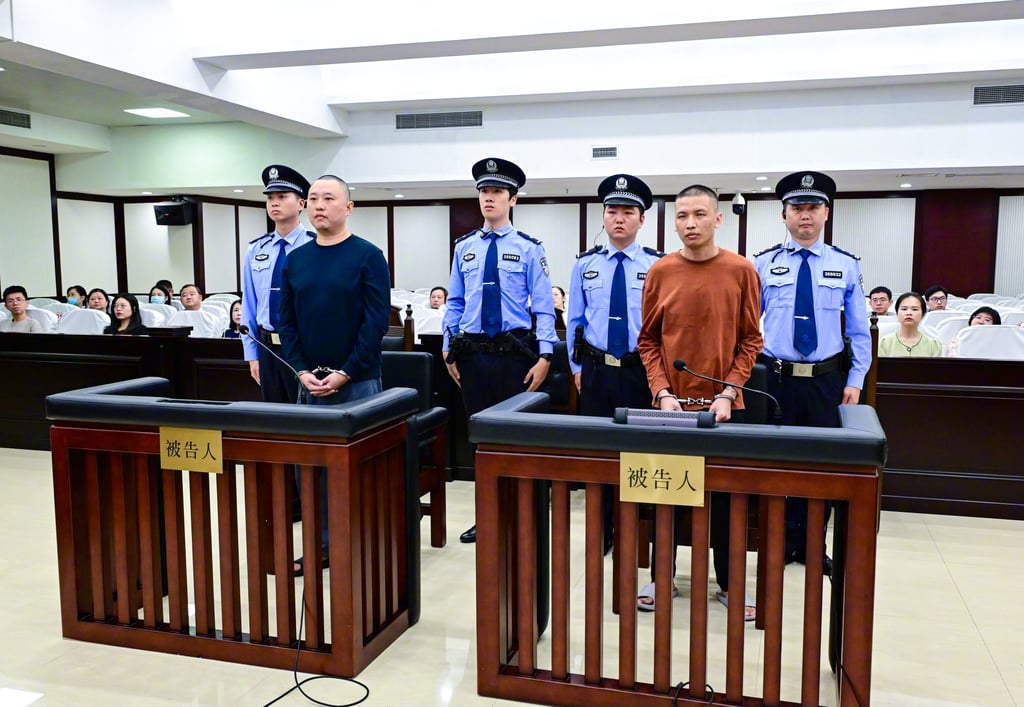
Wei Huairen, the family’s third eldest brother, served as chairman of the 1006 Border Battalion Supervision Committee of Kokang. This enabled him to weaponise state-authorised military forces for private criminal ends, the CCTV report said.
Court documents detailed violence inside the scam compounds, revealing that the syndicate colluded with fraud operators to murder two Chinese citizens who disobeyed internal rules.
Meanwhile, Chen Dawei, groomed as the clan’s second-generation armed enforcer, used private militias to carry out killings, including those of two other Chinese nationals.
A documentary aired by CCTV last week revealed that Chen admitted to randomly murdering a victim as a “ritual sacrifice” to prove loyalty while forging ties with fraud compound financiers.
The Wei family “uniquely” abused institutional authority, the documentary said. While ostensibly drawing government salaries to protect the border, clan leaders co-opted the state apparatus for private gain, it noted.
“By intertwining official border guard units with private militias, the family pioneered a violent model of armed military control over telecoms scam compounds” and casino hubs in Laukkai, the narrator said.
Kokang was long carved up among the “four families” – the Wei, Bai, Liu and Ming clans – who ran vast compounds where tens of thousands of trafficked workers faced torture, beatings and forced labour to carry out online scams.
01:06
China executes 4 more members of Myanmar-based scam syndicates
Jurisdiction was a key obstacle to China’s efforts to combat cross-border scam operations, the CCTV documentary revealed.
After China issued arrest warrants, the Myanmar authorities initially argued that the syndicate bosses held Myanmar nationality and should therefore face trial and serve any sentence locally before extradition could be considered.
Beijing countered that it held full legal jurisdiction because the syndicates mainly targeted Chinese citizens. Domestic prosecution in China was crucial for “thoroughly uncovering the full scope of crimes and deterring future syndicates”, the authorities argued, according to the documentary.
“The ‘four families’ in northern Myanmar had reached a stage where they simply had to be eliminated,” Niu Jiawei, deputy director of the Asean division at the Ministry of Public Security’s international cooperation bureau, said in the broadcast.
“If the heads of Kokang’s ‘four families’ were not brought to justice, the Chinese police would not accept it, Chinese law would not accept it and the Chinese people certainly would not accept it.”
02:08
Myanmar-based scam centre group members apologise on Chinese television
The impasse was finally resolved through a consensus on regional security, leading Myanmar authorities to detain and hand over the fugitive bosses, according to the documentary.
In late 2023, Beijing launched an aggressive cross-border law enforcement campaign that saw regional authorities hand over fugitive syndicate leaders and repatriate nearly 60,000 Chinese fraud suspects.
The latest judgment follows sweeping executions handed down to rival Kokang kingpins.
In January, 11 members of the Ming crime family were executed following sentencing by a court in eastern Zhejiang province, while syndicate founder Ming Xuechang died by suicide before he could be arrested. The following month, four core members of the Bai family were executed after being sentenced in Shenzhen, southern China.
The Fujian courts convicted Wei, Chen and their co-defendants on seven criminal counts, including intentional homicide and fraud, citing the grave harm their armed network inflicted on society.
KioskNews shows a cleaned-up reading view extracted from the publisher’s page — the original always lives on their site, not ours.