Japan's economy unexpectedly shrinks as inflation squeezes households
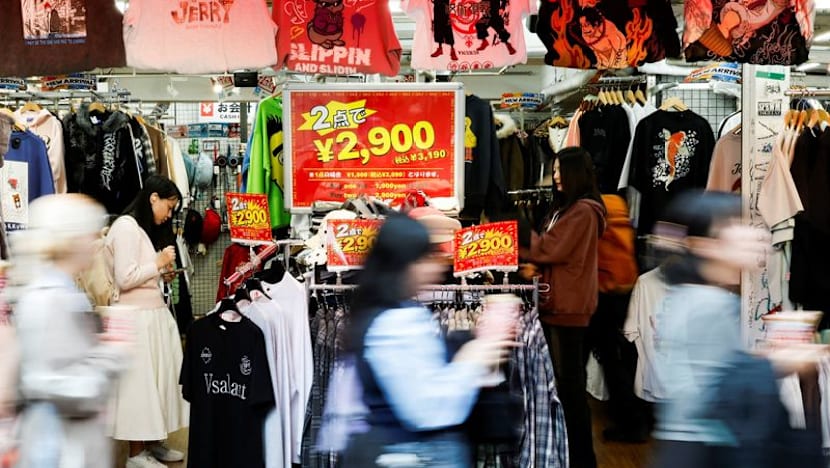
TOKYO, Nov 16 : Japan's economy unexpectedly shrank in the July-September quarter, reflecting weak consumer spending as higher living costs forced households to tighten their budgets.
Gross domestic product fell an annualised 0.1 per cent quarter-on-quarter, official data showed on Monday, compared with a median market forecast of 0.3 per cent annualised growth in a Reuters poll, and a revised 1.7 per cent expansion in the previous quarter.
The decline is the first in four quarters and underscores the uneven nature of Japan's economic recovery, with households remaining vulnerable to persistent inflation despite rising wages.
Still, policymakers are unlikely to view the weakness as a brake on Japan's moderate recovery, with resilient corporate activity, rising real wages and robust demand for artificial intelligence-related investment underpinning growth.
"While growth was indeed negative this time, there is no need to be overly pessimistic about the result," said Kento Minami, senior economist at Daiwa Securities. "My impression is that moderate growth is probably continuing."
Minami also said the results are unlikely to derail the Bank of Japan's tightening path, as the central bank remains focused on inflation risks, adding that firm domestic price pressures and a global backdrop of higher interest rates leave little room for a dovish policy shift.
The reading translated into a quarterly fall of 0.02 per cent, compared with the median estimate of a 0.1 per cent increase.
Private consumption, which accounts for more than half of economic output, fell 0.3 per cent, compared with a market estimate of a 0.2 per cent decline.
Persistent price pressures and poor weather, including heavy rain and typhoons during the quarter, hurt household spending. Demand for automobiles and air conditioners retreated following the temporary boost in the previous quarter from tax and regulatory changes.
"Strong wage growth should support consumption, but higher prices linked to Middle East tensions will continue to squeeze household purchasing power," said Masato Koike, senior economist at Sompo Institute Plus.
Capital spending, a key driver of private demand, rose 1.6 per cent, versus a market forecast for a 1.5 per cent increase, backed by investment in labour-saving technologies and AI-related projects.
Net external demand, or exports minus imports, knocked 0.6 per centage point off growth, compared with a market forecast for a 0.4 per centage point drag on GDP growth.
Imports rose sharply as oil and other energy purchases recovered after Japan diversified procurement following disruptions linked to the war in the Middle East.
"Looking ahead, improvements in the employment and income environment, as well as the effects of various policy measures, are expected to support a gradual recovery in the economy," Japanese economy minister Minoru Kiuchi said in a statement.
"However, it will be necessary to continue closely monitoring the impact of the Middle East situation," he said.
BOJ RATE-HIKE PATH
The BOJ will closely scrutinise the latest data as it assesses whether the economy can withstand further interest-rate increases.
With stubbornly high energy costs and rising import prices from a weak yen adding to inflationary pressures, the BOJ has stepped up its policy tightening this year, delivering interest rate hikes in June and September.
Many analysts expect the next BOJ rate hike as soon as December.
"While consumption remained weak, that was largely a consequence of rising prices," reinforcing the need for the BOJ to keep raising interest rates, said Kazutaka Maeda, senior economist at Meiji Yasuda Research Institute.
But Ryosuke Katagi, a market economist at Mizuho Securities, said in a note to clients that if weakness in consumer spending persists, it could sharpen differences among BOJ board members, as dovish policymakers cite fragile private consumption as a reason to proceed cautiously with further rate hikes.
A monthly survey of 37 economists by the Japan Center for Economic Research showed the economy is expected to grow 0.89 per cent in fiscal 2026 and 1.02 per cent in fiscal 2027, suggesting economists see growth remaining modest but resilient.
Japan's longer-term growth challenges remain in focus, with the International Monetary Fund projecting the country will slip to the world's sixth-largest economy in nominal dollar terms in 2027 in dollar terms, overtaken by India and Britain. Japan is currently the world's fourth-largest after Germany.
KioskNews shows a cleaned-up reading view extracted from the publisher’s page — the original always lives on their site, not ours.