‘Big hassle for everyone’: Malaysia braces for worsening haze as dry season bites
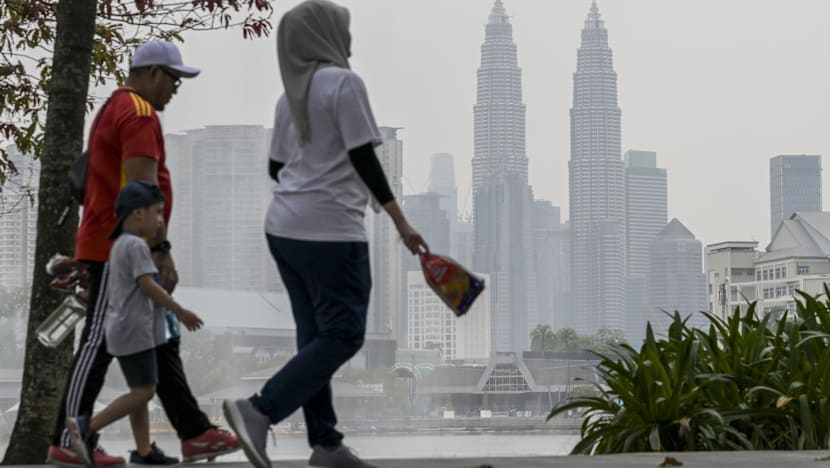
KUALA LUMPUR/JOHOR BAHRU: For Malaysian Shobana Sritharan, checking the Air Pollutant Index (API) every few hours over the last fortnight has become a routine.
As a fresh wave of haze blankets parts of their local Klang Valley, both she and her 12-year-old son have fallen ill this week with flu-like symptoms including a sore throat and cough.
After her son ran a fever soon following an outdoor activity in school, Shobana now opts to stay indoors wherever possible, monitoring the situation as it fluctuates by the hour.
However, as a public transport commuter, she still has to brave the walk from the train station to her office in Kuala Lumpur every day.
“We are used to this because (encountering haze) has been a yearly thing, but it’s still a big hassle for everyone,” said the 41-year-old student advisor at a learning centre.
Many other Malaysians share Shobana’s frustration as dense transboundary haze fuelled by seasonal land-clearing and agricultural fires in neighbouring Indonesia drifts across the region.
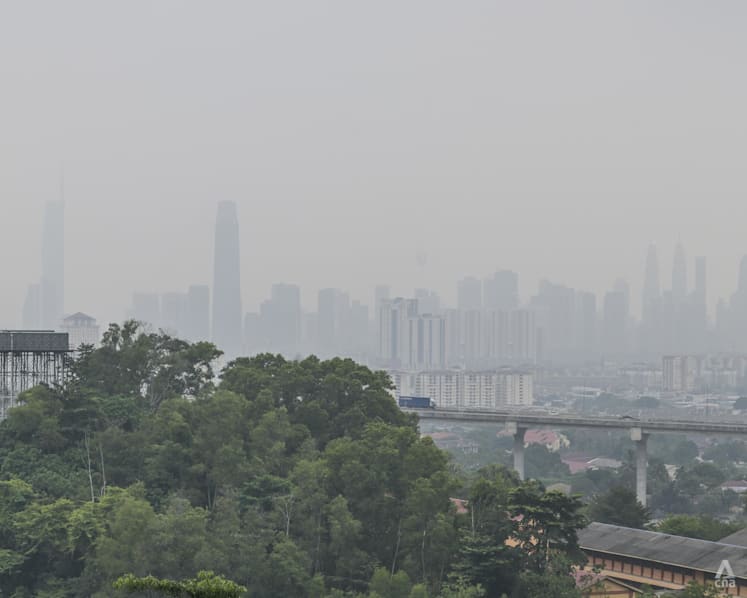
Malaysia is among the worst-hit countries in Southeast Asia, due to its geographical position relative to fire hotspots in Sumatra and Kalimantan, with areas in Sarawak and the Klang Valley, directly in the path of smoke, surpassing unhealthy levels in recent days.
On Friday, API readings for three areas in Sarawak and in the Klang Valley exceeded 150 - classified as within the unhealthy range.
Last week, figures in some areas of Sarawak crossed 200 - classified as a “very unhealthy range” - forcing the temporary closure of schools.
Government spokesperson Fahmi Fadzil also said that the government was evaluating whether to alter the scale or venue of its main National Day celebrations on Aug 31 due to the haze situation. Various ministries have been studying weather projections and discussing possible safety measures.
He said that no cancellations were expected but some events could be relocated indoors, and indoor celebrations have also been recommended.
“This is also to protect the 1,500 secondary school students participating in human graphics performance from three states,” Fahmi added.
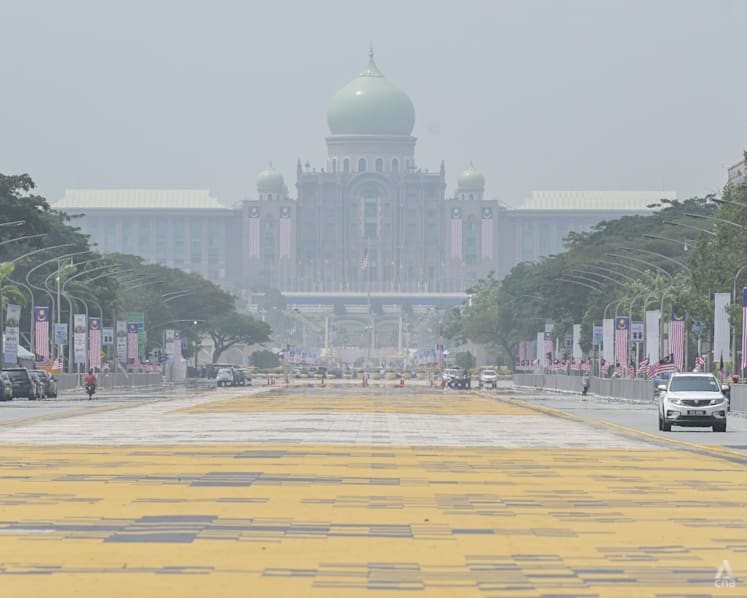
Malaysia’s Islamic Development Department (JAKIM) even held special prayer sessions at three mosques on Wednesday (Aug 26) night, seeking protection for the health of its citizens.
While Malaysia is among the worst-hit countries in Southeast Asia so far this year, experts CNA spoke to said that the solution must arise from collective political will among ASEAN member states.
“Tackling this issue is for Indonesia’s own benefit, it’s not just an external issue. Indonesian citizens suffer even more because the concentration of pollutants will be way higher in their areas,” Universiti Malaya meteorologist Azizan Abu Samah told CNA.
“The issue is transboundary, and sorting it out still requires a great deal of cooperation among ASEAN countries,” he added.
THE HUMAN AND COMMUNITY TOLL
An almost annual event in the region during the dry season between June and September, the haze is often attributed to fires started to clear land for agriculture in Indonesia, usually for palm oil and pulp and paper plantations.
The impact of the transboundary haze, compounded by prolonged dry weather due to the El Nino phenomenon, is likely to exacerbate the situation and fuel more hotspots in the coming weeks, said the ASEAN Specialised Meteorological Centre (ASMC).
And the impact on this year’s haze on Malaysians has already been pervasive, compared to previous years.
Schools have experienced the most visible disruption with more than 100 temporarily closed in Sarawak as the API rose to above 200 in these areas last week.
Beyond the temporary closures affecting nearly 200,000 students, the education ministry on Monday ordered all outdoor activities, assemblies and outdoor sports to stop at schools where API exceeds 100. Some school sporting events are being moved indoors or relocated.
“Strenuous physical activities can increase health risks due to the haze. This is because during intense physical exertion, the respiratory rate rises significantly, causing the volume of haze-polluted air inhaled to increase up to 10 times more compared to when at rest,” the health ministry said in a statement.
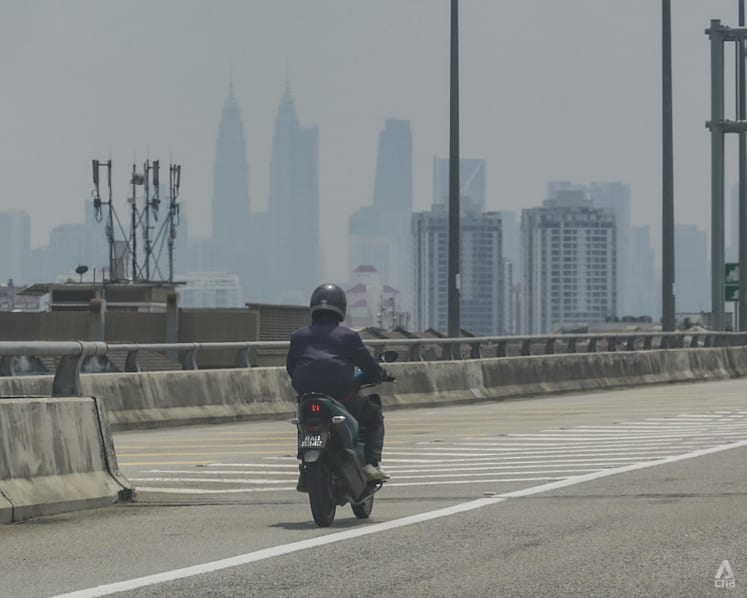
This led to one local national-level hockey competition for school children to be moved from Kuala Lumpur to Temerloh in Pahang more than 130km away where the haze conditions were not as severe.
The tournament format also had to be changed to nine-a-side hockey, while matches were changed to 15-minute durations, instead of regular 60-minute durations.
A parent of one of the participants who wanted to be known as Kelvin told CNA that the last-minute decision was disappointing as signs of the haze had been looming around for days.
“They could have postponed the competition to another time. There is a lot of cost involved, as some parents would have to travel out of town and extra buses would have to be booked for the players,” he said.
He added that since the games would be shortened, players might also be disappointed that they would not get the chance to play.
Malaysia’s health ministry has recorded a surge in cases of upper respiratory tract infections (URTI) and asthma over the past week.
In a statement issued on Wednesday, the ministry reported a sharp spike in health impacts: upper respiratory tract infection (URTI) cases surged by 124.4 per cent from 1,637 cases to 3,674 the following week, while asthma cases jumped 259 per cent, rising from 61 to 219 in the same time period.
Clinics have also seen an increase in cases of patients with respiratory illnesses in recent days, even in the southern state of Johor, where five districts reached unhealthy levels this week.
ATS clinic and surgery, located in the state’s capital Johor Bahru, told CNA that cases have risen by 20 per cent to 30 per cent over the past week.

The head doctor for the clinic, A R Leenah Devi, said that 80 per cent of her patients over the last week come with “cough and cold” symptoms, consistent with upper respiratory illness exacerbated by the haze.
“The haze also worsens it for those who are already ill with viruses - it exaggerates the symptoms,” she told CNA.
Pharmacies are also seeing an increase in demand and queries for face masks, air purifiers and supplements to boost lung immunity.
Chan Zuo En, manager of Health Lane pharmacy in Johor Bahru, told CNA that the branch had to recently restock N95 masks after an increase in purchases over the past week.
“We have not seen the stock deplete like it did during COVID-19, but I think there could be more interest in coming weeks if the haze gets worse,” he added.

WHY EL NINO WILL WORSEN HAZE
While transboundary haze is a recurring annual challenge, experts warned that the El Nino phenomenon will significantly intensify this year's crisis.
This means that it is possible that the situation could worsen this year for Malaysia and other countries in the region.
El Nino is a climate pattern marked by the warming of ocean surface temperatures in the central and eastern Pacific, which drastically alters global weather systems.
Helena Varkkey, an associate professor of environmental politics at the Department of International and Strategic Studies, told CNA that the haze usually occurs during the dry season every year, when any fires that occur will be exacerbated by the hotter and drier conditions.
“However this year, it is likely to be a "Super El Nino", which means even hotter and drier conditions, which is why this year's haze looks like it may be more severe, like in 2015 and in 1997,” she said.
Azizan noted that driven by the strong southwest monsoon winds, whatever is burned in Indonesia inevitably blankets Kuala Lumpur and Singapore.
“The issue is a recurring one; the only difference with El Nino is that the intensity becomes much worse. During neutral periods when there’s no El Nino, the land isn't as dry, so the fires don't spiral out of control,” he said.
Open burning, he explained, is deeply entrenched and often viewed as a routine part of the agricultural cycle and the cheapest method for land clearing across ASEAN, particularly in Indonesia.
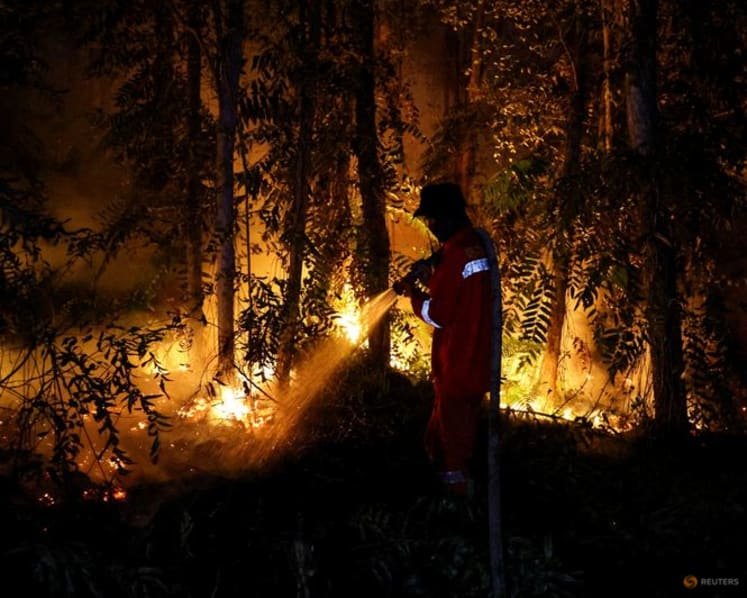
According to a forensic analysis on Indonesia’s wildfires in 2023 by the United Nations Office for Disaster Risk Reduction (UNDDR), human activities contributed to 98 percent of all fires, primarily due to social and cultural factors, including economic needs.
“Fire is a cheaper and easier method to clear land for crops, particularly oil palms,” it said in its report.
That worsening intensity of the fires this time is already being captured by regional monitors.
According to ASMC, the hotspot and smoke haze situation over the southern ASEAN region has deteriorated sharply amid prolonged dry conditions.
It said in a level 3 advisory - the highest level - posted on its website on Aug 26 that satellite surveillance revealed that widespread, moderate-to-dense smoke haze is emanating from clusters of hotspots in Kalimantan and Sumatra, both in Indonesia.
A total of 287 and 190 hotspots were detected in Kalimantan, and 65 and 81 hotspots were detected in Sumatra, on Aug 24 and Aug 25 respectively.
“Dry conditions are forecast to persist over most of the southern ASEAN region. Coupled with El Nino conditions that are predicted to strengthen over the coming months, the hotspot and smoke haze situation could escalate further, thereby increasing the risk of severe transboundary haze occurrence in the southern ASEAN region,” it had said.
WHAT CAN BE DONE?
Experts told CNA that ASEAN member states must revisit their cooperation under the existing transboundary haze agreement to ensure forest fires and regional smoke pollution are minimised or prevented.
Fredolin Tangang of Universiti Kebangsaan Malaysia (UKM) told CNA that the relevant authorities involved in the respective countries seemed to be largely reactive rather than proactive.
“Every El Nino season can be forecasted at least six months in advance. We have a good understanding of how El Nino evolves and how it exerts its impacts in the region,” he said.
“Six months is long enough for the authorities to plan and strengthen cooperation in preventing forest fires and haze,” he added.
From an ASEAN perspective, Varkkey noted that while the bloc has regional assistance mechanisms in place to facilitate firefighting and other emergency support from neighboring countries, their deployment depends on the affected country's request or consent. This requirement is explicitly written into ASEAN's haze treaty signed in 2002.
“When there is haze, assistance from neighbouring countries should be able to immediately come in based on prior agreed guidelines, without waiting for diplomatic approval,” she said.
Specifically for Malaysia, environmental group Greenpeace urged Putrajaya to enact a comprehensive Clean Air Act that addressed transboundary air pollution.
It said that such legislation could hold Malaysian citizens and businesses accountable when their overseas operations contribute to haze pollution.
Singapore enacted the Transboundary Haze Pollution Act in 2014, making it an offence to cause or contribute to any haze pollution in Singapore.
The law empowers individuals and organisations in Singapore to sue those who are responsible for the pollution and who cause them to suffer economic loss.
“Malaysia has previously acknowledged that cross-border environmental legislation is possible. The opportunity now is to build on this recognition and take the necessary steps to turn it into reality,” Greenpeace country representative Heng Kiah Chun had said in a recent open letter to Arthur Joseph Kurup who is the Minister of Natural Resources and Environmental Sustainability.
The Malaysian Cabinet agreed in principle in February 2020 to introduce a Transboundary Haze Act, although the proposal was subsequently shelved after the change of government.
Individually, people should mitigate the impact of the haze on themselves by taking precautions, said Devi, the Johor Bahru-based doctor.
She said that households should consider using an air purifier as the haze causes the air to be dry, and to mask up when outdoors when the API is at high levels.
“Try to breathe in clean air indoors and (take precautions) when going outdoors - that would be my best advice,” said Devi.
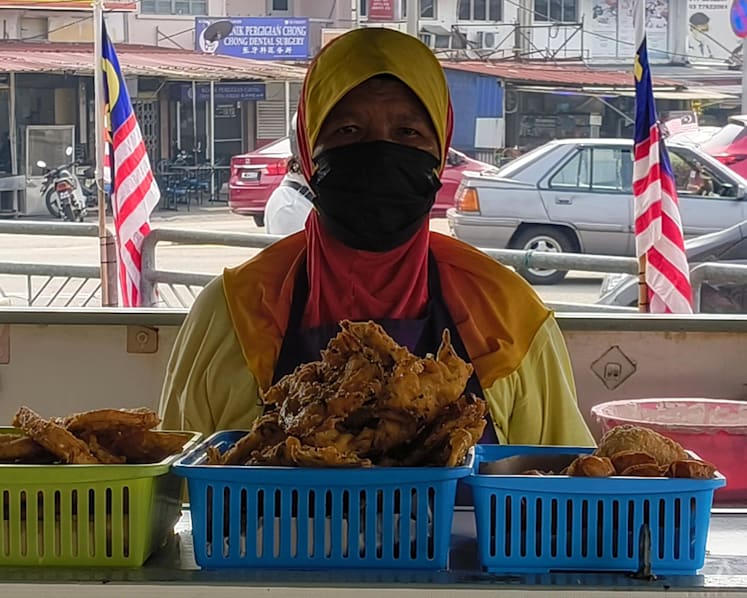
But wearing a mask outdoors for several hours may not be comfortable or practical, especially given the hot and humid weather.
Food trader Asiah Wan, 63, told CNA that doing so causes her discomfort, but removing it has also caused her to breathe in smog this past week.
"With or without the mask, it has been harder to breathe. I feel my eyes also becoming heavier," she said, adding that business has also been slower in the last few days.
The banana fritters seller, who is from Bagan Serai, Perak, is aware that the source of the haze is from the fires in Indonesia, and she expressed hope that the situation can be mitigated.
"I come from a place where we plant rice and there it was always forbidden to clear any land with fire because it would become dark and smoky. I hope those in Indonesia can also do the same because their actions affect others as well," said Asiah Wan.
KioskNews shows a cleaned-up reading view extracted from the publisher’s page — the original always lives on their site, not ours.