Scientists find evidence of a second-generation planet born from a dying star
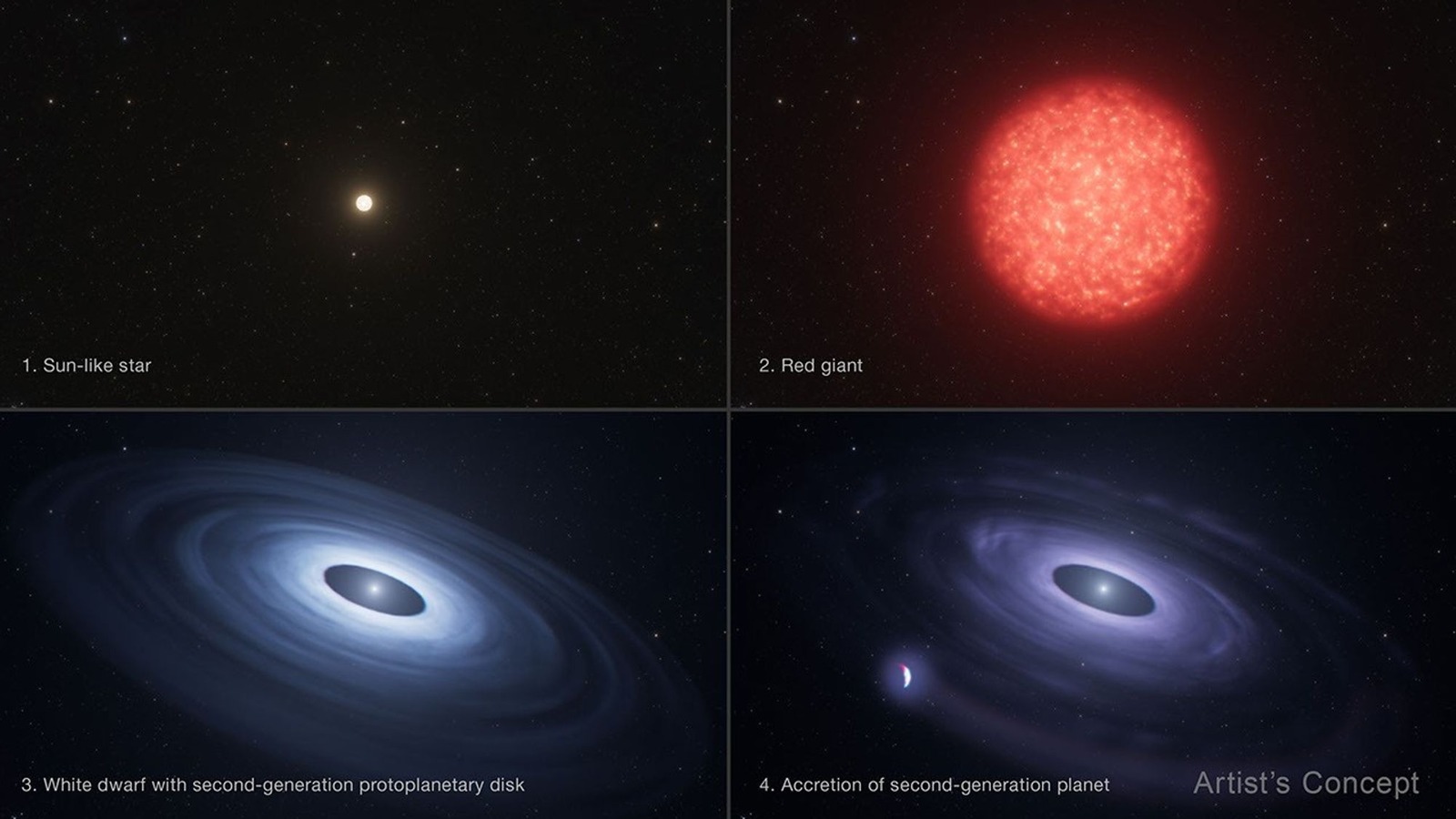
If confirmed, it would be the first white dwarf found to host a second-generation planet.
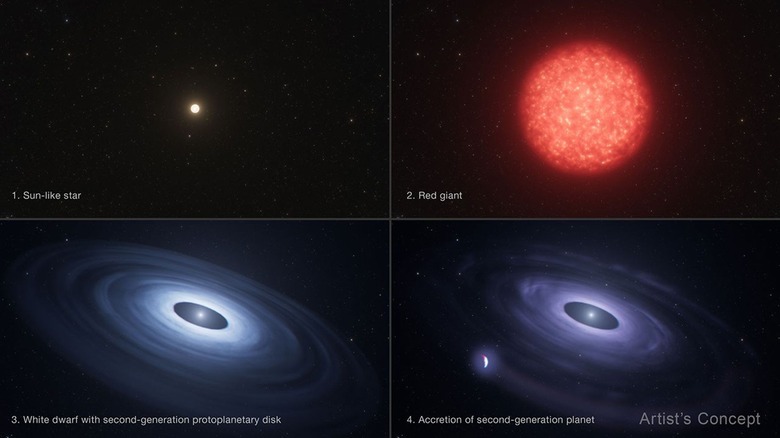
NASA, ESA, Leah Hustak (STScI)
Way back in 1999, NASA's Hubble telescope gathered data from a white dwarf star codenamed HS 0209+0832 with 100 chemical features that couldn't be identified. Now, a team of scientists led by astronomers from the University of Warwick has published a paper in Nature, revealing that those chemical features indicate that the white dwarf hosts a second-generation planet.
A white dwarf is what remains of a star like our sun following its red giant phase, wherein it runs out of hydrogen and expands into a massive fireball that's expected to eat up nearby planets, if there are any. It's the dense core left behind after it's done burning up its nuclear fuel and shedding its outer layers.
The planets in our solar system, including the Earth, are all first-generation planets. That means they formed using materials from the birth of the sun. Second-generation planets form from the materials a dying star casts off. They are very, very rare and are mostly suspected to exist around pulsars, which are the highly magnetic and rapidly spinning remnants of dead neutron stars. White dwarfs are more common than pulsars, and Jamie Williams, the lead author of the study, said finding a second-generation planet around one "was completely unexpected."
Williams found evidence of the planet by looking at Hubble's decades-old observations and comparing them to an updated chemical database. They found that the unidentified chemical features matched an element called niobium, which "can only be synthesized in the exotic conditions that briefly emerge inside dying stars." The niobium levels in the system were 1,000 times higher than our sun's, and that amount points to the formation of a planet from the dying star's materials.
The scientists said that the white dwarf is still extremely hot and is still blasting the planet with enough heat to strip out its outer layers. But they believe the planet will stay and that it will remain in the white dwarf's habitable zone for millions of years. According to the European Research Council, which funded the study, HS 0209+0832 would be the first white dwarf found to host a second-generation planet if the team's findings are confirmed.
KioskNews shows a cleaned-up reading view extracted from the publisher’s page — the original always lives on their site, not ours.