I, too, was raped by my partner while drugged and unconscious. There are more survivors than you think | Zoe Watts

Like many, I followed closely the sickening case of Philip Young, who has been convicted of repeatedly drugging and raping his now ex-wife, Joanne Young, and advertising her on the internet for sex. It is, to any right-thinking person, unimaginably horrific that the person you’re supposed to trust most in the world would betray you in this, the worst possible way.
I don’t have to imagine it, however. I have lived it. The man I had been with since I was 17 – my husband and the father of my four children, the man who had vowed to love and look after me and with whom I had shared a bed with for almost 7,000 nights – did the same to me.
Since Gisèle Pelicot stepped out of the shadows and waived her right to anonymity, the depraved crime of drug-facilitated sexual abuse has become stamped into the public’s consciousness – rightly provoking outrage and an outpouring of support for survivors.
My experience, some two years before Gisèle Pelicot’s trial, was different. There was just one single perpetrator, my husband.
I have no idea how many times it happened, nor do I wish to know, but for years he had been crushing sleeping pills into the cup of tea he made for me every night, then waiting for me to lose consciousness before raping me, often taking photographs and filming himself in the act.
There was no outpouring of support when I finally reported the crime. Quite the opposite, in fact. I was ostracised and publicly accused of destroying the reputation of this upstanding pillar of the community. This continued, inexplicably, even after his conviction.
The police were brilliant. The CPS less so. I had to fight to press charges when, after 18 months, it announced it was not going to, even though he had admitted his guilt to medical professionals. I felt as though I was the one on trial rather than him, and the verdict was already in. How could it be true? How could I not have known?
In truth I didn’t, but in hindsight the warning signs had been there: recurrent and unexplained bouts of thrush and urinary tract infections, worsening migraines, and just the nagging feeling that something in my body wasn’t quite right.
The reality was so unimaginable that even when he sat me down and told me what he had been doing, one day after church, it was as though my brain couldn’t process what he was saying. It was months before I told my sister and mum, who gently persuaded me to talk to the police, and it was only then I started to see that what he had been doing – each act – was a crime. A violation of my body, trust and everything I had believed to be true.
It is only recently that I’ve been able to bring myself to call it what it was – rape – and understand (something many survivors struggle with) that just because I can’t remember it, doesn’t mean it didn’t happen. Just because it was my husband doesn’t mean it didn’t count.
I don’t think this type of crime is becoming more common, I think the reporting of it is. The drugs used might be more sophisticated, so, too, the means by which perpetrators communicate with each other and share images and video. The crime, however, has always been there behind closed doors.
Prior to the Pelicot case, this kind of crime was virtually unheard of. What Gisèle Pelicot did was open the door for people to think that a man could do that to his wife. She created a space in which people could ask questions and could stand up and say, “This has happened to me as well.”
What none of us could have anticipated is the scale. Through #EndEyeCheck, the campaign publicly launched in May this year by fellow survivor-advocate Amanda Stanhope and me, we now know that this has happened and is still happening to hundreds of women around the world – and that doesn’t include those who haven’t yet had that realisation or don’t deem it rape.
The campaign name comes from a term I was blissfully unaware of before all this happened – used to describe the moment an abuser pulls back or lifts the eyelid of their victim to check they are fully unconscious before sexually assaulting them.
after newsletter promotion
Stories such as ours shine a light on this crime, but that is not enough and nor are the sentences handed down. My ex was given 11 years, and I’ll be lucky if he serves the same length of time in prison that his offences span. The government must act now to protect victims.
There needs to be earlier, more effective education around consent, starting in schools, so there can be no confusion and no blurring of boundaries over what is and isn’t allowed. I remember hearing teenage boys on the bus discussing CNC (consensual non-consent) porn and thinking, “Do they even know what it stands for or what it means?”
The platforms, mainstream porn sites among them, that are hosting this almost innocent-sounding “sleep content” must be held to account. It is not innocent – it is perpetuating the idea that consent is not obligatory.
The medical profession and the police also need to be alive to the signs of this type of abuse because the chances are the victims haven’t yet realised what is happening to them and may not, without informed support.
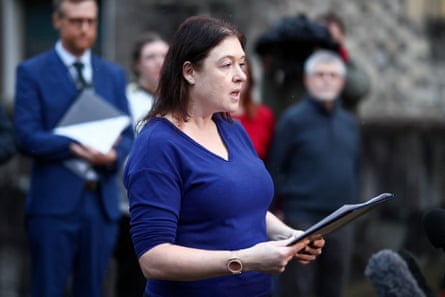
Like many, Gisèle Pelicot inspired me and played a huge part in the decision to waive my anonymity. It’s not for everyone, but in a strange kind of way it helped me to heal and imagine a future that, at one point, seemed impossible.
It is a complex problem and there is no easy answer, but at least now the conversation has started – and there is a place for women to go for help and to know they are not alone.
-
Zoe Watts is a campaigner and cofounder of the #EndEyeCheck campaign to raise awareness of drug-facilitated sexual abuse
-
Information and support for anyone affected by rape or sexual abuse issues is available from the following organisations. In the UK, Rape Crisis offers support on 0808 500 2222 in England and Wales, 0808 801 0302 in Scotland, or 0800 0246 991 in Northern Ireland. In the US, Rainn offers support on 800-656-4673. In Australia, support is available at 1800Respect (1800 737 732). Other international helplines can be found at ibiblio.org/rcip/internl.html
-
Do you have an opinion on the issues raised in this article? If you would like to submit a response of up to 300 words by email to be considered for publication in our letters section, please click here.
KioskNews shows a cleaned-up reading view extracted from the publisher’s page — the original always lives on their site, not ours.