'Lawyers Can Escape Pollution By Working From Home, Not Judges': Supreme Court
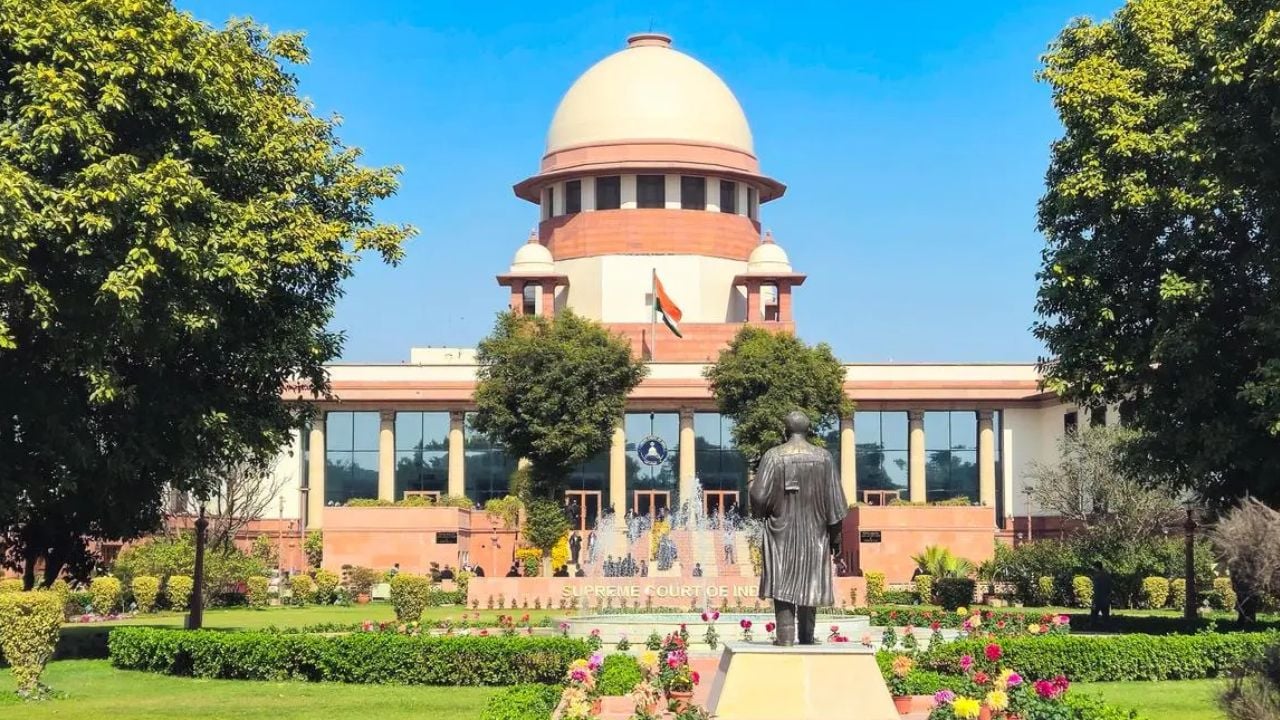
Concerns about air pollution in the national capital echoed in the Supreme Court on Wednesday, with Justice Vikram Nath highlighting that lawyers can escape pollution by working from home, but judges cannot, because they are required to hear cases in person.
The comment came during the hearing of a pollution-linked petition. Senior lawyer Indira Jaising urged the court to list the case on November 17, after Diwali. But the opposing lawyer insisted that the hearing be held before the festival because the pollution situation deteriorates in Delhi and surrounding areas.
Indira Jaising jokingly remarked that the pollution levels in Delhi remain very high before Diwali, and requested that the case be listed on November 17.
Justice Nath replied, saying pollution will worsen after Diwali.
"No, the air will be clean before Diwali. So, you should come before Diwali, as the situation will worsen after that," he remarked.
READ | Delhi's Winter Pollution Curbs Are Back. Do They Actually Work?
Jaising further said that pollution will persist both before and after Diwali. She stated that she is willing to endure the pollution if she gets the opportunity to appear in court in person. She added that judges will also have to come to court as well and face pollution.
"We cannot sit at home. You have the option of avoiding pollution by staying at home, but we cannot do that," the judge replied, referring to the option that lawyers have to appear through video conferencing.
Pollution In Delhi
Last year, a significant drop in Delhi's air quality was recorded around Diwali. The city's 24-hour average air quality index (AQI) was 268 on October 18, 2025, which increased to 296 on October 19 and 345 on Diwali day, October 20.
The AQI reached 351 on October 21 and 353 on October 22. During this period, Delhi's air quality remained in the 'very poor' category.
On October 21 this year, the Commission for Air Quality Management (CAQM) implemented the first phase of the Graded Response Action Plan (GRAP) in Delhi-NCR. On that day, Delhi's average AQI was recorded at 244 at 2 pm and 245 at 4 pm.
On October 27, Delhi's AQI was 197 at 4 pm, while on October 28, it increased to 228 at 7 am.
READ | "No Exception": Delhi's Vehicle Curbs May Hit Congress' November 1 Rally
Supreme Court's Stance On Ban On Firecrackers In Delhi-NCR
The Supreme Court has been monitoring issues linked to air pollution and the use of firecrackers in Delhi and surrounding areas for the past several years. The court has expressed concerns over various sources of pollution, including vehicular emissions, industrial pollution, dust from construction work, stubble burning and garbage burning.
In 2024 and 2025, a bench of Justices Abhay Oka and Ujjal Bhuyan strongly criticised the authorities' failure to enforce the ban on firecrackers.
In November 2024, the Supreme Court stated that no religion encourages activities that cause pollution or endanger public health. The court also asked the Delhi government to consider the possibility of a year-round ban on firecrackers.
In April 2025, the court refused to relax the year-round ban on firecrackers. The court also refused to exempt green firecrackers, stating that there was insufficient scientific evidence to prove their pollution-reducing effects.
However, in October 2025, a bench headed by then Chief Justice BR Gavai permitted the sale and use of green firecrackers for a limited period around Diwali.
This year, the Supreme Court refused a complete ban.
On September 30, 2026, a bench comprising Justices MM Sundaresh and Augustine George Masih clarified that the court would neither impose a complete ban on firecrackers nor allow their use round the clock.
The bench stated that it was important to strike a balance between religious sentiments and the health impact of pollution on children, the elderly, and the sick.
On October 12, a bench headed by Chief Justice Surya Kant heard a suo motu case related to air pollution and firecrackers in Delhi-NCR. During the hearing, amicus curiae Aparajita Singh expressed concern over the lack of effective enforcement of the ban.
During the hearing, Justice Joymalya Bagchi questioned the religious justification for bursting firecrackers and asked, "What does religion have to do with firecrackers?"
The Chief Justice stated that the court did not want to hurt religious sentiments. He emphasised public awareness and voluntary restraint.
KioskNews shows a cleaned-up reading view extracted from the publisher’s page — the original always lives on their site, not ours.