DC’s New ‘Superman’ Spin-Off Could Finally Solve 1 Major Supervillain Problem

Lloyd 'Happy Trails' Farley: the man, the myth, the legend. What can be said about this amazing - and humble - man that hasn't been said before? Or, more accurately, what can be said in public? Born in Calgary, Alberta, Canada, Lloyd is a master of puns and a humorist, who has authored one pun book to date - Pun and Grimeish Mint - and is working on a second. His time with Collider has allowed Lloyd's passion for writing to explode, with nearly 1,000 articles to his name that have been published on the site, with his favorite articles being the ones that allow for his sense of humor to shine. Lloyd also holds fast to the belief that all of life's problems can be answered by The Simpsons, Star Wars, and/or The Lion King. You can read more about Lloyd on his website, or follow his Facebook page and join the Llama Llegion. Happy trails!
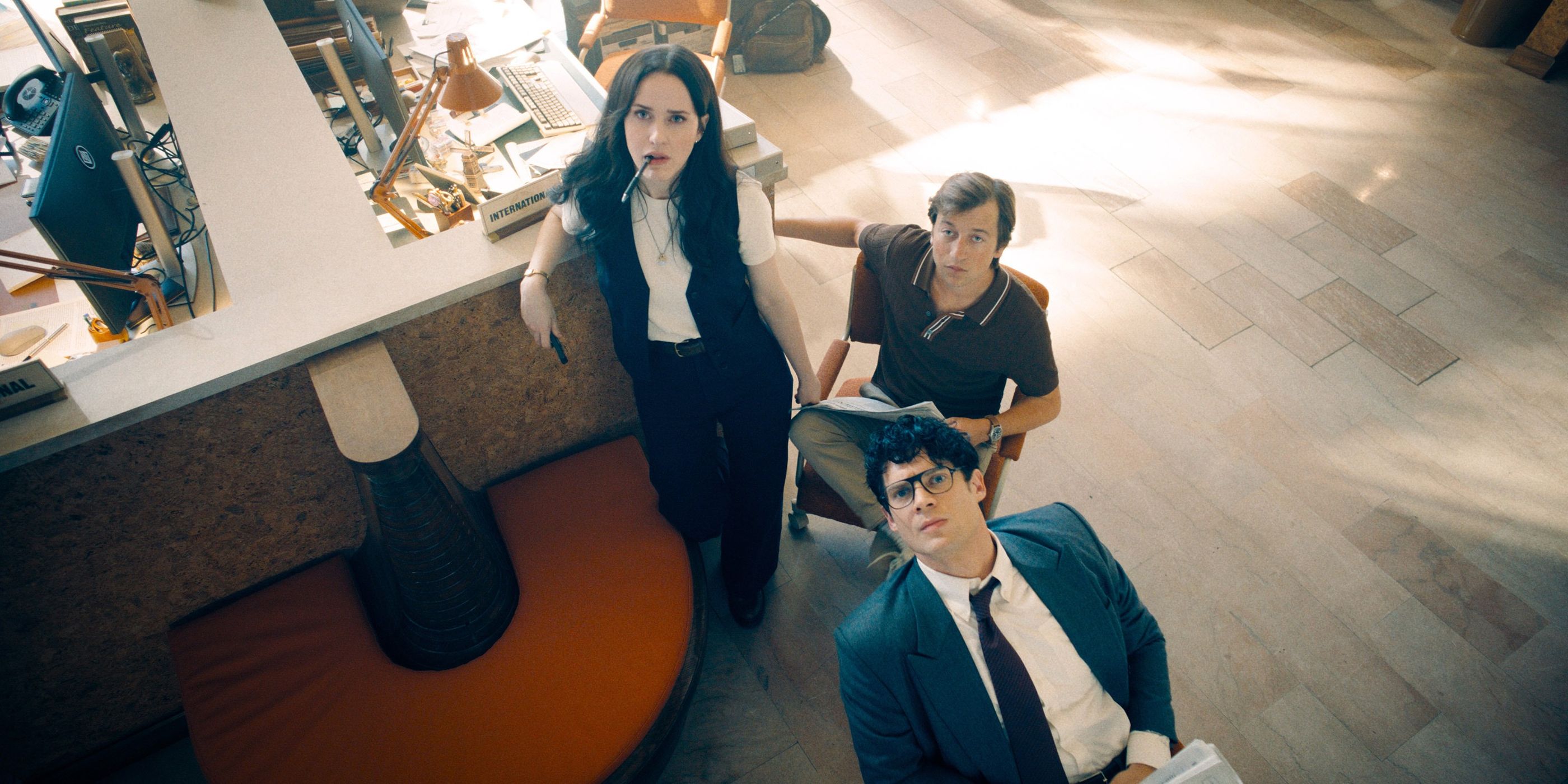
Assuming it's still moving forward, The People v. Gorilla Grodd marks the first attempt at a legitimate comedy set in the DC Universe since the underappreciated NBC series Powerless in 2017. That series, however, was more DC-adjacent, where the new series is utilizing canon characters like Jimmy Olsen (Skyler Gisondo), Cat Grant (Mikaela Hoover), and the titular Gorilla Grodd (Jimmy Tatro), the character's first live-action appearance since the Arrowverse series The Flash. In addition to the comedy element, The People v. Gorilla Grodd offers an opportunity to solve one major supervillain problem that has, to date, remained elusive.
'The People v. Gorilla Grodd' Fills a Major Hole in the Genre
It’s fair to say that the best entries in the superhero genre have a great supervillain, one that truly challenges the protagonist. It’s why Superman was successful, with Nicholas Hoult’s Lex Luthor challenging David Corenswet’s Superman physically, via Ultraman, and psychologically, most notably by turning public opinion against him by translating his parents’ message. And it’s why Supergirl was not: Krem of the Yellow Hills (Matthias Schoenaerts) was simply average at best, essentially handcuffing Milly Alcock’s Supergirl by not presenting a worthy challenge.
The bulk of the film, or TV season finale, is then spent mano-a-mano with the hero squaring up against the villain in a spectacular battle, ultimately emerging victorious. If the villain isn’t killed, à la Obadiah Stone (Jeff Bridges) in Iron Man, then they’re in some sort of prison, i.e. Arkham Asylum or the Raft. What’s missing? The due process of law.
Supervillain or not, the legal process is a fundamental right, and while it’s painfully obvious that, say, the Riddler (Paul Dano) is guilty in The Batman, there’s no accountability for his actions in a court of law. That is the gap that The People v. Gorilla Grodd is set to fill, with Grodd facing accusations that he murdered his father, the king of Gorilla City. It forces Grodd to take accountability for the act or, as Olsen and his Daily Planet cohorts aim to find out, if that accountability actually falls elsewhere.
'The People v. Gorilla Grodd' Succeeds Where 'Man of Tomorrow' Has Already Failed
Exploring that legal side in The People v. Gorilla Grodd is something new, legitimately interesting, and potentially presents storyline opportunities with answers to questions no one has ever really asked, or even thought of, before. How does a defense lawyer make an argument for a supervillain’s actions — or, for that matter, how does the supervillain explain their actions? Is the court process merely a formality, a slam-dunk for the prosecution, or is the courtroom yet another battlefield? And what about the heroes that bring them in: what sort of accountability are they held to?
Ultimately, the punishment needs to fit the crime, which seems to be, right now, the direction that The People v. Gorilla Grodd is headed. But another upcoming DCU project, Man of Tomorrow, has already failed on that front. In Superman, Luthor was sent to Belle Reve (presumably after due legal process) after his illicit shenanigans, only to form a deal with A.R.G.U.S. and Rick Flag Sr. (Frank Grillo) in Peacemaker Season 2 that earns him a transfer to a run-of-the-mill federal facility, the VanKull Department of Corrections, among other perks. Now, in the upcoming film, he’s apparently freed outright to partner with Superman to stop Brainiac (Lars Eidinger). What little accountability he had taken was effectively neutered by Flag and is being dismissed altogether next summer. Presumably.
The idea of a super-intelligent gorilla with psychic abilities and speech, sitting in a courtroom, is, in itself, pretty funny, so The People v. Gorilla Grodd is on the right track by taking a humorous approach. That doesn’t lessen what can be learned from its leaning into the legal process, however. And it’s an angle definitely worth pursuing in other genre fare, if for no other reason than seeing something different. Plus, it offers an insight into a supervillain that isn’t easily obtainable otherwise: for the morally penitent, there’s room for sympathy from their accountability; for those who refuse it, an even deeper level of villainy. Thank Grodd for that.

The People v. Gorilla Grodd
- Network
- HBO Max
- Showrunner
- Tony Yacenda, Dan Perrault
- Directors
- Tony Yacenda
KioskNews shows a cleaned-up reading view extracted from the publisher’s page — the original always lives on their site, not ours.