US jury finds Huawei guilty of hiding Iran business, stealing trade secrets
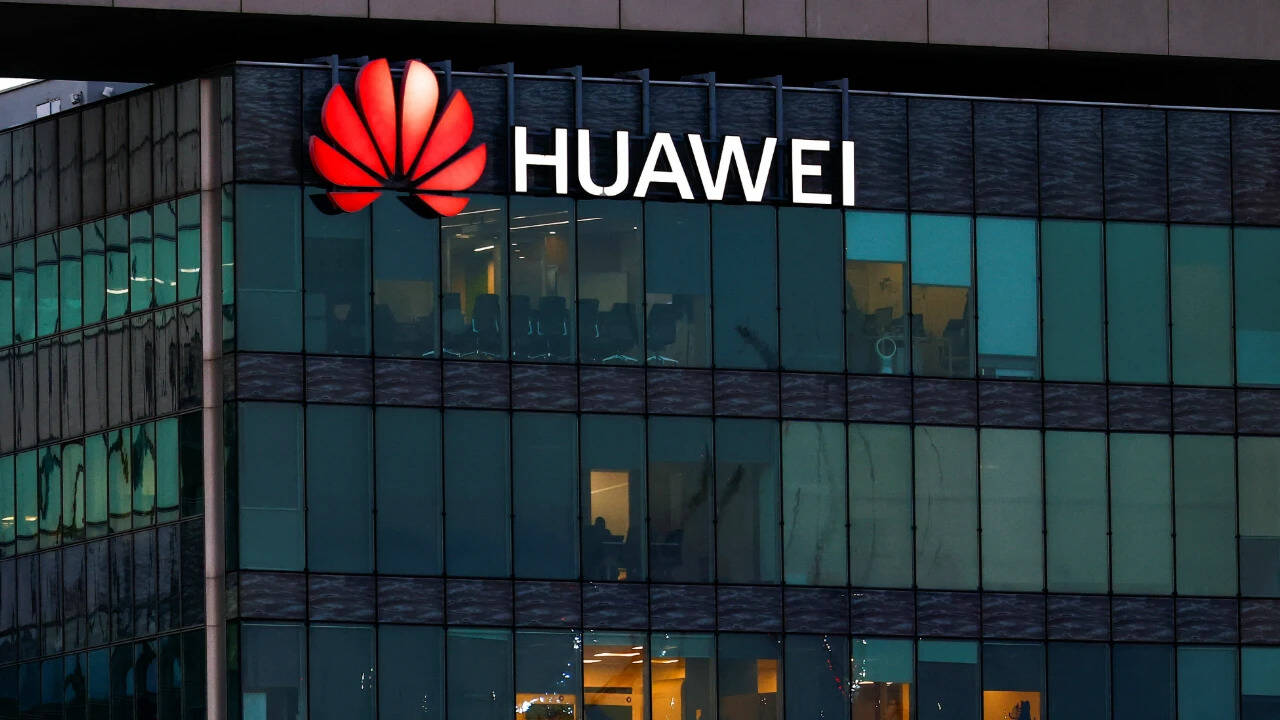
The US first announced criminal charges against Huawei in early 2019 and expanded the allegations later. The lengthy trial began in September.
A US federal jury on Tuesday convicted Chinese technology giant Huawei Technologies of conspiring to steal trade secrets and defrauding banks over its business dealings in Iran and alleged theft of technology from American companies.
The company was found guilty on 10 of 12 counts in a case that spanned more than two decades of alleged misconduct. However, jurors acquitted Huawei of the most serious charge of criminal racketeering conspiracy.The verdict came after a trial lasting more than two months at a federal court in Brooklyn, New York. Prosecutors called more than 60 witnesses, while the defence called 15. Huawei and three of its affiliates faced charges including bank fraud, wire fraud, sanctions violations, trade secret theft and conspiracy to obstruct justice.The company could face billions of dollars in penalties when it is sentenced next September. No individual executives or employees were tried in the case, according to a report by The Associated Press.Huawei's lawyer Brian Heberlig described the acquittal on the racketeering charge as a “profound rejection” of the government's allegations. He said the company would appeal the convictions but welcomed the not guilty verdicts on racketeering conspiracy and conspiracy to obstruct justice.
“Few crimes are as serious as Huawei's decades-long pattern of endangering US national security, violating the sanctity of US commerce, and impeding the enforcement of US laws,” Brooklyn US Attorney Joseph Nocella Jr. said in a statement.“No person or company is above the law,” Attorney General Todd Blanche said.
Charges against Huawei
The US criminal case began in 2018. Prosecutors initially accused Huawei of misleading banks, including HSBC, Standard Chartered and BNP Paribas, about its business dealings in Iran.They alleged that the company concealed its activities in the country to move money through the international banking system despite US sanctions.The indictment was expanded in 2020 to include allegations that Huawei had conspired to steal trade secrets from American technology companies over a period of two decades.Prosecutors argued that the company followed a pattern of stealing intellectual property and technological secrets from competitors and business partners to strengthen its position in the global telecommunications market.The prosecution also alleged that Huawei made false statements to US government officials and banks to conceal its activities.The racketeering charge, commonly used in organised crime and drug-related cases, was central to the government's argument that the alleged wrongdoing was part of a wider corporate conspiracy.“The tone was set at the top by Huawei leaders and executives who themselves engaged in criminal conduct, like lying to Congress, lying to banks, violating US sanctions and trying to interfere with the very criminal investigation that led to this case,” prosecutor Meredith Arfa told jurors during the trial.
Cisco, T-Mobile, Quintel among companies named
Prosecutors presented several examples of alleged technology theft involving American companies.They alleged that Huawei stole source code developed by Cisco Systems for its routers. The company was also accused of taking antenna technology from wireless telecommunications firm Quintel USA.Another allegation involved semiconductor company CNEX. Prosecutors claimed Huawei hired a professor to gain access to a circuit board developed by the company.Jurors also watched a video that prosecutors said showed a Huawei employee slipping a piece of a T-Mobile testing robot into his backpack.In another incident, a Huawei engineer allegedly entered a Fujitsu booth at a trade show and secretly photographed a device.The earlier indictment also described an incident in which a Huawei employee allegedly removed a robotic arm from a competitor's laboratory so it could be photographed and measured.The companies identified as victims in the case included Cisco Systems, Motorola Solutions, T-Mobile, Quintel USA and Fujitsu.
Meng Wanzhou's Iran admission featured in trial
The case dates back to December 2018, when Huawei's chief financial officer Meng Wanzhou was detained in Canada on a US warrant. Meng is the daughter of Huawei's founder.US prosecutors had accused her of misleading an HSBC banker about Huawei's business in Iran. They alleged that the company used the arrangement to move dollars into and out of Iran in violation of US sanctions.Meng fought extradition to the US for nearly three years. She eventually entered a deferred prosecution agreement and returned to China in 2021. The US subsequently dropped the charges against her.During the Huawei trial, prosecutors presented a statement attached to Meng's agreement in which she acknowledged that the company had illegally conducted business in Iran. She did not testify in the trial. However, an HSBC banker who had met her in 2013 appeared as a witness.
Huawei argued banks knew about Iran business
Huawei's defence team disputed the allegations, arguing that HSBC and other banks were aware of the company's operations in Iran and were competing for its business.In his closing argument, Heberlig accused prosecutors of relying on “innuendo and facts ripped out of context” and testimony from former employees “with a bone to pick”.He also accused the prosecution of having "cherry-picked" a handful of separate incidents to build its claim of a 20-year conspiracy.“Huawei didn't steal its way to success,” Heberlig said, arguing that much of the material allegedly stolen was already publicly available.“You can't steal a secret that isn't a secret,” he said.He said Huawei had paid billions of dollars in licensing fees over the years, with 75 per cent of the money going to US companies. The company had also reprimanded or dismissed employees found to have engaged in wrongdoing.Heberlig cited an incident involving Cisco source code found in Huawei software more than two decades ago. He said Huawei recalled routers sold in the US after discovering the copied code, offered to replace them with Cisco products and introduced stronger compliance measures.Prosecutor Arfa also referred to Reuters' reports from 2012 and 2013 that helped expose Huawei's activities in Iran."After the media started questioning Huawei's operations in Iran, so did Huawei's banks," she told jurors during her closing argument.
US restrictions have not stopped Huawei's global expansion
The verdict's impact on Huawei's international business remains unclear. The company has been barred from selling equipment to US telecommunications carriers for years over national security concerns. Other Western countries, including Canada and Britain, have also restricted its operations.The US government placed Huawei on a trade blacklist in 2019, limiting its access to American technology.However, the restrictions have not significantly undermined its business, according to experts cited by Reuters.
Huawei has diversified its operations and emerged as an important player in China's push for artificial intelligence.The company has more than 200,000 employees and operates in approximately 170 countries. It continues to sell smartphones and telecommunications equipment in international markets and has expanded into chipmaking.
In a statement after the verdict, Huawei defended its business practices.“Huawei has always adhered to integrity in business, upheld business ethics, respected intellectual property, and remained committed to complying with all applicable laws and regulations,” the company said.“We remain focused on serving our customers and partners and ensuring continuous and stable business operations," the statement said.The case has also become part of wider tensions between Washington and Beijing over technology, trade and national security. Chinese officials have accused the US of engaging in “economic bullying” and using national security concerns as a pretext to target Chinese companies.
KioskNews shows a cleaned-up reading view extracted from the publisher’s page — the original always lives on their site, not ours.