Owl survives 65mph truck crash, travels 70 miles trapped in front before rescue
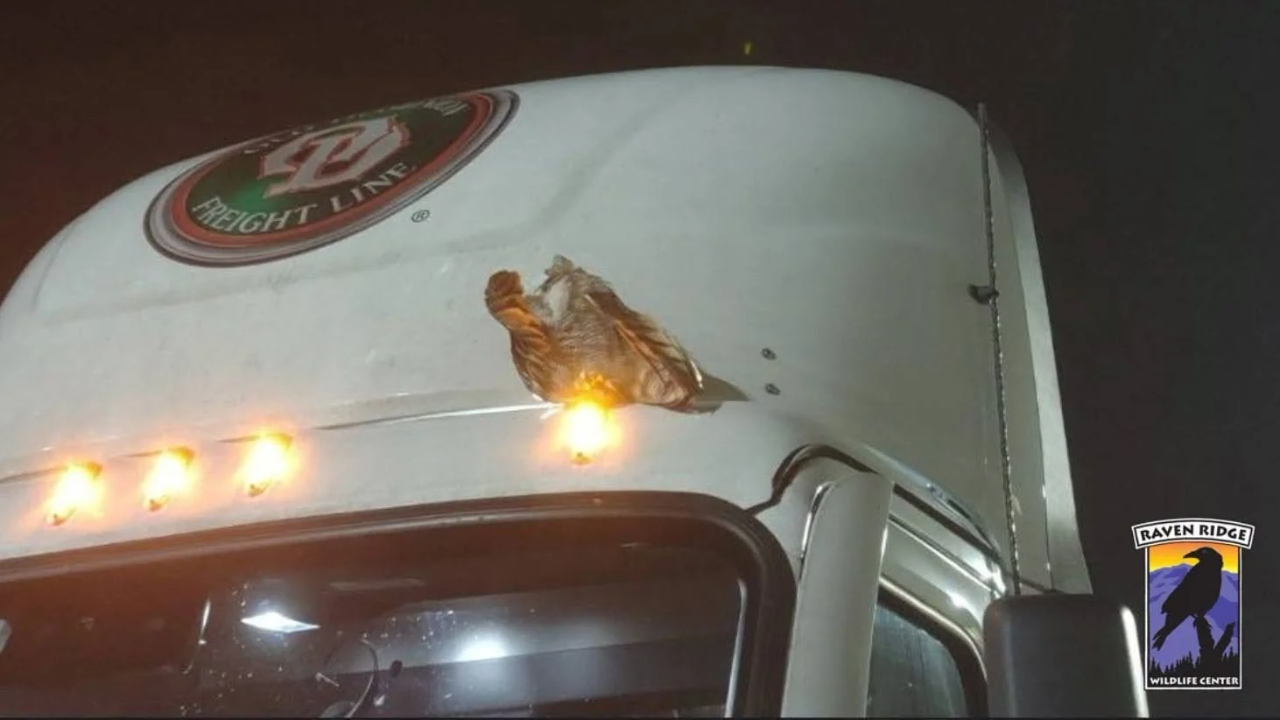
Image Courtesy: Facebook/Raven Ridge Wildlife Center
In horrific news from Pennsylvania, a great horned owl thankfully survived being struck by a tractor-trailer travelling at 65 mph. What’s more, it remained trapped in its front air dam for about 70 miles before Pennsylvania rescuers freed it with few injuries.
We bet that owl has a story to tell when he gets home.While most birds would struggle to survive an impact of that magnitude, this particular owl appears to have had luck on its side. What followed was an unexpected journey across Pennsylvania, with the bird stuck in a rather unusual hiding spot: the front of a moving truck.
An unexpected passenger
The incident took place in Pennsylvania, when a driver for Old Dominion Freight Line struck the owl while travelling at approximately 65 mph.
The driver knew she had hit the bird and even noted the mile marker where the collision occurred. What she did not realise was that the owl had become lodged in the truck's front air dam.An air dam is the structure fitted beneath the front bumper of a vehicle. It helps manage airflow around the vehicle, particularly at higher speeds. In this case, the truck's fibreglass air dam became an unlikely hiding place for an injured bird.
The driver continued towards the company's terminal in Carlisle, unaware that she had an unexpected passenger. By the time the truck arrived, the owl had travelled approximately 70 miles, still stuck headfirst in the structure. The wildlife centre later described the journey as one of the most astonishing survival stories it had encountered.
A rescue effort after hours
Once the owl was discovered, employees at the trucking terminal contacted Raven Ridge Wildlife Center in Washington Boro, Pennsylvania.
The centre received an after-hours call from the company, explaining that the bird was still alive but trapped.The maintenance team at Old Dominion Freight Line worked to carefully free the owl from the air dam. Once released, however, the bird attempted to fly but could not manage it and needed medical attention.With the wildlife centre more than an hour away, volunteers stepped in to coordinate its transport. One volunteer collected the owl from the terminal, while another met them along the way to help bring it safely to the rehabilitation centre.
It was a collective effort involving the trucking company's employees and wildlife rescuers, all working to give the bird a fighting chance.
A surprisingly clean bill of health
When the owl finally arrived at Raven Ridge, its condition was better than anyone could have expected. Its feathers were dishevelled, understandably, but the initial examination revealed no broken wings, broken legs or open wounds.The most significant injury was to its left eye, which had suffered bleeding and swelling following the collision.
The centre arranged a full examination with a veterinarian, who was reportedly amazed by how little trauma the bird had sustained.Considering that the owl had not only been struck by a moving vehicle but had also remained lodged in its front structure for 70 miles at highway speed, its condition was remarkable. The centre shared photographs and details of the rescue on Facebook, expressing disbelief at the bird's survival.
It described the owl as perhaps the luckiest it had ever encountered.
The road back to the wild
For now, the great horned owl is under observation at Raven Ridge Wildlife Center while its eye heals. Although surviving the collision is an encouraging start, the bird still needs to demonstrate that it can fly properly before it can be returned to the wild.
The centre has planned the owl’s eventual release. Once it has recovered and staff have been able to observe it flying outdoors, they intend to drive it back the same 70 miles to the area where it was originally struck.They made this decision keeping in mind that releasing a wild animal in unfamiliar surroundings can make it harder for it to find food, shelter and suitable territory. Returning it close to where it was found gives it a better chance of resuming its life in familiar surroundings.This particular owl has already survived an ordeal that would have been difficult to imagine, and its recovery is a reminder of what timely intervention can do for injured wildlife. And hopefully, its next 70-mile journey will be a considerably more peaceful one.
KioskNews shows a cleaned-up reading view extracted from the publisher’s page — the original always lives on their site, not ours.