Key Milei ally Bullrich says re-election at risk unless Argentina's economy improves
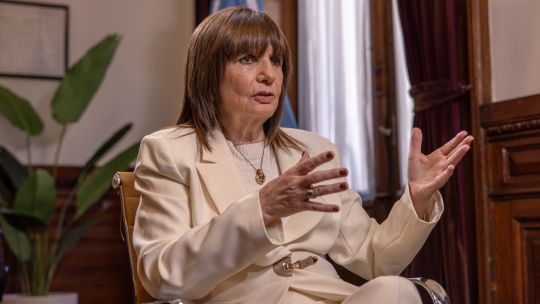
Patricia Bullrich has a prescription for getting Argentina’s economy in shape for next year’s election. What she won’t say is whether she wants to be the one running for president.
The 70-year-old senator, one of President Javier Milei’s most important allies, is calling for “surgical” changes to boost struggling sectors and help voters feel the economic turnaround before the 2027 ballot.
“I don’t think it’s enough to say everything will get better in 2028,” Bullrich said in an interview Tuesday. “There’s an election in between.”
Bullrich called for reduced taxes and other measures to make Argentine companies more competitive internationally. Local producers are weighed down by national and local taxes, expensive logistics and other costs their foreign competitors don’t face, she said.
She also called for lower borrowing costs after a spike in interest rates in 2025 choked off new mortgage lending and curtailed credit to businesses.
“Credit moves an economy, and last year we had a very tough crisis and interest rates skyrocketed,” she said. “Rates need to keep going down so that there’s consumer spending and capital expenditure that lets industries modernise.”
Bullrich is more guarded about her own plans for 2027. From her light-filled, wood-paneled Senate office, where portraits show her smiling and riding on horseback, she dodged multiple questions about whether she plans to run for president or as Milei’s vice-president.
“How am I going to be positioned? I don’t know. That’s not what I’m discussing. What I’m discussing is how this plan reaches every citizen,” she said.
Bullrich’s 2023 presidential bid ended after she finished third, behind Milei, after which she endorsed him, helping deliver much of her conservative electorate to his successful run-off campaign. She was rewarded with the post of security minister, cracking down on the near-daily protests that had routinely blocked highways and streets for hours and snarled Buenos Aires. She also oversaw an anti-crime push in Argentina’s third-largest city, Rosario, that helped sharply reduce homicides in a metropolis plagued by drug violence.
Now, as the economy slows, job losses pile up and factories shutter, Bullrich remains one of the government’s most popular political figures. Argentina’s economy almost certainly entered a technical recession in the third quarter, according to data published Tuesday.
When a graft scandal engulfed Milei’s former Cabinet chief, Bullrich was the first government figure to question him. She ranked fourth among the country’s politicians in October with a 37 percent positive image, just above Milei, according to LatAm Pulse, a survey conducted by AtlasIntel for Bloomberg News.
Cryptic posts
She has fuelled speculation about her ambitions with cryptic social media posts. One showed her working in her Senate office to a song by Lali Espósito, the pop star who has publicly feuded with Milei. Another carried the caption, “Things are coming...” and an eyes emoji.
While Milei has not hesitated to cut ties with longtime allies – or send them to the guillotine, as he puts it – he has taken a more conciliatory approach to Bullrich, repeatedly dismissing talk of a rupture.
Bullrich lights up when discussing the reactions her videos elicit, scrolling through the comments and laughing at their differing interpretations. She welcomes those urging her to run, pointing to them as a sign that Milei’s nascent political party is beginning to mature.
“For it to come of age, it has to have many leaders who can win a territory, a mayoralty, a province, the Presidency, the Vice-Presidency, the different places,” she said. “That doesn’t mean that it’s going to happen.”
Bullrich described her relationship with Milei as “very good.” Asked how often they interact, she said that wasn’t “relevant” to people.
She is less sanguine about what awaits the government next year. While some speculate Milei could benefit from divisions within the Peronist opposition, Bullrich says the government should prepare for its rivals to unite.
“If you say, ‘No, they’re never going to unite,’ then you plan according to that hypothesis: they’re never going to unite. Then they unite and, boom,” she said. “And besides, they’ve shown it at different moments in my history, that they’ve been capable of uniting in the most difficult circumstances.”
While Milei was a political newcomer, Bullrich is a lifelong politician. After first associating with a Peronist youth group in the late 1970s, decades later Bullrich served as a minister under Fernando de la Rúa, whose government collapsed during Argentina’s 2001 financial crisis. She also led the Security Ministry under former president Mauricio Macri.
Bullrich said the current moment reminds her most of Carlos Menem’s first term, when Argentina underwent a wave of economic reforms in the early 1990s before Menem won re-election. Milei’s government can do the same, she said, but “we have to work hard.”
She also remembers 2019, when Macri suffered a crushing defeat in the August primary that triggered a collapse in Argentine stocks, bonds and the peso. The difference, she said, was that “nobody saw it coming.”
“Now we’re in a situation where we have time to course correct.”
KioskNews shows a cleaned-up reading view extracted from the publisher’s page — the original always lives on their site, not ours.