Two years of Satgas PKH: Reclaiming state control over forests
Jakarta (ANTARA) - Stacks of red Rp100,000 banknotes filled the main hall of the Attorney General’s Office in Jakarta on October 6, 2026. The Forest Area Enforcement Task Force (Satgas PKH) handed over its eighth payment installment to the state treasury through the Finance Ministry.
The money totaled trillions of rupiah, marking another milestone as the administration of President Prabowo Subianto approached its two-year mark on October 20, 2026.
President Prabowo witnessed the ceremonial handover directly. He noted that the task force had collected and deposited approximately Rp52 trillion (US$2.9 billion) into state coffers since its inception.
This revenue came from administrative fines in the forestry sector, non-tax state revenue managed by the Attorney General’s Office, and back taxes paid by corporate violators following strong enforcement.
Beyond the cash deposits, the task force achieved larger recoveries on the ground.
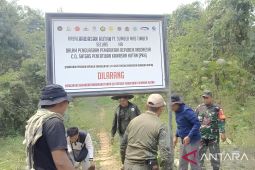
Satgas PKH reclaimed control of more than 6 million hectares of illegal oil palm plantations and tens of thousands of hectares of unauthorized mining sites inside state forest zones.
President Prabowo estimated the economic value of these reclaimed lands to reach nearly Rp400 trillion (US$22.3 billion).
The establishment of Satgas PKH was one of the early signature actions of the administration. President Prabowo signed Presidential Regulation (Perpres) Number 5 of 2025 on January 21, 2025, less than three months after taking office.
The task force was designed to tackle complex, deep-rooted issues in forest governance while supporting broader national goals for food security, energy independence, and fiscal discipline.
Finance Minister Suahasil Nazara explained that all funds collected by the task force enter the treasury as official state revenue. The government then channels these funds into priority spending programs set by the President.
Under Presidential Regulation Number 5 of 2025, the task force operates with three main legal powers: imposing administrative fines, reclaiming state forest land, and recovering assets inside those areas.
Law enforcement officials emphasized that civil or administrative settlements do not eliminate criminal prosecution. Illegal activities inside conservation areas, protected forests, or production forests remain subject to full criminal prosecution.
The land governance problem had built up over many decades.
Forestry Ministry data revealed that out of Indonesia's 16.38 million hectares of oil palm plantations, around 3.3 million hectares were located illegally inside state forest zones.
Previous efforts failed because separate agencies handled permits, land titles, tax claims, and criminal cases independently.
Presidential Regulation Number 5 of 2025 unified these fragmented efforts under Satgas PKH. The organizational structure features a steering committee chaired by the Defense Minister and an operational team led by the Junior Attorney General for Special Crimes (Jampidsus).
Twelve key ministries and state bodies work together inside this structure, including the Forestry Ministry, the Agrarian Affairs and Spatial Planning Ministry, the Energy and Mineral Resources Ministry, as well as the Finance Ministry.
The Indonesian National Armed Forces (TNI) provide security during high-risk field operations, while President Prabowo retains direct oversight.
The urgency of task force operations increased after heavy floods and landslides struck Aceh, North Sumatra, and West Sumatra in late 2025. In response, Satgas PKH carried out fast-track audits on natural resource companies operating across the three affected provinces.
In early 2026, President Prabowo led a virtual limited cabinet meeting from London during an official foreign trip to review the audit results.
Following the meeting, the government revoked the operating licenses of 28 companies, mostly forest utilization permit holders, covering roughly 1 million hectares of concession land.
Investigations proved that these companies had expanded beyond their legal boundaries into protected headwater forests.
Reclaiming state assets
To protect local economies, the government conducted an inventory of ongoing commercial activities on the revoked lands and ordered a structured, phased shutdown so workers would not lose their income overnight.
Satgas PKH relies on modern technology to enforce rules. A specialized mining unit called the Halilintar Task Force uses satellite imagery to identify illegal mining operations inside forest zones.
Satellite findings are mapped over official permit layers and verified on the ground by field officers.
Currently, around 200 mining firms are undergoing verification. The task force also maintains a public reporting system for citizens to submit evidence of illegal land use.
Data integration between forestry maps and tax records has yielded quick financial returns.
In the eighth installment, tax payments formed the largest share of recovered funds, accounting for Rp8.23 trillion (US$459.7 million) out of the Rp13.24 trillion (US$739.6 million) collected in that single phase. Corporate offenders have moved quickly to clear long-standing unpaid tax liabilities.
Reclaiming land is only the first step in the process.
Reclaimed productive oil palm lands were transferred to state-owned enterprise PT Agrinas Palma Nusantara, which now manages around 4.1 million hectares of plantation land for the state.
Former mining concessions were assigned to state-owned mining firms, while degraded forest areas were returned to the Forestry Ministry.
Under this management model, reclaimed assets serve as state capital equity. The plantations remain operational and staff keep their jobs, but profits flow directly into state reserves rather than private accounts.
Not all recovered land remains under commercial cultivation. During its first year, the Attorney General’s Office designated nearly 900,000 hectares of land for ecological restoration into conservation forests.
The primary restoration site is Tesso Nilo National Park in Riau Province. The park covers over 81,000 hectares, but illegal oil palm plantations encroached on the land over two decades.
Workers cleared illegal oil palms across large parts of the park and planted tens of thousands of native tree saplings to restore natural habitats for wild Sumatran elephants.
As Satgas PKH approaches its two-year mark, the government faces the task of managing these state assets effectively over the long term.
Priority challenges include maintaining plantation yields, enforcing tax compliance, providing legal clarity for law-abiding enterprises, and restoring critical ecosystems that sustain local populations.
Speaking at the Attorney General’s Office, President Prabowo linked the asset recovery figures directly to public benefit programs, including public housing projects, school upgrades, and poverty alleviation initiatives.
As part of this effort, the government allocated approximately Rp90 trillion (US$5.02 billion) to renovate 70,000 public schools across the country.
Related news: Satgas PKH hands over 259,230.73 hectares of reclaimed land
Related news: RI Govt recovers 3.3 million hectares of illegal forest land
KioskNews shows a cleaned-up reading view extracted from the publisher’s page — the original always lives on their site, not ours.